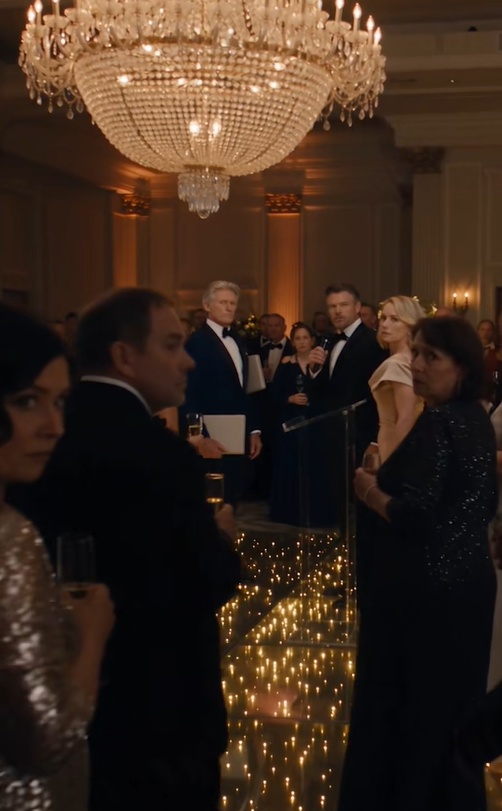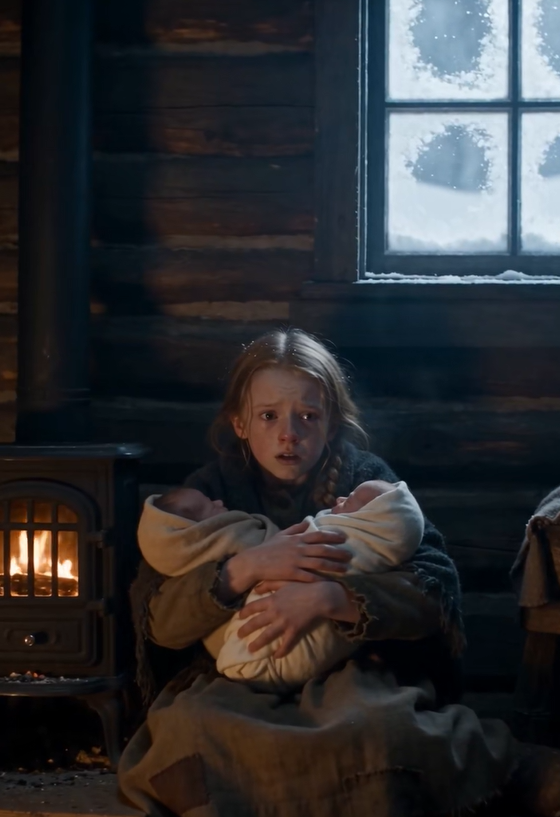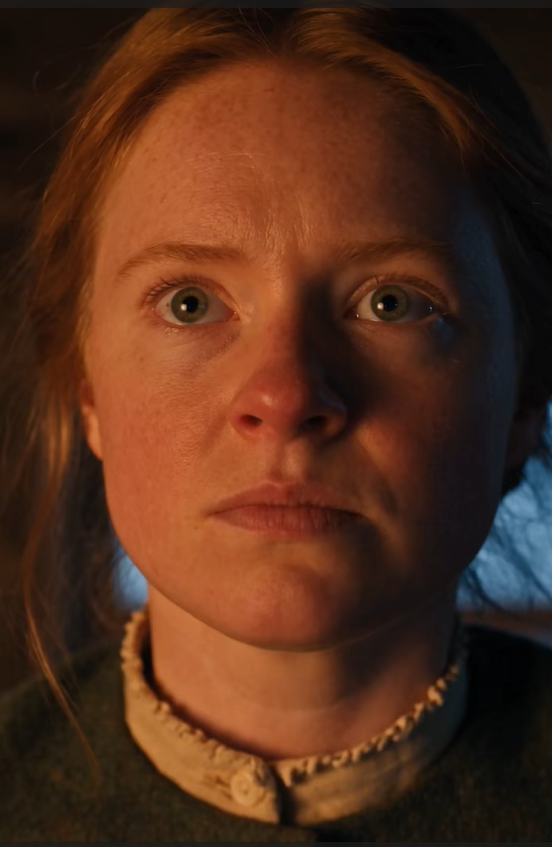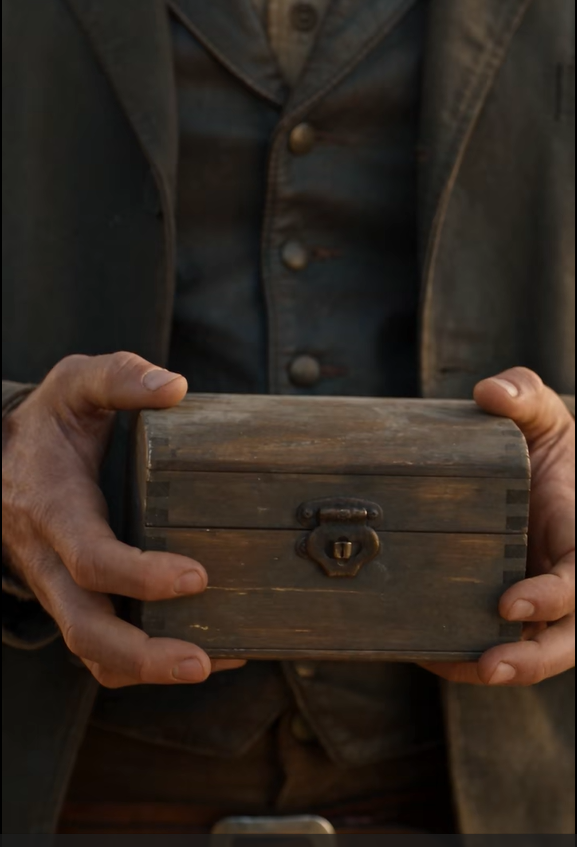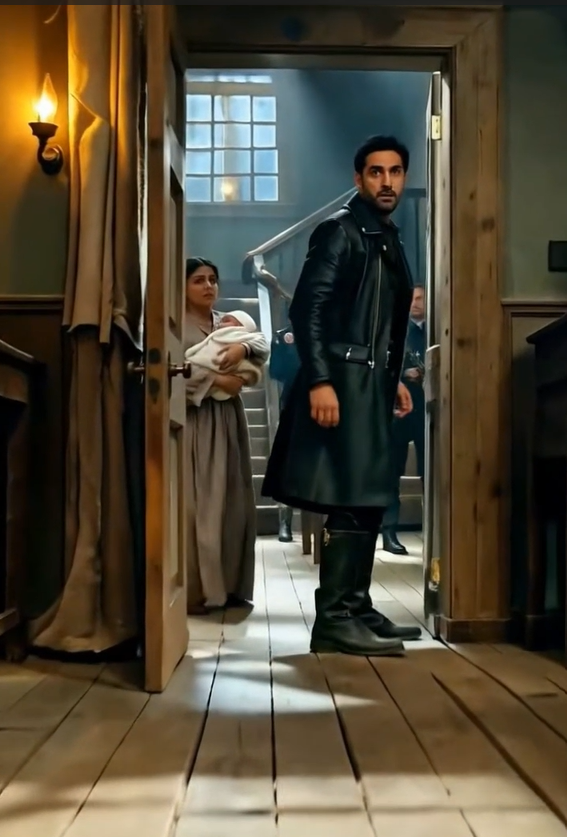
The entire town fell silent when Thomas Hayes walked into the Saturday market carrying a dying baby.
Not because of the child.
Not at first.
They fell silent because of the man carrying her.
Thomas Hayes was the kind of man mothers warned their sons not to provoke and fathers watched carefully when he entered a saloon. He stood six feet three in his boots, with shoulders hardened by fifteen years of breaking horses and driving cattle across country that killed weaker men.
There was a pale scar along his jaw.
Another disappeared beneath his collar.
And according to nearly everyone in Willow Creek, Thomas Hayes had once struck a preacher in the middle of Sunday service.
Some said he had nearly killed him.
Others claimed Reverend Josiah Bell had survived only because three men dragged Thomas away.
Nobody seemed to remember why Thomas had thrown the punch.
But towns remembered violence longer than reasons.
That Saturday morning, however, Thomas Hayes didn’t look dangerous.
He looked terrified.
His black horse came thundering into the market square shortly before noon, scattering chickens, upsetting a basket of apples, and sending two boys diving behind the blacksmith’s wagon.
Thomas jumped from the saddle before the animal had fully stopped.
Something was wrapped against his chest.
At first Norah Whitfield thought it was a blanket.
Then she heard the sound.
A tiny cry.
So weak it barely seemed human.
Thomas pulled the blanket aside.
A baby’s face appeared.
Gray.
Sunken.
Still.
“Doctor!” Thomas shouted.
No one moved.
“Where’s the doctor?”
Silence.
The baker lowered his eyes.
The butcher suddenly found something fascinating about his knives.
Finally Martha Greene, the elderly woman who sold herbs and tonics from a crooked stall beside Norah’s bread table, spoke.
“Doctor Pike left yesterday. Went to Fort Mason. Won’t be back before Tuesday.”
Thomas stared at her.
“Tuesday?”
His voice cracked.
“She doesn’t have until Tuesday.”
The baby whimpered.
Thomas looked down.
And the expression on his face was something Norah would remember for the rest of her life.
Helplessness.
Pure, absolute helplessness.
“Please,” he said.
The word sounded unnatural coming from a man like him.
He turned slowly toward the market.
“Someone help her.”
Nobody stepped forward.
Thomas swallowed.
“She hasn’t eaten properly in three days.”
A murmur moved through the crowd.
Someone asked, “Where’s her mother?”
Thomas’s face hardened.
“Dead.”
That single word silenced them again.
He looked from woman to woman.
Several mothers held infants of their own.
Thomas approached one.
“Ma’am.”
She backed away.
“My baby’s sick.”
“I’m sorry.”
“Please.”
She pulled her child closer.
Thomas turned to another.
That woman wouldn’t meet his eyes.
“I can pay,” Thomas said desperately. “Anything. I have cattle. Horses. Land. Take whatever you want.”
Still nobody moved.
Because this was Thomas Hayes.