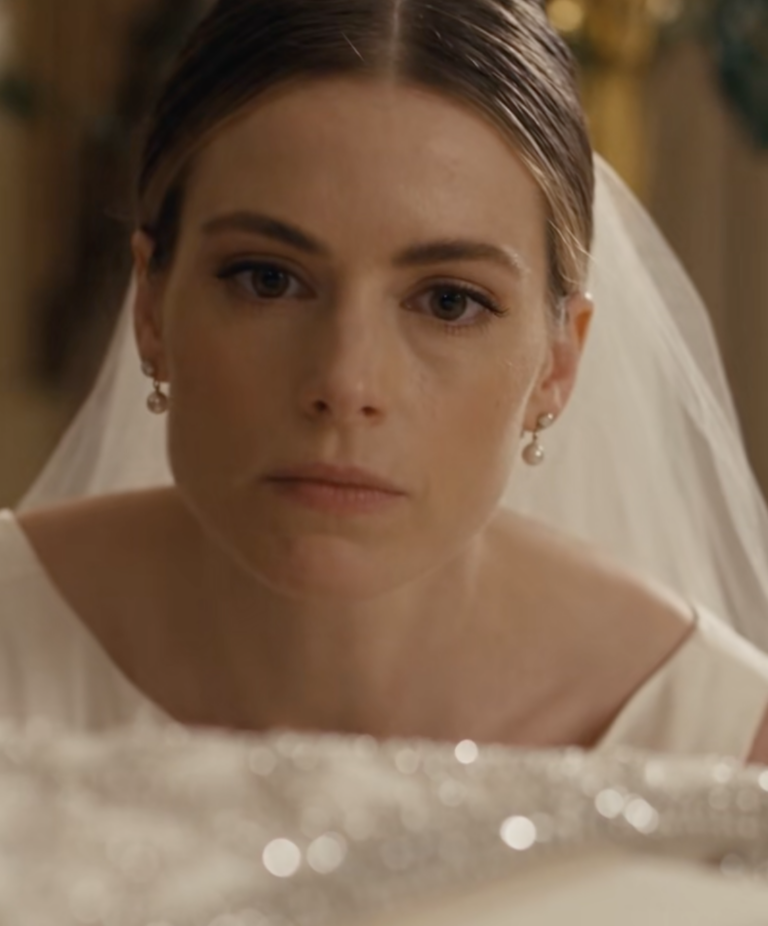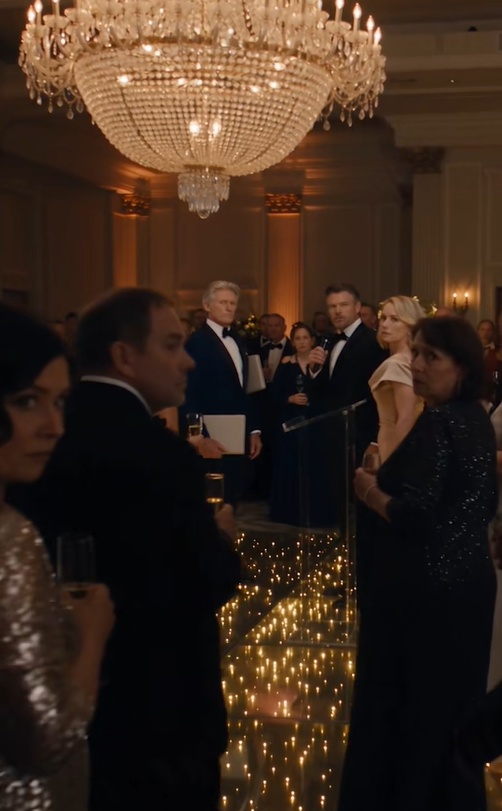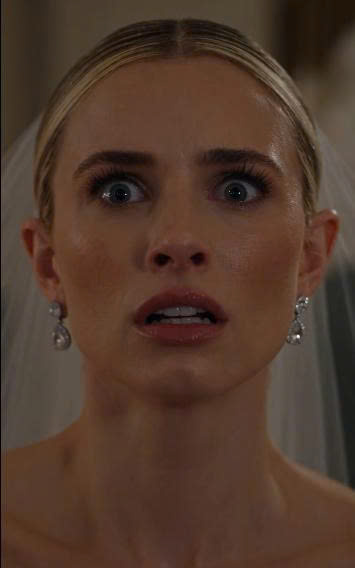
The scissors were still in Victoria Harrington’s hand when I realized she had made her first mistake.
She had expected me to cry.
Instead, I looked at the $120,000 wedding dress lying butchered across the marble floor, then at the woman who had spent a year trying to convince me that I was too ordinary to marry her son.
And I smiled.
Three minutes remained before I was supposed to walk into the Grand Aurelia Ballroom and marry Adrian Harrington in front of five hundred people.
Three minutes before the string quartet changed songs.
Three minutes before the doors opened.
Three minutes before Victoria expected me to disappear.
My sister Claire stood frozen beside the vanity.
“Emma…”
Victoria slowly lowered the silver scissors.
Her pearl-gray gown was immaculate. Her diamonds caught the afternoon light pouring through the windows of the bridal suite, and not one strand of her ash-blond hair had moved from its sculpted place.
She looked more composed standing over the destroyed dress than most people looked ordering coffee.
“Oh, Emma,” she said.
Her voice was almost tender.
“What a disaster.”
I looked down.
The gown had taken eleven months to create.
Ivory Italian silk.
Thousands of hand-sewn crystals.
Silver vines curling across the corset.
A cathedral train requiring two attendants to carry it.
And now a savage cut ran down the back from the waist almost to the hem.
One of my bridesmaids started crying.
Claire did not.
Claire was staring at Victoria’s hand.
“You were holding the scissors.”
Victoria’s eyes moved to her.
“Be very careful what you’re accusing me of.”
“You’re standing over a destroyed dress with scissors.”
“I found it like this.”
Claire laughed once.
There was no humor in it.
“Do you usually investigate crimes by picking up the murder weapon?”
Victoria’s mouth tightened.
Then she turned to me.
And something fascinating happened.
Her face softened.
Not because she felt sorry for me.
Because she had reached the part she had rehearsed.
“We can handle this discreetly,” she said. “You’re under enormous pressure. No one would blame you for becoming overwhelmed.”
I said nothing.
“We could tell the guests you felt unwell.”
Still nothing.
“Adrian would understand.”
That nearly made me laugh.
She continued.
“The important thing is that this doesn’t become… embarrassing.”
There it was.
Not my ruined wedding.
Not her son waiting downstairs.
Not five hundred guests.
Embarrassment.
For twelve months, Victoria Harrington had treated embarrassment like a weapon.
At our engagement dinner, she had asked whether anyone in my family owned “formal dinner clothes.”
At a museum fundraiser, she had corrected the way I held my champagne flute in front of six donors.
When my mother’s old Brooklyn accent slipped into mine during an argument, Victoria smiled and said, “How charming. Adrian will have to make sure the children spend enough time uptown.”
Adrian always defended me.
Every time.
And every time he did, Victoria became a little colder.
But standing in that bridal suite, I finally understood something.
The insults had never been the point.
They had been training.
She had spent a year creating a story about me.
Emma Bell was emotional. Emma Bell was provincial. Emma Bell was uncomfortable around wealth. Emma Bell did not belong.