Hunger can be hidden behind a smile—but sooner or later, it tells the truth.
And on the coldest night Red Ash Crossing had seen in years, Miriam Vale was running out of lies.
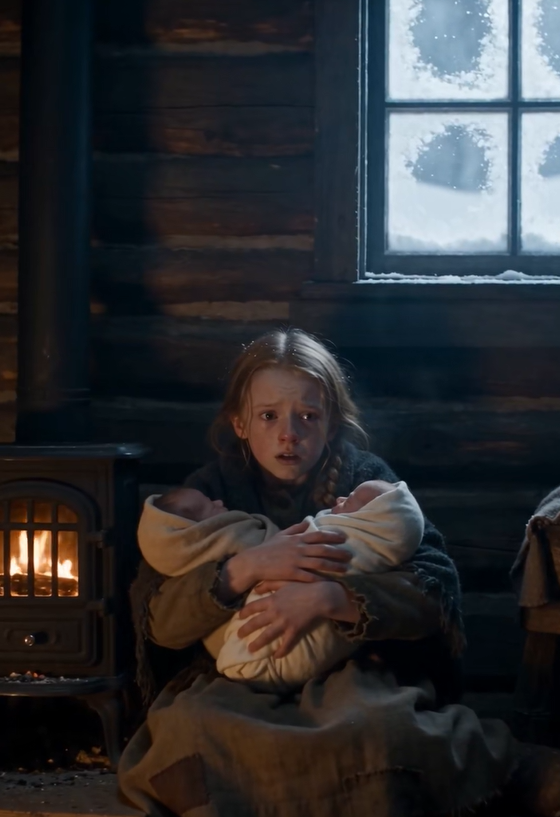
The great freeze of 1879 had buried the Montana Territory beneath a coffin-white sky. Snow swallowed fences, roads, and rooftops while a vicious wind clawed through every crack in Miriam’s small cabin.
Still, she smiled.
She smiled when her two boys asked why the flour barrel sounded empty.
She smiled when neighbors stopped visiting and church ladies stopped promising they would “check in soon.”
She even smiled when she caught herself staring at the last photograph of her dead husband, Isaac, wondering what he would say if he could see how close his family had come to starving.
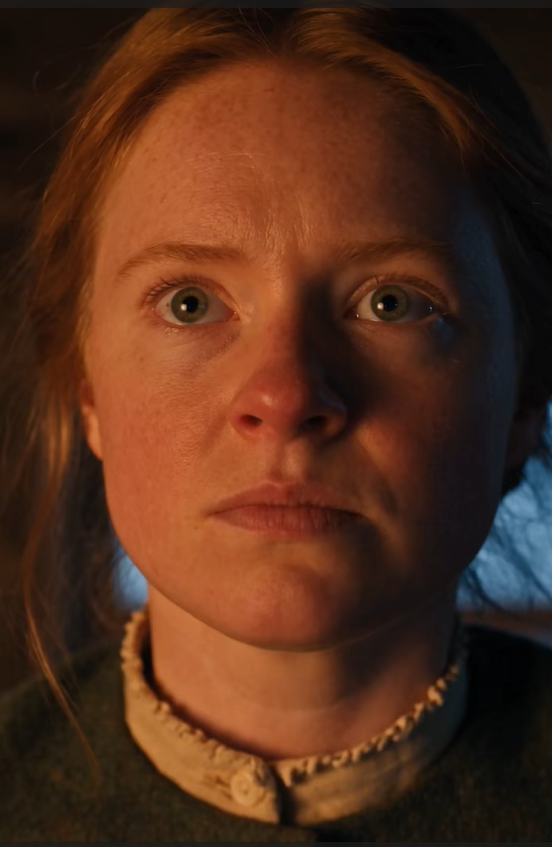
But that Thursday night, Miriam’s smile almost broke.
On the rough pine table sat the final piece of cornbread.
It was thin, flat, and barely held together, made from the last spoonfuls of meal she had scraped from the bottom of the sack and stretched with water.
She had baked it in the same black skillet Isaac had carried west years ago.
The warm smell filled the cabin.
Miriam’s stomach cramped painfully.
She ignored it.
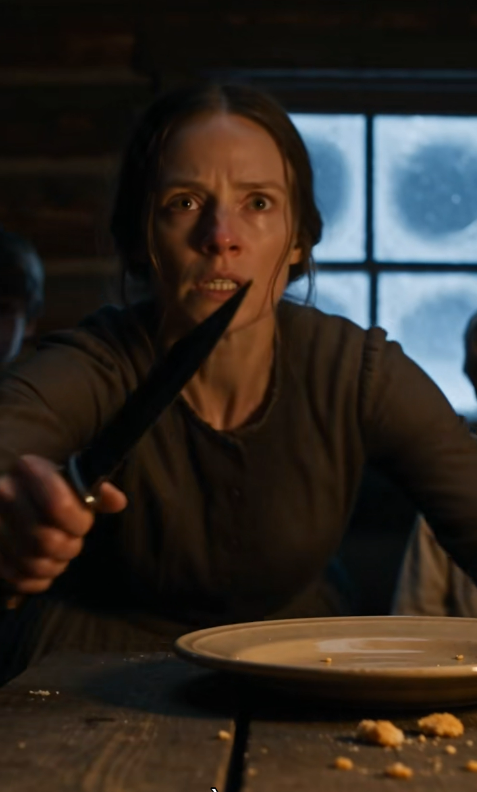
Taking Isaac’s old hunting knife, she sliced the cornbread straight down the middle.
Two pieces.
Two boys.
Nothing for her.
Jonah, ten years old and already carrying his father’s quiet, watchful eyes, stared at the plate.
“Ma,” he said softly. “You ain’t eating.”
Miriam folded her hands beneath the table so he wouldn’t see them trembling.
“I ate earlier.”
Six-year-old Peter frowned.
“No, you didn’t.”
Miriam smiled weakly.
“I had something while you were fetching wood.”
Peter shook his head with the brutal certainty of a child.
“You came with us.”
Jonah looked down at his half of the cornbread.
His cheeks had grown hollow that winter. His sleeves stopped too high above his wrists.
Without saying anything, he broke his piece in two.
Then he pushed the smaller portion toward Miriam.
Her throat tightened.
“No.”
“But you’re hungry.”
“You eat it.”
“Ma—”
“I said eat, Jonah.”
The sharpness of her voice startled them all.
Jonah slowly pulled the bread back.
Peter took tiny bites, chewing each mouthful far longer than necessary.
Outside, the storm battered the cabin.
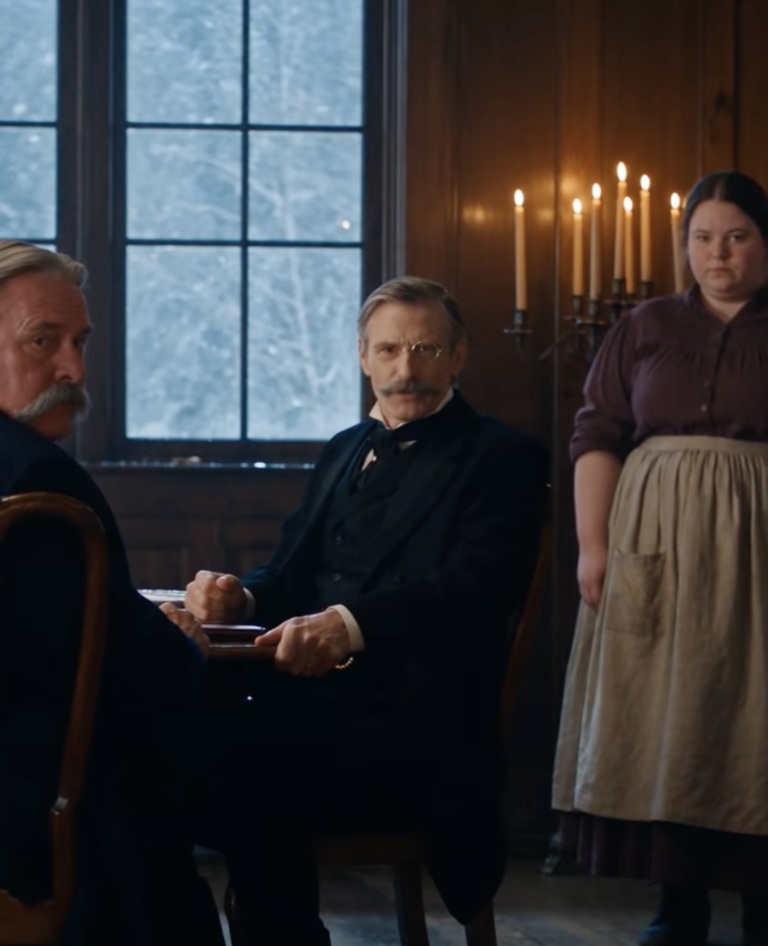
But beyond the frost-clouded window, another figure stood motionless in the darkness.
A man on horseback waited beneath the bare cottonwoods at the edge of the yard.
Snow coated his heavy black coat.
His hat brim shadowed most of his face.
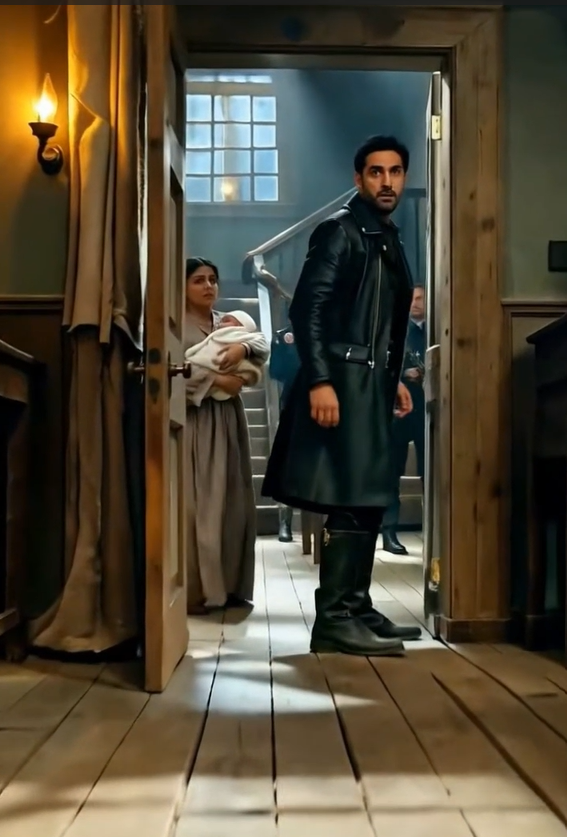
His name was Silas Crowe.
Owner of the largest ranch north of the river.
And nobody in Red Ash Crossing would have described him as charitable.
People said Silas Crowe had been carved from iron and old grief. Ten years earlier, a fire had taken his wife and infant son. After that, he dismissed half his social obligations, stopped attending church dinners, and rarely entered town except for business.