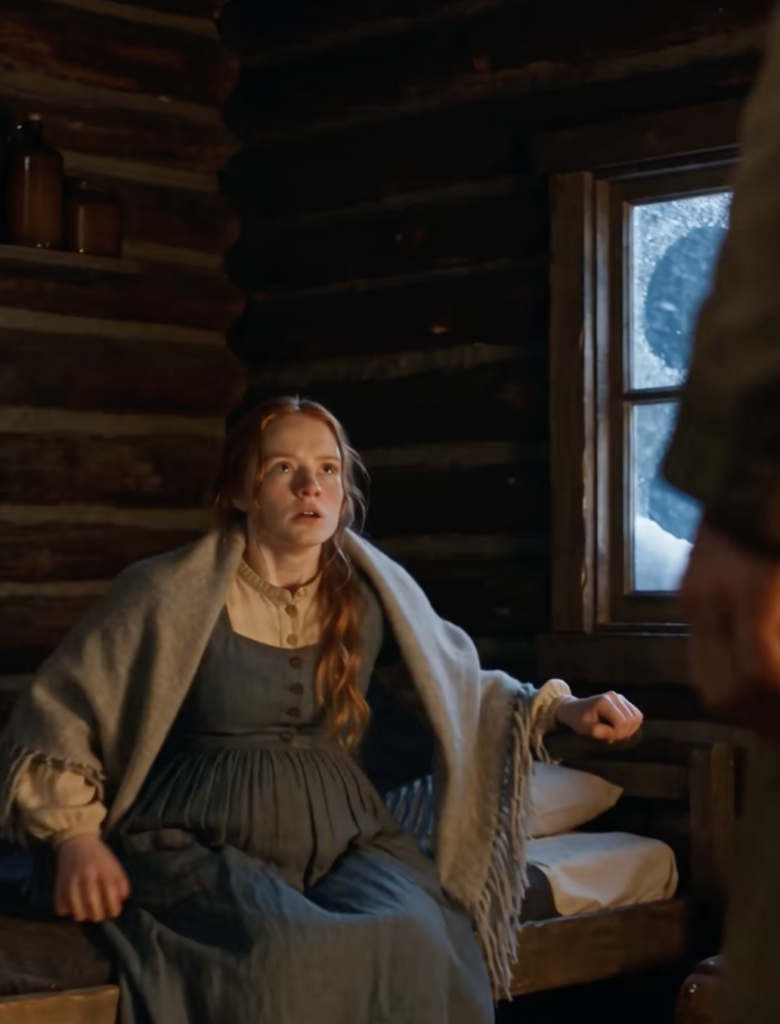

The Mountain Man Hired a Pregnant Widow for the Winter. Then She Learned the Cabin, the Mountain, and His Secret Had All Been Waiting for Her.
The first thing Silas Croft said after seeing Lydia Marsh’s pregnant belly was not welcome.
It was—
“How long ago did your husband die?”
The question struck harder than the mountain wind.
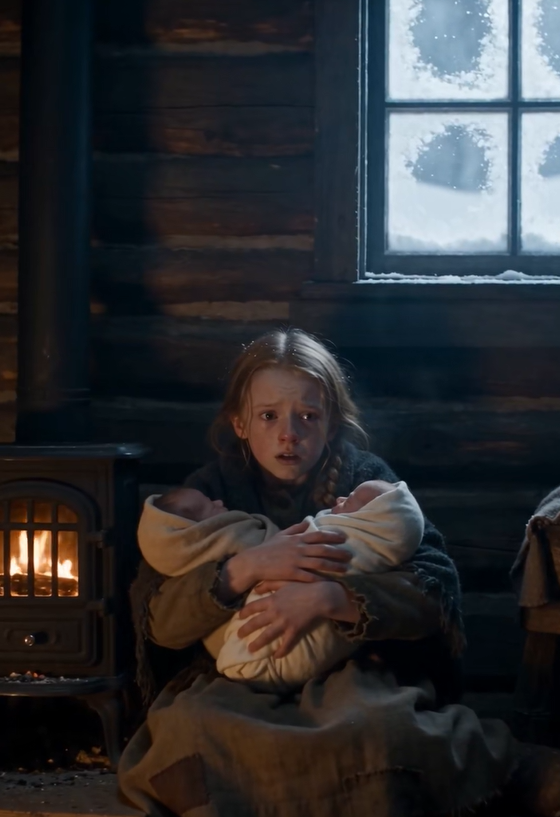
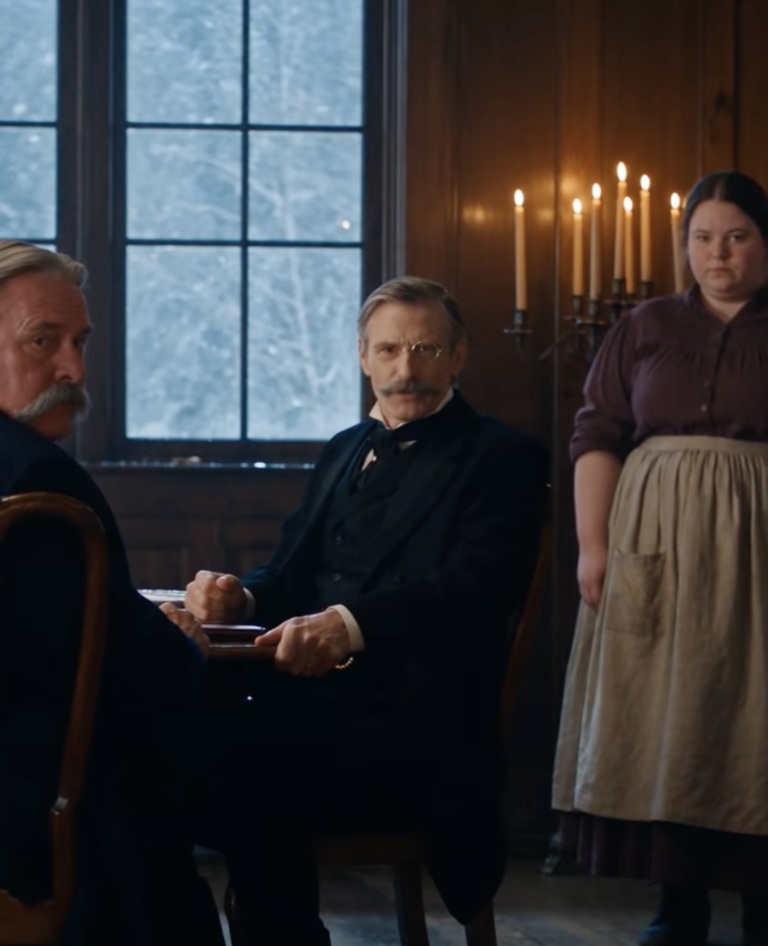
Lydia sat on the edge of the narrow bunk with one hand over the child moving beneath her dress, staring at the enormous stranger standing beside the fire.
“Six months,” she answered.
Silas went still.
Completely still.
The iron ladle in his hand stopped above the blackened stew pot.
“Six months exactly?”
Lydia’s exhaustion sharpened into suspicion.
“Near enough.
Why?”
Silas looked at her for several seconds.
Then he turned back toward the fire.
“No reason.”
“You don’t look like a man with no reason.”
“I’ve been told my face ain’t friendly.”
“Your face isn’t the problem.”
That almost made him smile.
Almost.
But then another gust of wind slammed snow against the cabin windows, and whatever had passed through Silas’s expression disappeared.
“Get some rest,” he said.
Lydia watched him.
He was hiding something.
She knew the look.
Daniel had worn it during the last year of their marriage whenever she asked about money.
Whenever she asked why another chair had vanished from the dining room.
Whenever a man in a dark coat stood across the street watching their house.
Whenever Daniel came home smelling of whiskey and told her everything was fine.
Everything had not been fine.
By the time her husband died, Lydia had possessed exactly nine dollars, two dresses, one wedding ring she couldn’t bring herself to sell, and an unborn child whose future frightened her more than hunger.
Daniel had left debts everywhere.
At the mill.
At the bank.
At the mercantile.
With men who did not bother going through banks at all.
And the worst part had been the whispers.
Gambler’s wife.
Fool.
Pregnant widow.
As though Daniel’s sins had somehow settled onto Lydia’s shoulders the moment they lowered his coffin into the earth.
So when an advertisement appeared asking for a winter housekeeper in the mountains—food, shelter, and wages provided—she had answered immediately.
Silas Croft’s reply had come two weeks later.
His letter was brief.
Can offer twenty dollars monthly, board included.
Work is hard.
Winter is worse.
If you still mean to come, ask for Potter’s wagon.
Lydia had not expected kindness.
She had expected survival.
And now, as snow buried the only road back to civilization, survival was exactly what she had.
Nothing more.
At least that was what she told herself.
She awoke before dawn to the smell of coffee.
Real coffee.
Not roasted chicory root.
For a few seconds Lydia forgot where she was.
Then she heard an ax splitting wood outside.