He Pulled a Dying Woman From a Frozen Stagecoach and Broke the One Rule That Had Kept Him Alive. When She Finally Remembered Why the Coach Had Crashed, Caleb Realized the Storm Had Brought His Past to His Door.
The woman looked from the clothing hanging near the fire to Caleb Ward’s scarred face.
Then she screamed.
Not loudly.
Her throat was too raw for that.
What came out was a broken, terrified sound, something halfway between a gasp and a cry, and she scrambled backward until her shoulders struck the log wall.
“Don’t touch me.”
Caleb stopped instantly.
“I’m not going to.”
“Where are my clothes?”
“Drying.”
Her green eyes widened.
“What did you do?”
Caleb felt his jaw tighten.
He had carried her two miles through a blizzard, nearly frozen his own hands doing it, spent half the night keeping hot stones beside her body so her heart would not stop, and now she was looking at him as though he were the danger.
A younger version of Caleb might have been offended.
The man he had become understood.
“You were wet through,” he said. “You were freezing to death.”
Her breathing remained quick and shallow.
“You undressed me?”
“I removed the wet things. Nothing more.”
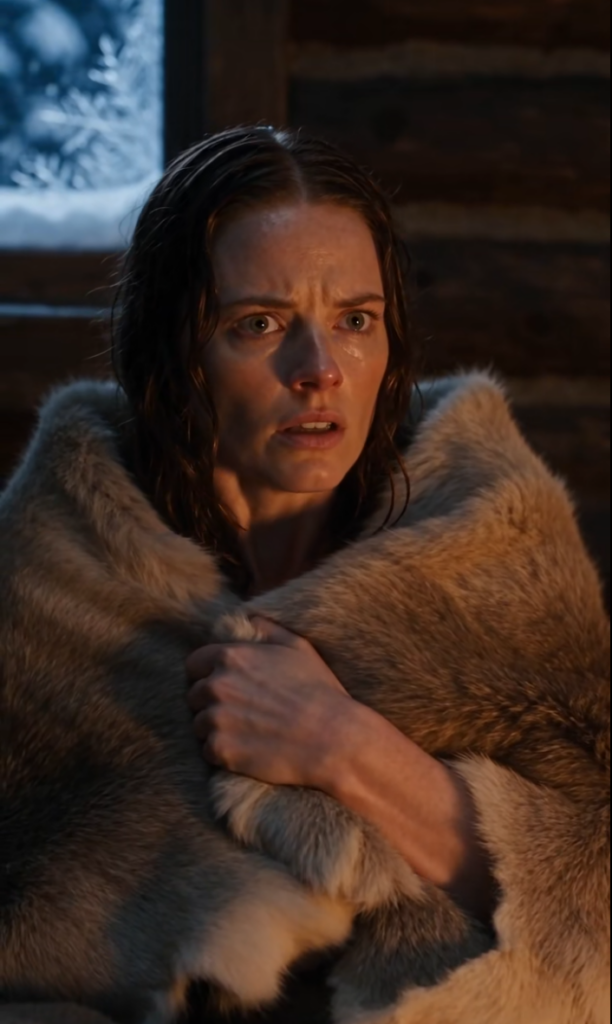
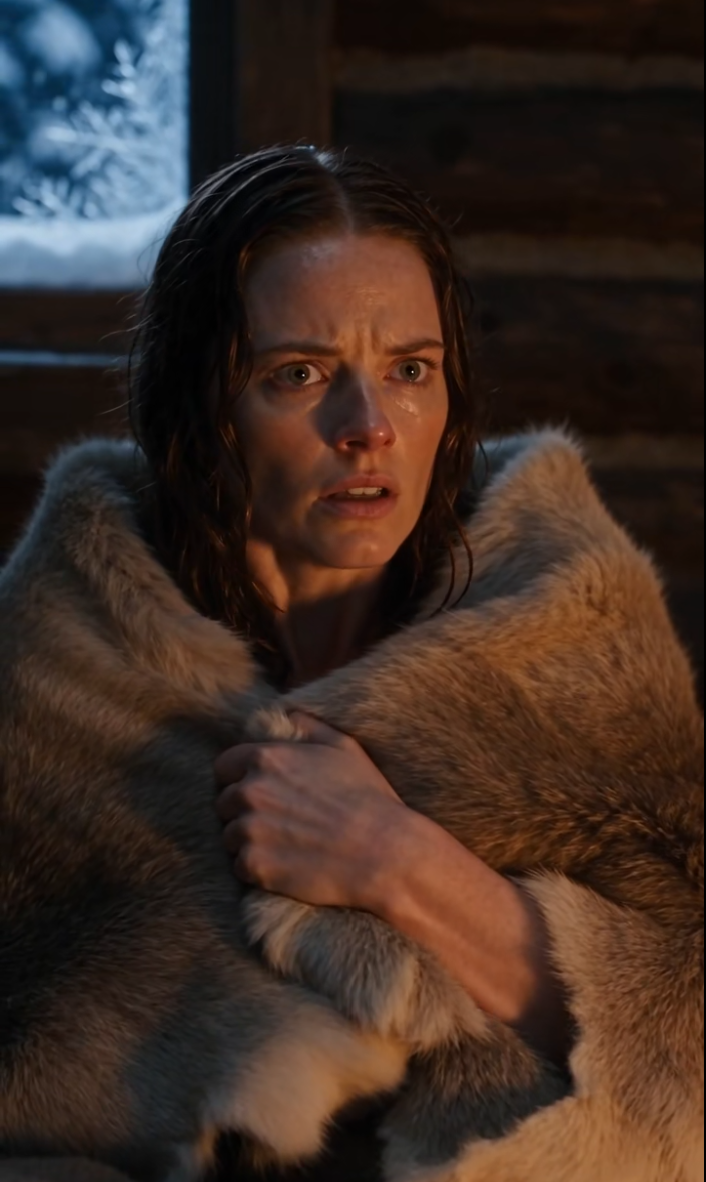
She pulled the blankets tighter.
Caleb stepped farther away.
“Your boots are there. Dress is there. Coat’s ruined.”
She stared at him.
“Who are you?”
“Caleb Ward.”
“Where am I?”
“My cabin. North slope of Elk Ridge.”
Her face changed.
Only slightly.
But Caleb saw it.
Recognition.
Fear.
Then something else.
“Do you know Elk Ridge?” he asked.
“No.”
The answer came too quickly.
Caleb’s eyes narrowed.
Before he could press further, she suddenly squeezed both hands against her temples.
A sharp breath escaped her.
“What is it?”
“My head.”
“You struck it in the wreck.”
“The wreck?”
Caleb watched confusion spread over her face.
“The stagecoach.”
Her eyes lifted to his.
“What stagecoach?”
For the first time since she had awakened, Caleb felt something colder than the storm outside.
“You don’t remember?”
She looked genuinely frightened now.
“I…”
Her mouth opened.
Nothing came.
She looked around the room as if the walls might provide an answer.
Caleb asked, “What’s your name?”
She blinked.
Once.
Twice.
Her lips parted.
Then closed.
Caleb watched the blood drain from her face.
“I don’t know.”
Silence filled the cabin.
The fire snapped.
Somewhere outside, snow slid from a pine branch with a soft collapse.
The woman whispered, “I don’t know my name.”
By noon, the storm had passed.
Sunlight struck the snow so fiercely that the world outside looked carved from white glass.
Inside the cabin, the woman sat beside the hearth wearing one of Caleb’s flannel shirts beneath the blankets.
Her dress was still damp.
She had tried three times to remember something—anything—and each attempt had ended with the same frightened emptiness.
Caleb set a tin cup of broth beside her.
“Drink.”
She eyed it.
“Is that a request?”
“No.”
One corner of her mouth almost moved.
Almost.
It was the first sign Caleb had seen that fear had not swallowed her completely.
She lifted the cup with trembling hands.
“How many people were in the coach?”
Caleb did not answer immediately.
She noticed.
“How many?”
“Five including you.”
“And?”
“You survived.”
The cup stopped halfway to her lips.
“All of them?”
“Yes.”
Her gaze lowered.
She whispered, “I should feel something.”
Caleb said nothing.
“I don’t even know who they were.”
“Most likely strangers.”
“How can you know?”
“Most stage passengers are.”
She looked at him over the rim.
“You don’t say much.”
“I say enough.”
“That sounds like something a man says when he doesn’t want questions.”