They Said He Would Never Walk Again. The Housekeeper’s Daughter Found the Pill That Could Destroy His Empire.
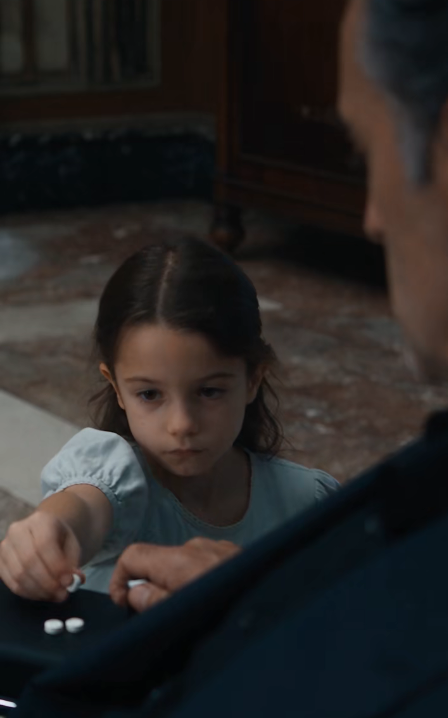
The first time eight-year-old Sofia Alvarez told Luca Rinaldi he would walk again, three doctors had just finished explaining why he never would.
They stood around his wheelchair in the sunlit library of Villa Rinaldi, speaking in the careful voices men used when delivering bad news to someone powerful enough to ruin them.
Dr. Emil Vogel from Zurich pointed to an illuminated scan.
“Mr. Rinaldi, the spinal cord itself is not severed, but the neurological damage appears extensive. After seventeen months without meaningful motor recovery, the probability of regaining independent mobility is—”
“Say the number.”
Vogel hesitated.
“Less than one percent.”
Silence settled over the library.
Outside the tall windows, the Ligurian Sea burned silver beneath the Italian sun. Inside, no one moved.
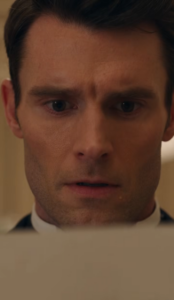
Luca Rinaldi had once controlled ports, construction companies, casinos, freight unions, judges, and men whose names never appeared on payrolls. At forty-two, he had been called everything from businessman to butcher.
But no one had ever called him helpless.
Not until the crash.
His armored Mercedes had gone through a stone barrier on a mountain road outside Genoa seventeen months earlier. His driver had died instantly. Luca had survived with shattered vertebrae, a damaged spinal cord, and a future measured in wheelchairs, medication, and pity.
He hated the wheelchair most.
Not because it confined him.
Because everyone looked down at him now.
Vogel closed the folder.
“I am sorry.”
Luca’s dark eyes remained fixed on the sea.
“You flew from Switzerland to tell me what six other specialists already said.”
“I came because your brother insisted there might be another interpretation.”
At that, Luca looked toward the fireplace.
His younger brother Matteo stood there in a charcoal suit, handsome, composed, one hand resting against the mantel.
Matteo gave an apologetic shrug.
“I wanted certainty.”
“You have it now.”
Luca turned his wheelchair toward the door.
That was when a little voice spoke from the hallway.
“You’re wrong.”
Every adult froze.
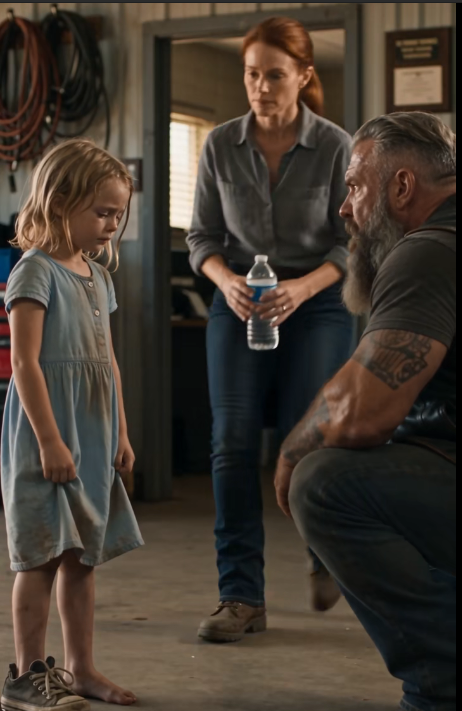
Sofia stood barefoot on the polished marble, holding a blue plastic basin filled with warm water.
Her mother, Elena Alvarez, appeared behind her carrying folded towels.
“Sofia!”
The child looked startled.
“I’m sorry, Mama.”
Elena went pale when she realized who her daughter had interrupted.
She had worked as a housekeeper at Villa Rinaldi for eleven years. She knew which doors to avoid, which conversations not to hear, and which men never to look at for too long.
She hurried forward.
“Mr. Rinaldi, forgive her. She was bringing water for—”
“I asked who was wrong.”
Luca’s voice stopped her.
Sofia pointed at the doctors.
“Them.”
One of the physicians gave an uncomfortable laugh.
Matteo smiled faintly.
“Apparently we have another specialist.”
Elena gripped Sofia’s shoulder.
“Enough.”
But Luca lifted one hand.
“No. Let her speak.”
Sofia was small for eight, with enormous brown eyes and black hair tied in a crooked braid. She looked at Luca without the fear adults carried around him.
That alone irritated him.
“What makes you think I can walk?”
She frowned as though the answer were obvious.
“Because your feet aren’t dead.”
The room went silent.
Vogel cleared his throat.
“That is not how spinal injuries—”
“They get warm.”
Sofia pointed toward Luca’s legs.
“When Mama changes the blankets, your feet get warm after she rubs them. Dead things don’t get warm.”
Matteo chuckled.
“Sofia, I don’t think medical school works that way.”
She ignored him.
Then she walked toward Luca.
Elena caught her wrist.
“Sofia.”
But Luca said quietly, “Let her come.”
The girl placed the basin in front of his wheelchair.
She knelt.
And before anyone could stop her, she dipped a cloth into the water.