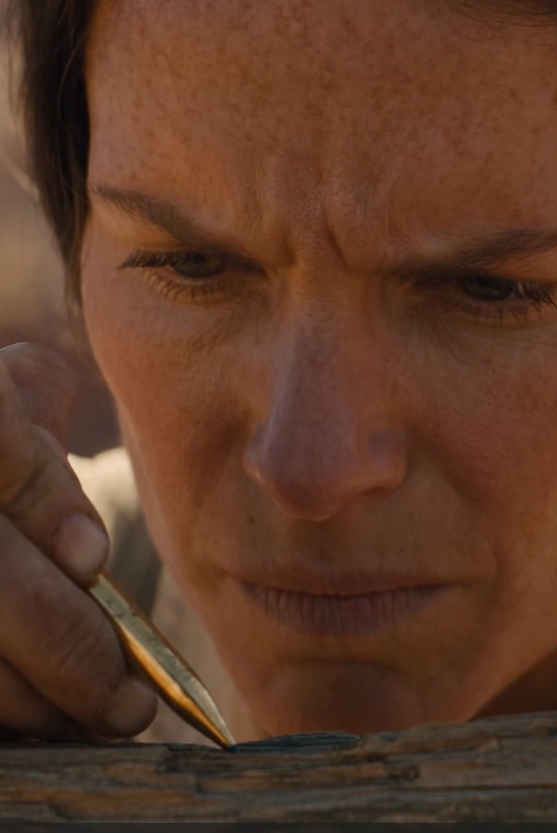
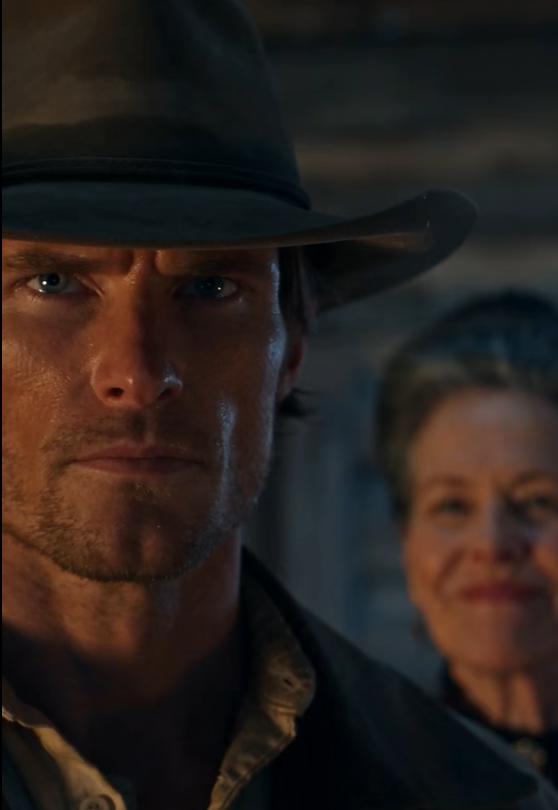
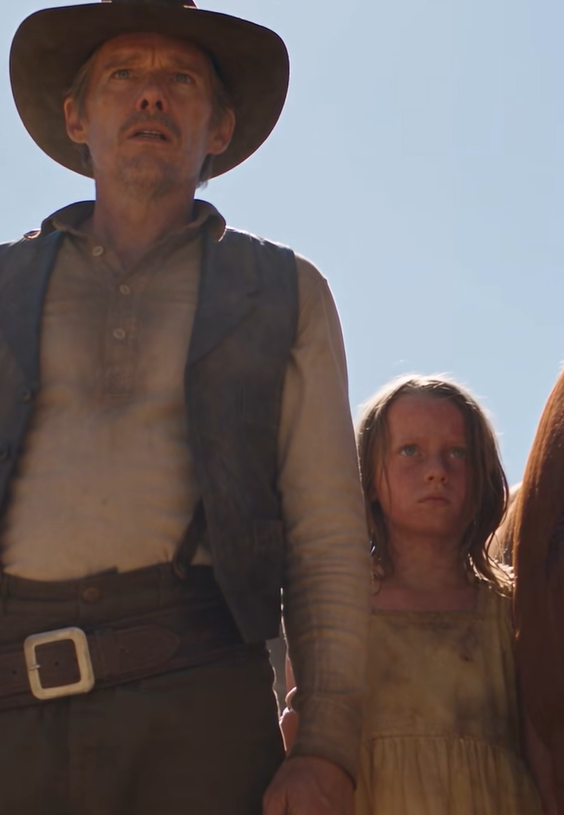
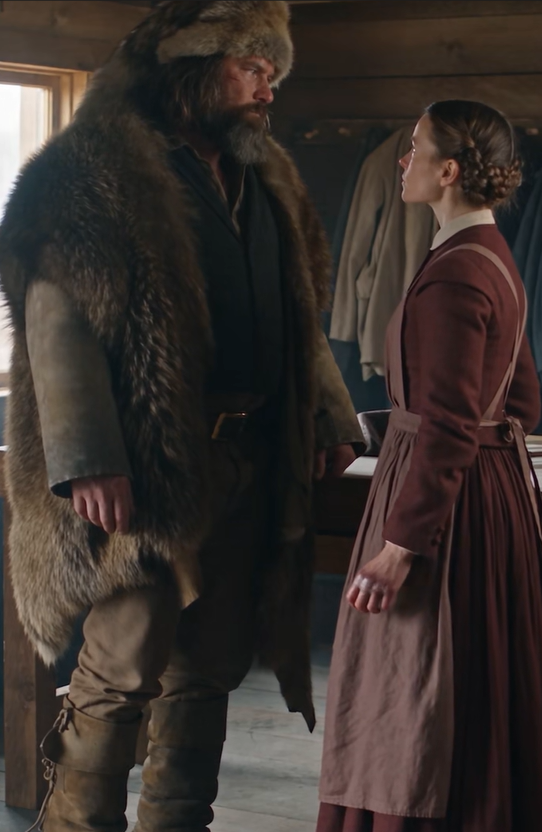
At supper, Nara asked questions about the ranch.
About the creek.
About the old stone well.
About the abandoned mining road beyond the eastern pasture.
Eli answered what he could.
One afternoon, while repairing a fence, she asked, “Did your wife like this place?”
Eli stopped hammering.
“Rebecca loved it.”
“What was she like?”
He looked toward the mountains.
“She laughed at things that weren’t funny. Sang badly. Burned bread at least twice a week.”
Nara smiled.
“That sounds terrible.”
“She was wonderful.”
His smile faded.
“We had a boy. Samuel.”
Nara grew still.
“Where is he?”
Eli stared at the hammer in his hand.
“Buried beside his mother.”
“I’m sorry.”
He nodded.
For several moments, neither spoke.
Then Nara said quietly, “I lost a child too.”
Eli looked at her.
She was watching the distant mountains.
“A daughter?”
Nara shook her head.
“A boy.”
“How old?”
“Old enough to call for me.”
Eli felt his throat tighten.
“What happened?”
Her expression closed.
“I do not know.”
The answer troubled him more than any story of death might have.
But he did not press her.
That evening, after Nara went upstairs, Eli noticed something unusual.
The small framed photograph of Rebecca and Samuel had been moved from the mantel to the kitchen table.
Beside it lay a strip of faded blue cloth.
He picked it up.
The cloth was old and carefully preserved.
Embroidered along one edge were three tiny white stars.
Eli stared.
A memory stirred.
Rebecca had sewn stars like those onto Samuel’s winter coat.
He turned the cloth over.
There, barely visible, was a single initial.
S.
His hands began to shake.
Chapter Four: The Grave Beneath the Cottonwood
Eli did not sleep that night.
At dawn, he found Nara beside the cottonwood tree.
She was standing before the two graves.
Rebecca Ward.
Samuel Ward.
The boy’s stone bore the words:
Our beloved son, 1881–1886.
Nara had removed her hat.
Her face was wet, though the rain had stopped hours earlier.
Eli approached slowly.
“Where did you get that cloth?”
She turned.
“What cloth?”
“The blue one. With the stars.”
Her expression changed.
“Where is it?”
“In the house.”
“Give it back.”
“Tell me where you found it.”
She stepped toward him.
“Please.”
Eli had never heard such desperation in her voice.
He took the cloth from his pocket.
Nara seized it and pressed it against her chest.
“Where did you get it?” he repeated.
She looked toward the grave.
“From a woman who was dying.”
Eli felt the ground shift beneath him.
“What woman?”
“An old Apache woman named Seya.”
He shook his head.
“I don’t know her.”
“She knew you.”
“That’s impossible.”
“She told me to find Eli Ward. She told me to find the ranch with the cottonwood tree and the stone well.”
Eli stared at her.
Nara continued.
“She gave me this cloth. She said it belonged to a boy who was taken.”
Eli could barely breathe.
“Taken?”
Nara’s eyes filled.
“She told me a child was stolen during a raid twenty years ago. A boy with gray eyes.”
Eli stepped backward.
“Twenty years?”
“Yes.”
“My son died eight years ago.”
Nara looked at Samuel’s grave.
Then back at Eli.
“I did not come here looking for your son.”
“Then who?”
Her voice trembled.
“I came looking for you.”
The words struck him like a rifle shot.
For a moment, the entire world seemed silent.
Then Eli laughed once, bitterly.
“You’ve got the wrong man.”
Nara shook her head.
“Seya said you were brought here as a child. She said your name was changed.”
“My name has always been Eli Ward.”
“That is what you were told.”
Eli’s face hardened.
“My father raised me on this ranch. My mother is buried in Dustwater.”
“Did your father ever tell you where you were born?”
Eli opened his mouth.
No answer came.
He remembered his father saying that his mother had died when he was very young.
He remembered being told that he had fallen from a wagon at the age of four, which explained why his earliest memories were broken and unclear.
He remembered nightmares.
Fire.
Screaming.
A woman’s voice calling a name he could never quite understand.
But that was all.
Nara stepped closer.
“Seya said there was a mark beneath your left shoulder.”
Eli went cold.
“What kind of mark?”
“A scar shaped like a crescent.”
Eli’s hand moved instinctively toward his back.
He had carried that scar his entire life.
His father had told him it came from the wagon accident.
Nara watched his face.
And she knew.
“Who are you?” Eli whispered.
Nara swallowed.
“My mother was Seya’s daughter. She died last winter. Before she died, she told me about a little boy stolen from our family.”
Eli shook his head.
“No.”
“She said the boy had been taken by a white trader and sold to a rancher.”
“No.”
“She said the trader was named Silas Dugan.”