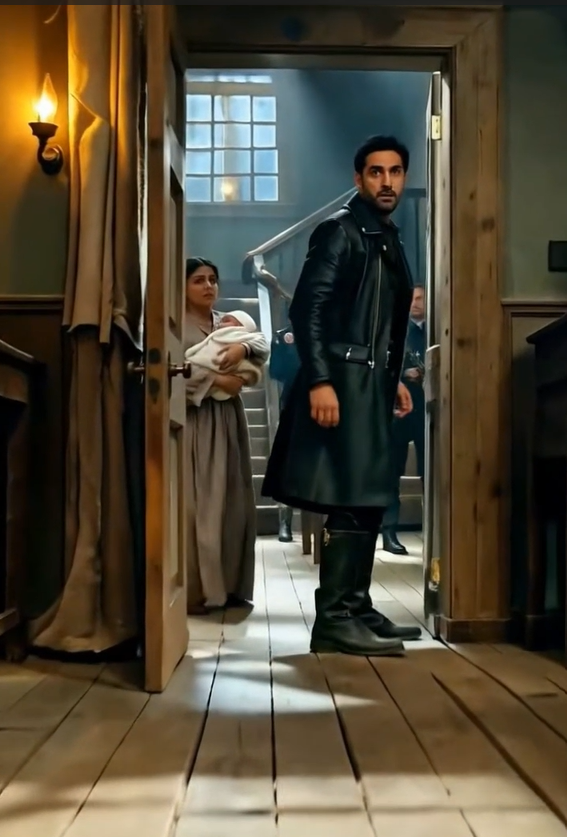
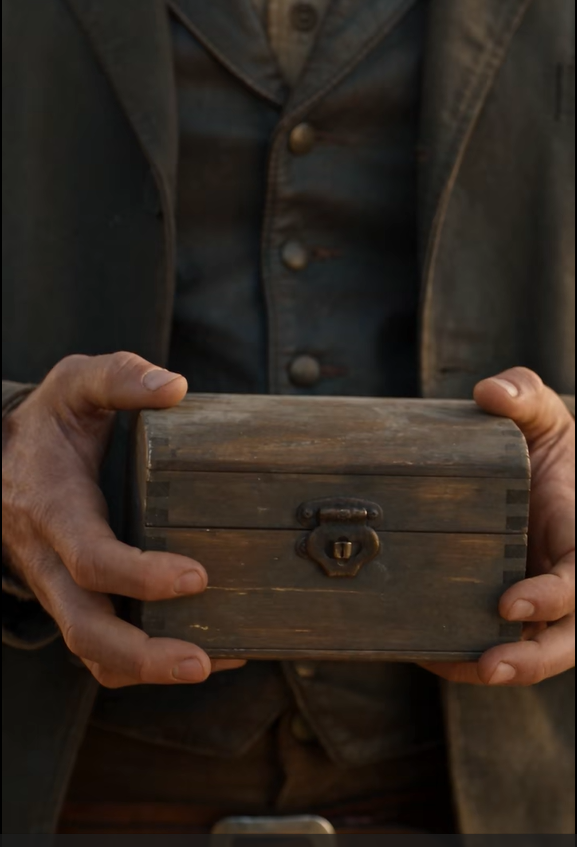
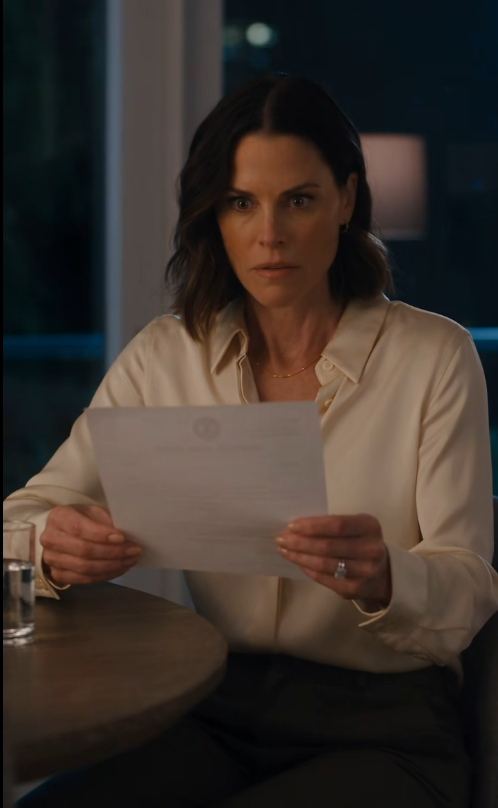
Forgive me for allowing you to believe I was dead. The men involved have friends in courts, orphan societies, railroad offices, churches, and territorial governments. If they knew I lived, they would come for you and the children.
Her vision blurred.
Our Nathaniel lives.
A sob escaped her.
I saw his name in their records.
I could not return without him.
There is one man I believe can help me. His name is Caleb Roar.
Eleanor stopped.
Slowly she looked up.
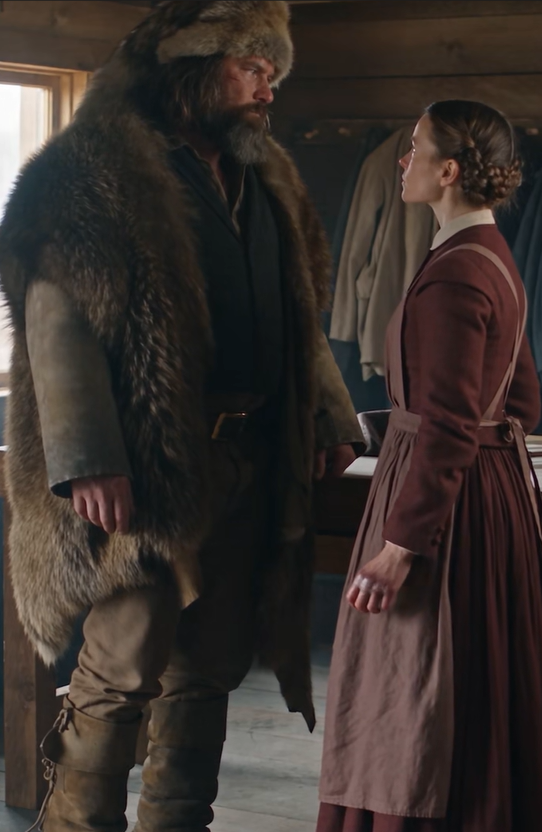
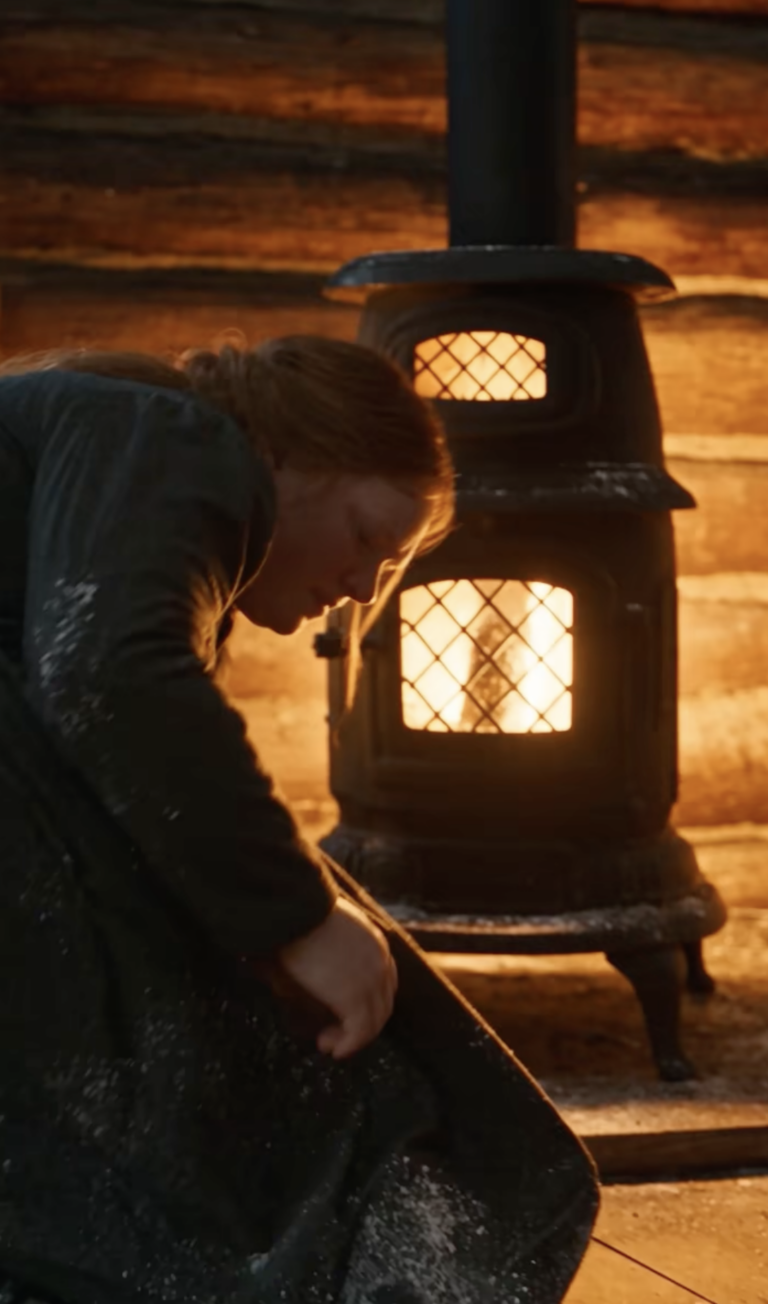
Caleb stood beside the stove.
His face contained no triumph.
Only grief.
“Where is Samuel?”
Caleb’s eyes hardened.
“Dead.”
This time, there was no uncertainty.
“How?”
“Shot outside Black Ridge eight months ago.”
Eleanor closed her eyes.
“I buried him myself.”
Silence filled the kitchen.
Caleb’s voice became rough.
“He asked me to find Nathaniel.”
Eleanor looked again at the letter.
Another line waited below.
If Caleb Roar ever comes for you, Eleanor, trust him.
Her tears fell onto the paper.
He is the only man I know who cannot be bought.
Life changed slowly after that.
Nathaniel did not suddenly become her son simply because blood said he was.
For three days, he barely spoke to Eleanor.
But he watched her.
He watched her braid Catherine’s hair.
He watched her bandage James’s scraped hand.
He watched her scold Thomas for carrying firewood too heavy for him.
He watched her sit beside Edward after nightmares.
On the fourth morning, Eleanor found Nathaniel in the kitchen staring at biscuits cooling beside the stove.
“You may have one.”
He did not move.
“You don’t have to ask.”
Still nothing.
Eleanor picked up a biscuit and placed it on a plate.
Then she turned away.
Behind her came the smallest scrape of ceramic.
When she looked again, the biscuit was gone.
That evening, Nathaniel appeared beside her while she darned a sock.
“Did I have a blanket?”
Eleanor froze.
“When I was a baby?”
“Yes.”
“What color?”
“Blue.”
He considered that.
“Everybody says boys get blue.”
“Yours had yellow stars.”
Nathaniel looked at her.
“I made them.”
“You?”
“I was terrible at embroidery.”
The corner of his mouth moved.
Barely.
Eleanor smiled.
“You had nine crooked stars and one that looked like a potato.”
Nathaniel’s mouth twitched again.
Then he asked, “Did you cry?”
“When?”
“When I died.”
The needle fell from Eleanor’s fingers.
She looked at him.
“For eight years.”
His expression changed.
Some invisible wall shifted.
He moved one step closer.
Then another.
He did not hug her.
Not yet.
But he sat beside her.
For Eleanor, that was enough.
Caleb remained more difficult to understand.
He worked from before sunrise until dark.
He repaired fences, hauled firewood, checked traps, taught the boys how to handle horses, and never raised his voice when Edward accidentally dropped half a bucket of eggs.
There was no cruelty in him.
But there was distance.
Every night, Caleb checked the tree line before locking the doors.
Every morning, he searched for tracks.
Eleanor noticed.
“You expect someone.”
“Yes.”
“Who?”
“The people whose ledger I took.”