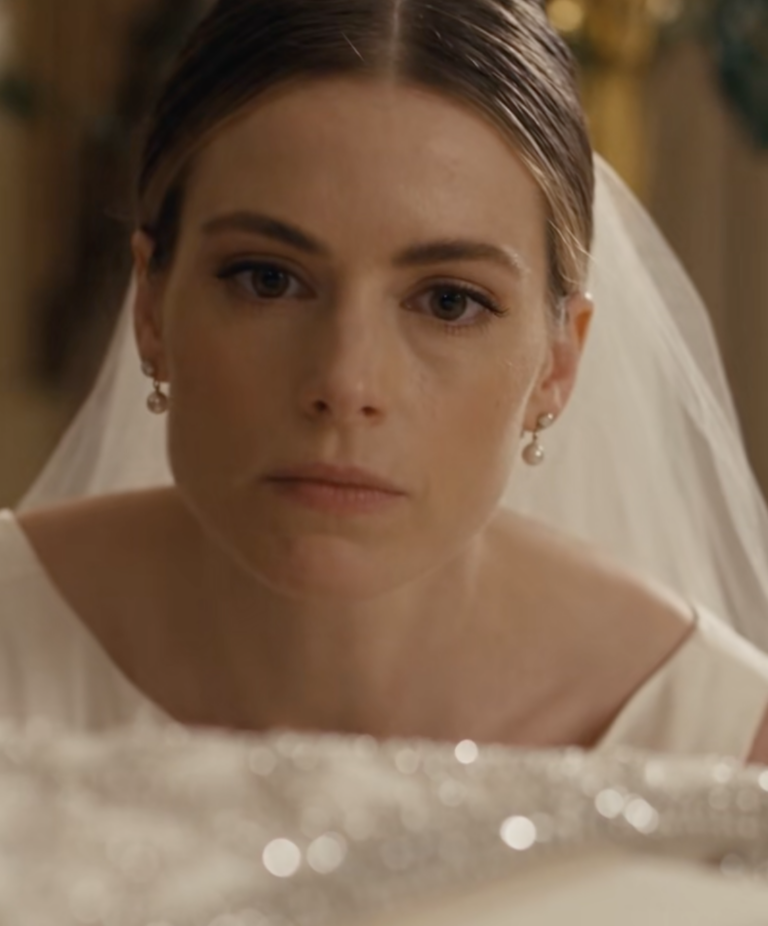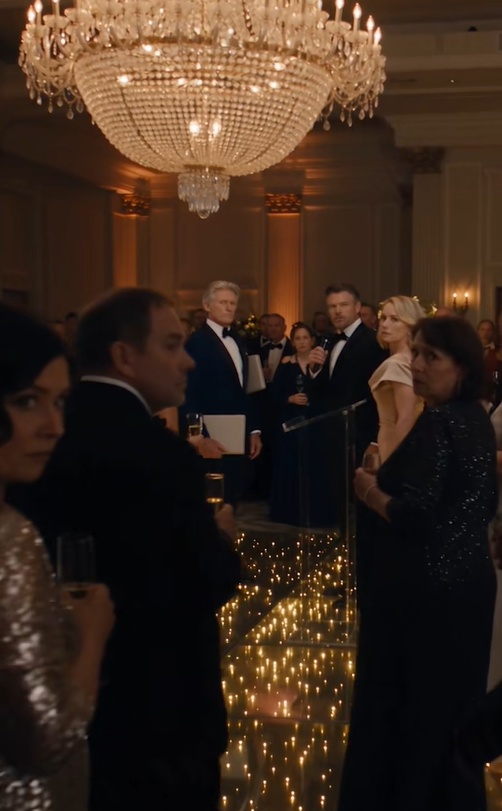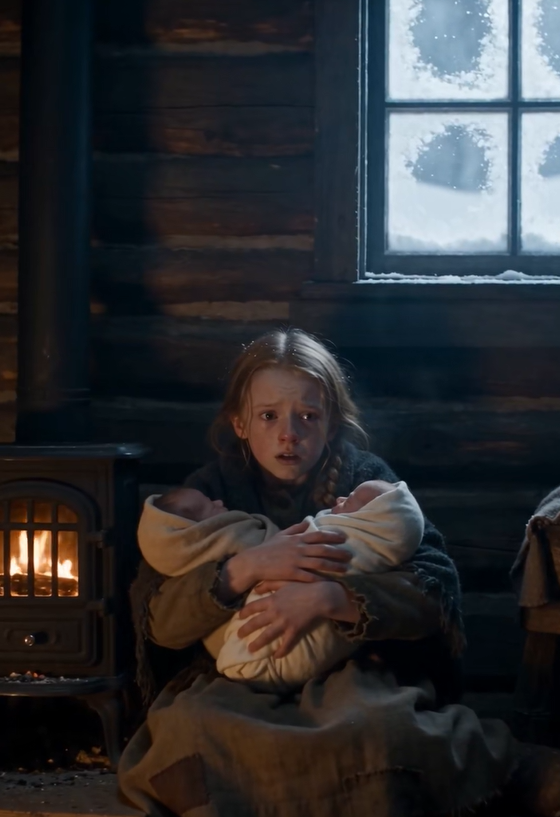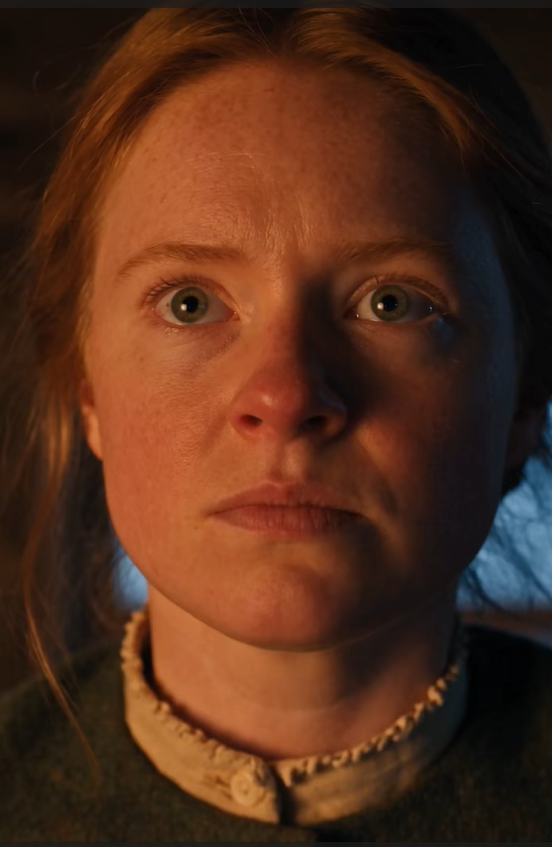
Everyone Thought the Rich Rancher Came for the Beautiful Sister. Then He Chose the Woman Her Family Had Spent Twenty-Six Years Trying to Erase.
“I don’t want Eliza. I want Lena.”
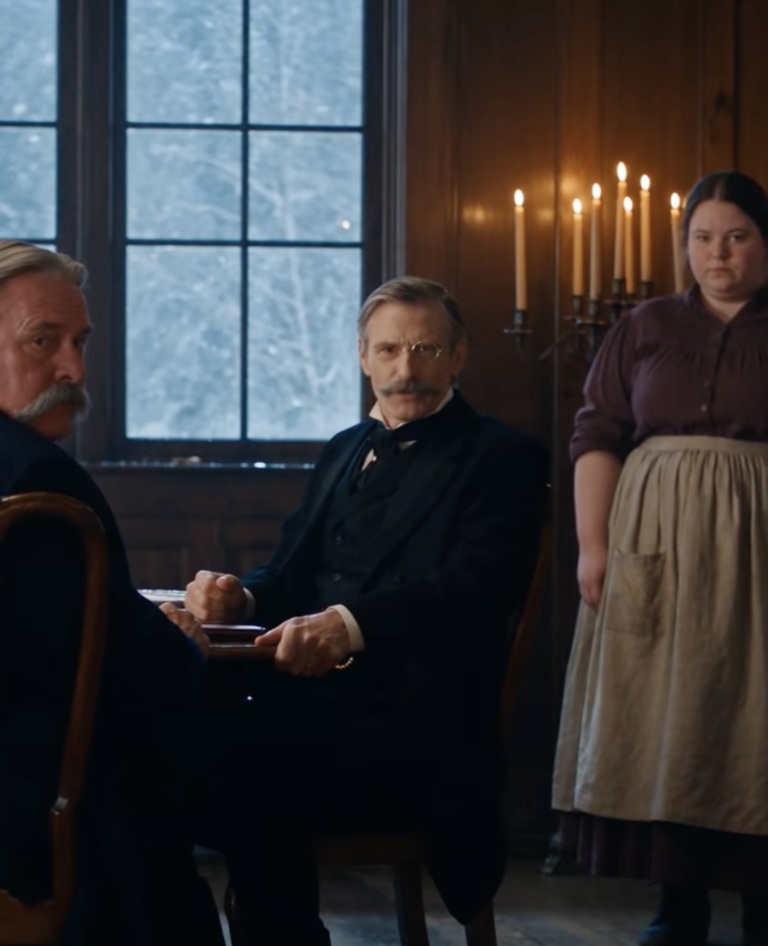
For several seconds, nobody in the Hail family parlor seemed to remember how to breathe.
The fire cracked inside the stone hearth.
A porcelain spoon slipped from Beatrice Hail’s fingers and struck the saucer with a sharp little clink.
Harold Hail stared at Dawson Reed as if the rancher had drawn a pistol instead of speaking six perfectly ordinary words.
And Eliza—
beautiful, golden-haired Eliza, sitting straight-backed upon the velvet settee in the finest blue gown she owned—
simply froze.
She had been prepared for this moment for three weeks.
Everyone had.
Dawson Reed had recently begun making unusually frequent visits to the Hail ranch. He was thirty-two, unmarried, handsome in the hard, weathered way of a man who had spent more years beneath open sky than beneath chandeliers, and he was believed to own more cattle and land than any rancher within a hundred miles.
Naturally, everyone knew why he was coming.
For Eliza.
Who else?
Harold had ordered the parlor curtains washed.
Beatrice had polished the silver.
Eliza had spent almost an hour arranging her honey-colored hair beneath a delicate ivory comb.
And Lena had been sent to the kitchen.
Where, according to her father, she would be “more useful.”
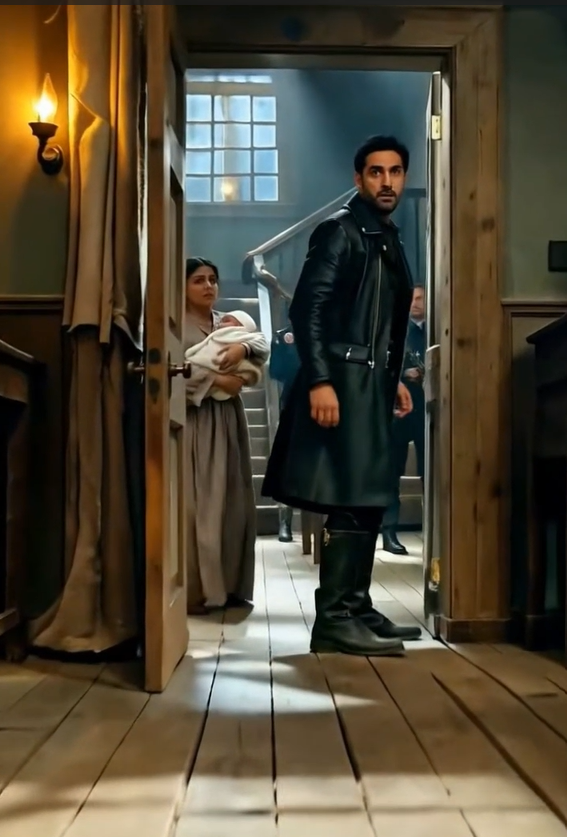
Now every face in the parlor slowly turned toward the kitchen doorway.
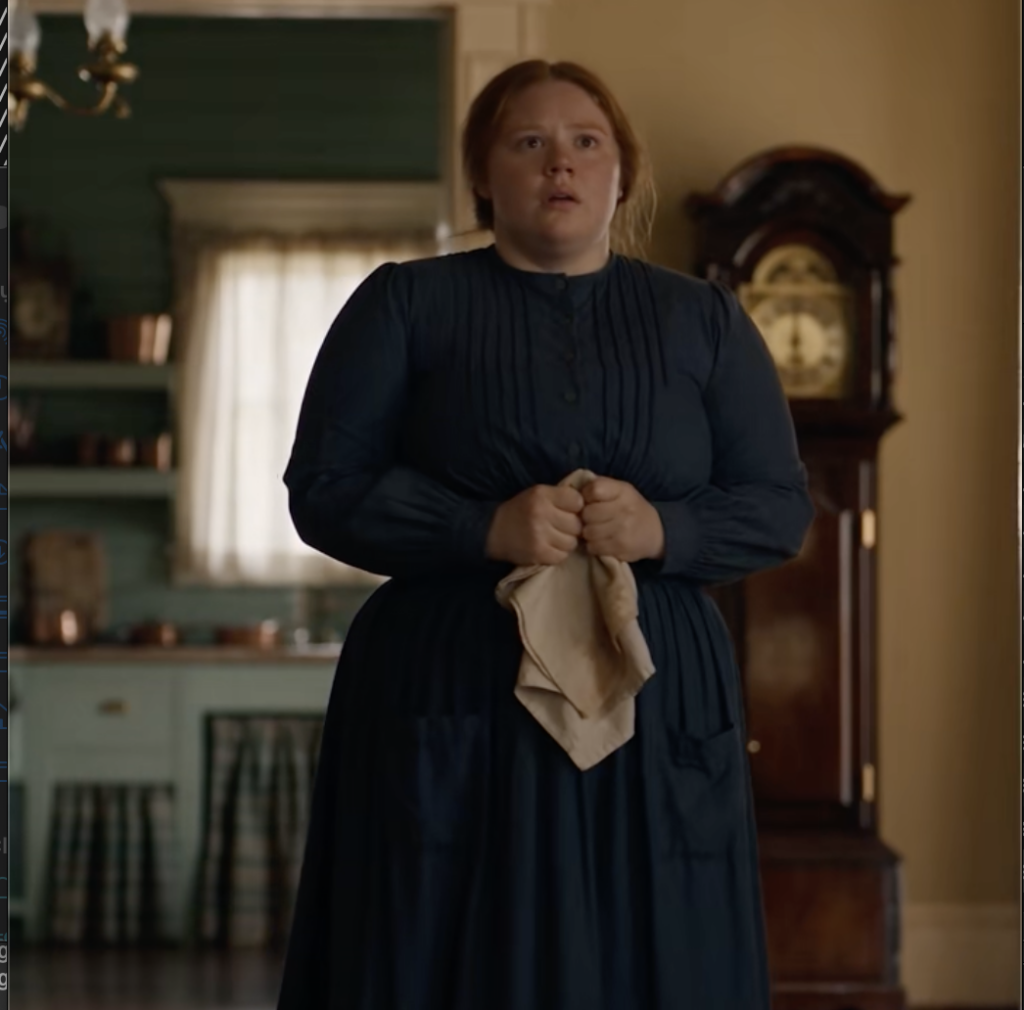
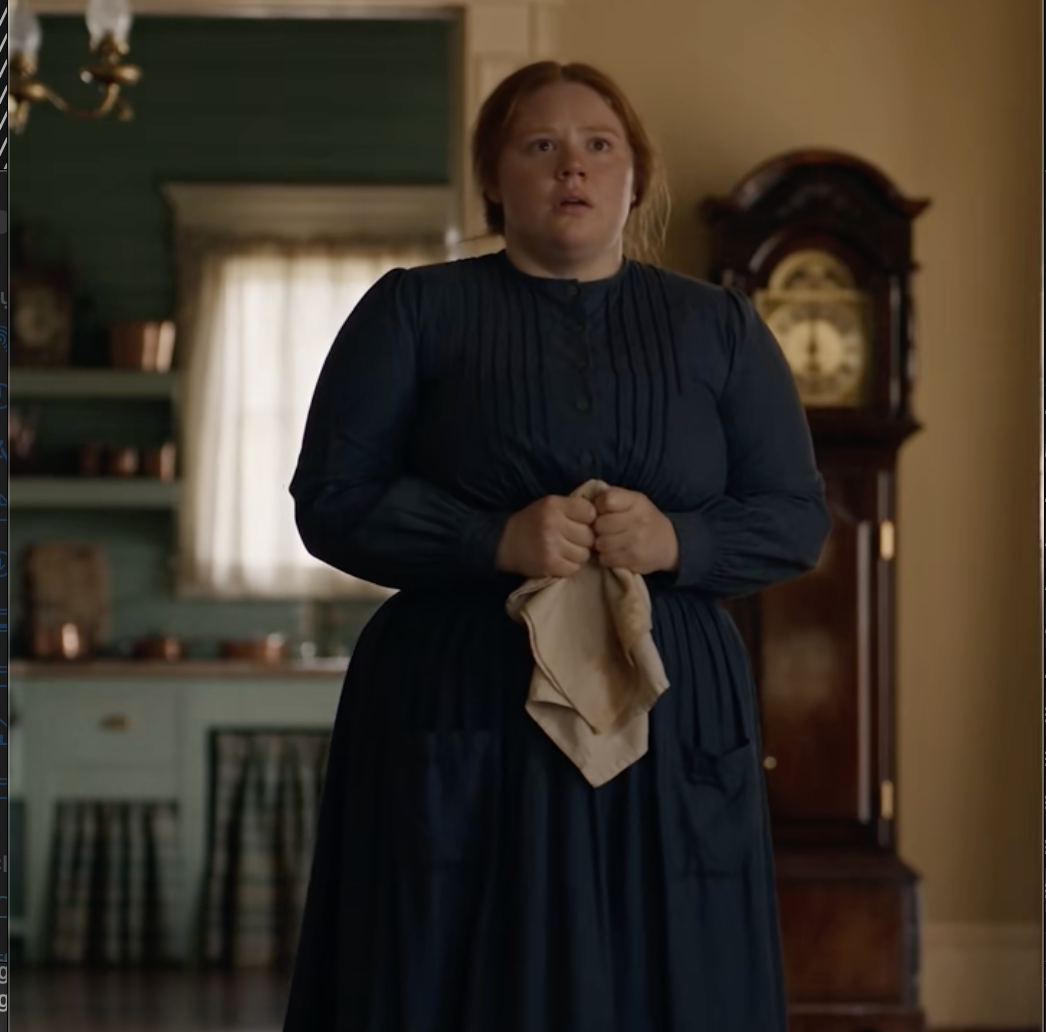
Lena Hail stood there holding a dish towel.
At twenty-six years old, she was nearly three hundred kilograms, broad through the shoulders and hips, with thick dark-brown hair usually twisted into a practical knot at the back of her neck. Her cheeks were flushed from the kitchen stove, and a dusting of flour remained across one sleeve of her plain gray dress.
She looked nothing like Eliza.
Eliza resembled the painted women in store advertisements.
Lena looked like a woman who could carry a sack of grain beneath each arm and still remember precisely how much the merchant had overcharged for them.
Her eyes—large, dark, and intelligent—moved from Dawson to her father.
Then back again.
“Excuse me?”
Her voice was barely more than a whisper.
Harold laughed.
It was a nervous, brittle sound.
“Reed, surely you misspoke.”
Dawson did not look at him.
His eyes remained on Lena.
“No.”
Harold swallowed.
“You said Lena.”
“Yes.”
“The older one?”
For the first time, something dangerous moved across Dawson’s expression.
“I know exactly who she is.”
Eliza’s face turned scarlet.
Harold stood.
“But surely Eliza would be the more suitable—”
“Suitable for what?”
The question silenced him.
Dawson Reed was not an enormous man, but he possessed the unnerving stillness of someone accustomed to being obeyed. His dark coat carried a trace of road dust. His black hair was wind-tossed from the ride, and a thin scar crossed his left eyebrow.
He had removed his hat when entering the house.
Now he held it loosely beside his leg.
“Marriage,” Harold finally said.
Dawson’s mouth hardened.
“I didn’t come here asking you which daughter you think I should marry.”