Then I smiled.
“Yes.”
Nathaniel stood so quickly he nearly dropped the ring.
I laughed.
He pulled me against him.
And beneath a Texas sky painted gold and red, I kissed the man who had expected my sister and discovered me instead.
Victoria stayed in Texas.
That surprised me almost as much as anything else.
She purchased a small house in Red Valley and began teaching at the school.
A year later, Samuel Ortiz started finding unnecessary reasons to repair things around her property.
Victoria pretended not to notice.
She was an excellent liar.
Samuel was extremely patient.
They married two years after Nathaniel and I did.
Margaret traveled west to California under her real name.
Occasionally we received letters.
The first ended with:
I spent three years pretending to be dead because I was afraid of what truth might destroy.
Tell your children someday that truth usually destroys less than lies do.
I kept every letter.
But the final surprise arrived fifteen years later.
Nathaniel and I had three children by then.
Mercy Spring still ran clear through the northern pasture.
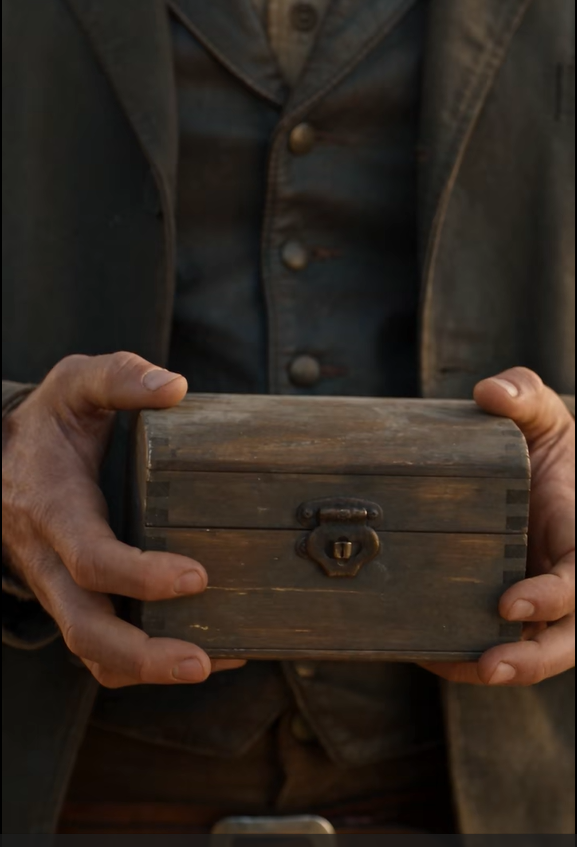
One afternoon, a lawyer from Missouri arrived carrying a locked box recovered during the demolition of my father’s old house.
Inside were financial records.
A photograph.
And another letter.
Victoria stood beside me while I opened it.
The letter was written by my father.
But it had never been sent.
It was addressed to Margaret.
The date was only a month before my journey to Texas.
You think sending Clara to Walker will defeat me.
I stopped.
Victoria stared.
Nathaniel leaned over my shoulder.
The letter continued.
You still do not understand.
I know she is Eleanor’s heir.
I know what you purchased in her name.
My hands began shaking.
Father had known.
He had known everything.
Which meant—
“He didn’t send you because Victoria refused,” Nathaniel whispered.
I read the final lines.
Let Clara go to Texas.
Let her find the deed.
Once she marries Walker, they will believe they have won.
Then tell her the truth about who paid for Mercy Spring.
Beneath the letter lay an old bank receipt.
Margaret had always believed my mother’s hidden inheritance had purchased Mercy Spring.
She was wrong.
The money had come from an anonymous account.
The signature authorization belonged to—
Franklin Whitmore.
My father.
For several minutes, nobody spoke.
Then Victoria sat down.
“Why?”
I kept searching the box.
At the bottom was one final page.
A confession.
Father had written it during an illness years earlier and apparently hidden it instead of destroying it.
The answer changed everything I believed about him.
He had not hated me because I was plain.
He had not resented me because Mother loved me.
He had resented me because
I was the only person he had ever tried to protect—and doing so reminded him that somewhere inside himself, a decent man had once existed.
Before gambling destroyed him, before greed consumed him, Franklin had secretly placed money beyond his own reach.
He bought Mercy Spring through Margaret so that one daughter would always possess something he could not steal.
Me.
Years later, drowning in debt and bitterness, he tried to steal it back.
He became exactly the man he had once protected me from.
His final confession ended with one sentence.
If Clara ever learns what I became, do not ask her to forgive me.
I lowered the paper.
Nathaniel said nothing.
He simply stood beside me.