Later, after everyone went inside, I stayed on the dock.
Ethan joined me.
For a while, neither of us spoke.
Then he said, “Can I ask you something?”
“Always.”
“Why didn’t you leave Dad thirteen years ago?”
I had asked myself that question a thousand times.
At first, because I was afraid.
Then because I needed evidence.
Then because Dad died.
Then because the companies became tangled.
Then because leaving immediately would have allowed Victor to destroy records, move money and blame everyone else.
But those were only practical answers.
The true answer was harder.
“I kept thinking I could wait until the perfect moment.”
Ethan looked at me.
“There isn’t one, is there?”
“No.”
I smiled sadly.
“There are only moments when staying costs more than leaving.”
“Do you regret it?”
I thought about thirteen years.
Birthdays.
Arguments.
Christmas mornings.
Victor’s lies.
My own silence.
Daniel.
Melissa.
Noah.
Then I looked toward the house.
Through the windows, I could see Noah laughing while Eleanor swatted him with a dish towel.
Life is strange.
It does not balance itself cleanly.
Pain does not automatically create wisdom.
Justice does not restore lost years.
And revenge, when you finally reach it, is often far less satisfying than people imagine.
“I regret the years I spent believing endurance was the same thing as strength,” I said.
Ethan nodded.
Then he asked, “What is strength?”
I looked across the dark water.
My father’s voice returned to me.
Character doesn’t need a chance.
It needs an opportunity.
I finally understood what he meant.
“Strength is knowing what something costs you,” I said, “and refusing to keep paying just because you’ve already paid so much.”
Ethan leaned against me.
I rested my head against his shoulder.
The boy I had once carried was taller than me now.
Behind us stood the house Victor had generously decided to “leave” me.
He never understood that the lake house had belonged to the Harcourt trust from the beginning.
He could not have transferred it even if he tried.
That was one final detail I had never bothered telling him.
Some truths no longer need an audience.
Three months later, while clearing an old desk, I found a sealed envelope in one of my father’s folders.
My name was written across the front.
HELEN.
I opened it.
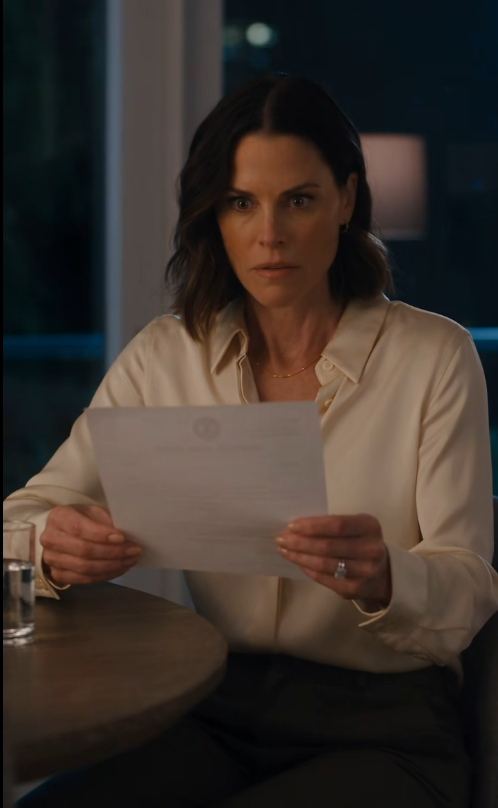
Inside was one sheet of paper.
Dad’s handwriting.
If you’re reading this, then something became difficult.
That sounded like him.
Never dramatic when drama would do.
I kept reading.
You will be tempted to measure victory by what you keep.
Don’t.
Measure it by what no longer owns you.
I sat alone at the desk for a long time.
Then I carried the letter outside.
The sun was setting over the lake.
Gold across the water.
Wind in the trees.
Voices drifting from the house.
I thought of Victor in that hospital bed, signing property after property while watching my face.
He believed wealth was the final measurement of love.
He believed giving something to one person meant taking it from another.
He believed silence meant defeat.
He believed patience meant weakness.
And most tragically, he believed a family was something you could divide on paper.
He was wrong about all of it.
Victor had spent thirteen years hiding money, hiding a woman, hiding a child and hiding what he’d done to his brother.
In the end, he lost the one thing he had spent his entire life trying to control.