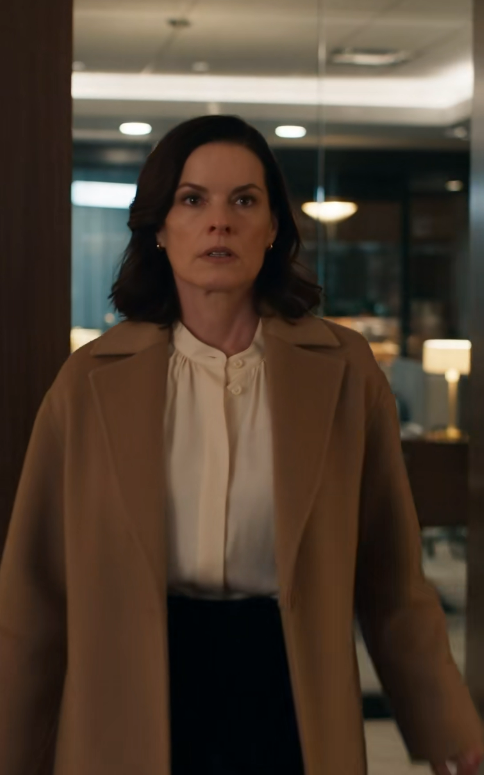
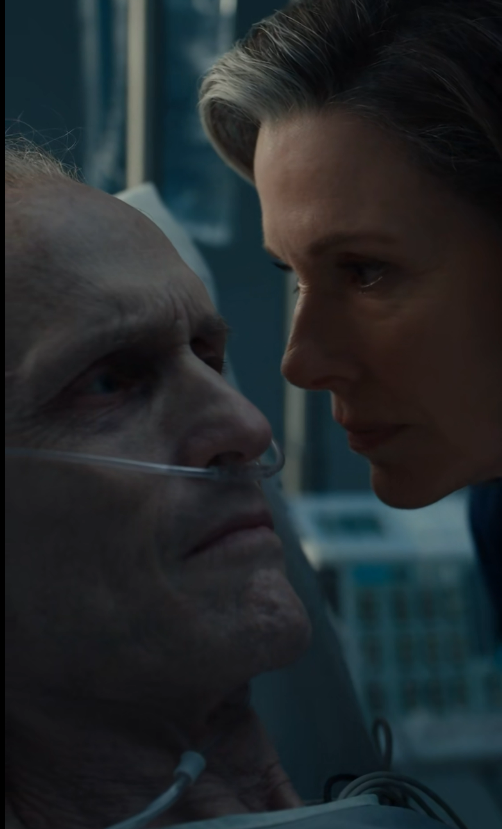
A floorboard creaked behind them.
Seven-year-old Reeve stood in the doorway.
His face was white.
Something trembled between his hands.
A silver locket.
“Papa,” he whispered.
Harlan went completely still.
“Where did you get that?”
“Thomas said not to touch Mama’s box, but Rue knocked it down and—”
“Give it to me.”
Reeve flinched.
Nora stepped forward instinctively.
“Don’t frighten him.”
Harlan lowered his voice.
“Reeve. Please.”
But the boy was staring at Nora now.
Not at Harlan.
At Nora.
His hand opened.
The silver locket lay across his palm.
Nora stopped breathing.
She knew it.
Not the locket itself.
The face inside it.
A tiny faded portrait showed a little girl of perhaps three years old sitting on a woman’s lap.
The child wore a white dress.
Her dark hair curled above one eyebrow.
Around her neck was a ribbon with a little wooden horse.
Nora’s fingers flew to her throat.
She had not seen the ribbon in twenty-three years.
But she remembered the horse.
Remembered chewing its wooden ear when she was frightened.
Remembered a woman humming near a fire.
“Where…” Nora whispered. “Where did you get that?”
Harlan closed his eyes.
Nora snatched the locket from Reeve.
On the back, nearly worn away, someone had engraved two words.
Nora Callaway.
She looked at Harlan.
Every bit of warmth vanished from her voice.
“Start talking.”
Harlan sent the children upstairs.
Thomas refused.
“I stay.”
His father stared at him for a long moment.
Then nodded.
Nora remained standing.
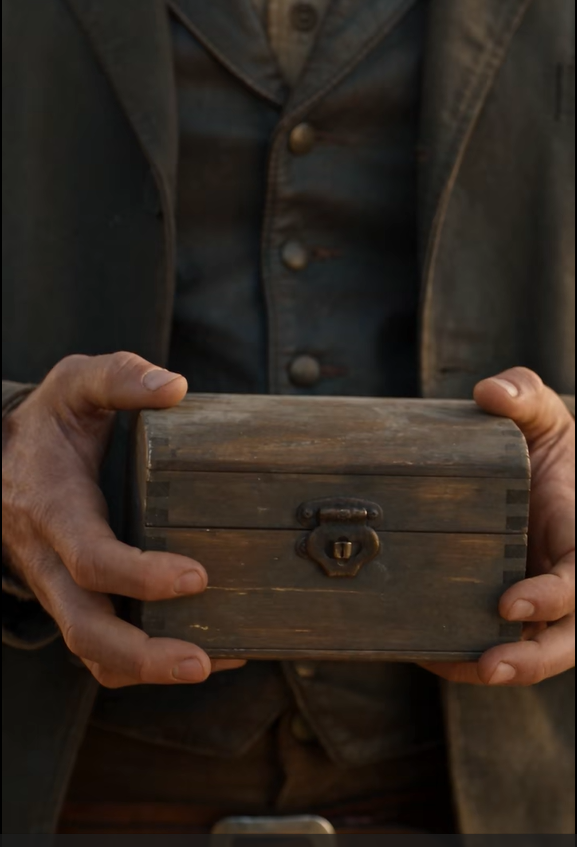
Harlan opened a cupboard and removed a scorched wooden box.
“My wife found this two years before she died.”
Nora’s heart pounded.
“Your wife?”
“Her name was Nell.”
Nora had seen the name on the marriage papers.
Nell Greer.
Deceased.
Harlan placed the box on the table.
“She found it beneath the pantry floor when we replaced rotten boards.”
Inside were brittle papers, two photographs, a child’s ribbon, and a family Bible with a burned leather cover.
Nora touched nothing.
Harlan opened the Bible.
On the family page, four names remained legible.
Samuel Callaway.
Margaret Callaway.
Eleanor Callaway — born April 3, 1841.
And below it—
Nora Callaway — born November 16, 1858.
Nora stared until the letters blurred.
“No.”
Harlan said nothing.
“My mother died when I was three.”
Thomas looked down.
Nora’s voice rose.
“My father died in the same fire. My aunt Beatrice raised me. There was no Eleanor.”
Harlan pushed a photograph across the table.
A young woman stood beside a tree.
Dark hair.
Serious eyes.
A familiar tilt to her mouth.
Nora’s knees weakened.
She knew that face.
Because she saw echoes of it in her mirror every morning.
Harlan spoke quietly.
“My wife was raised as Eleanor Mercer.”
Nora looked at him.
“She believed the Mercers were her parents until she was thirty-three.”
Thomas whispered the words his father could not.
“Her real name was Eleanor Callaway.”
The room seemed to tilt.
Nora gripped the table.
Harlan’s dead wife.
The mother of these boys.
Had been her sister.
“No.”
“I know.”
“No.”
“Nora—”
“Don’t say my name.”
She backed away.
“You knew?”
Harlan’s silence told her enough.
“You knew who I was?”
“Not at first.”