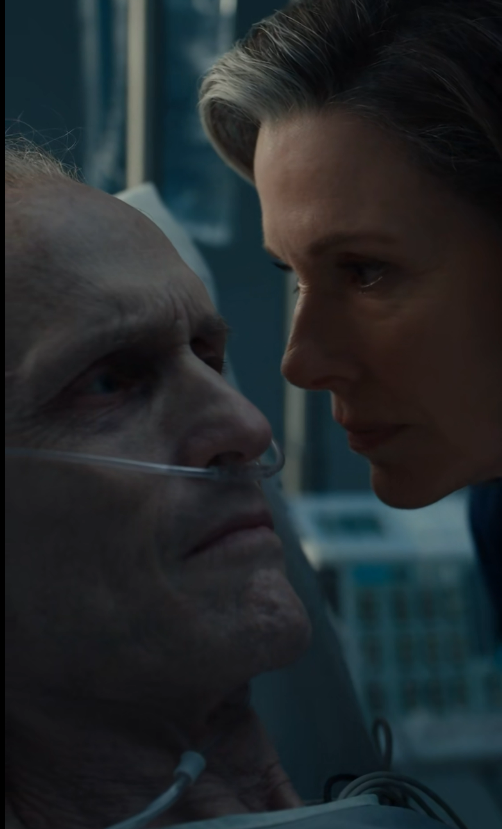
“Planning to live in my home.”
“I know.”
Her voice broke.
“I was awful to you.”
I said nothing.
“But Natalie, I swear to you, I didn’t know about the money.”
“Why should I believe you?”
“Because I have something he doesn’t know I kept.”
Twenty minutes later, she arrived at my office.
No designer clothes.
No perfect makeup.
She looked exhausted.
She placed her phone on the desk.
Messages.
Hundreds.
Eric telling her the divorce had been planned for years.
Eric claiming Brooks Design Studio was partly his.
Eric promising her startup capital.
Then she showed me one message that made my skin crawl.
It had been sent seven months earlier.
Once Natalie signs the revised company documents, we’re free.
“What revised documents?”
“I don’t know,” Marissa said.
I did.
Three months earlier, Eric had encouraged me to restructure Brooks Design Studio for “tax efficiency.”
He had even recommended an attorney.
I hadn’t done it.
I’d been too busy.
My procrastination may have saved my company.
Marissa swiped to another message.
This one was stranger.
Her father almost ruined everything. At least that problem solved itself.
I stopped breathing.
“When was that sent?”
She showed me the date.
Three days after Dad died.
I looked at Catherine.
Nobody spoke.
Finally, Marissa whispered, “Natalie… did your father really have a heart attack?”
Dad had.
The medical records confirmed it.
Natural cardiac arrest.
No evidence of foul play.
But Eric’s message transformed something else.
He had known Dad was investigating him.
Which meant Dad’s death had removed an obstacle.
Not caused by Eric.
But welcomed by him.
Somehow that felt almost as ugly.
Then the forensic report on Archive 07 arrived.
The drive contained deleted files.
Lots of them.
Samuel recovered spreadsheets, emails, scanned contracts, and encrypted archives.
At the center was a document titled:
PROJECT HOUSEKEEPING
It described Brooks Design Studio as a “vehicle.”
My company.
My employees.
My reputation.
A vehicle.
Money had been moved through inflated vendor payments, phantom consultants, and duplicate reimbursements.
But the money wasn’t simply being stolen.
It was being collected.
Consolidated.
Prepared for something.
Samuel traced the final destination.
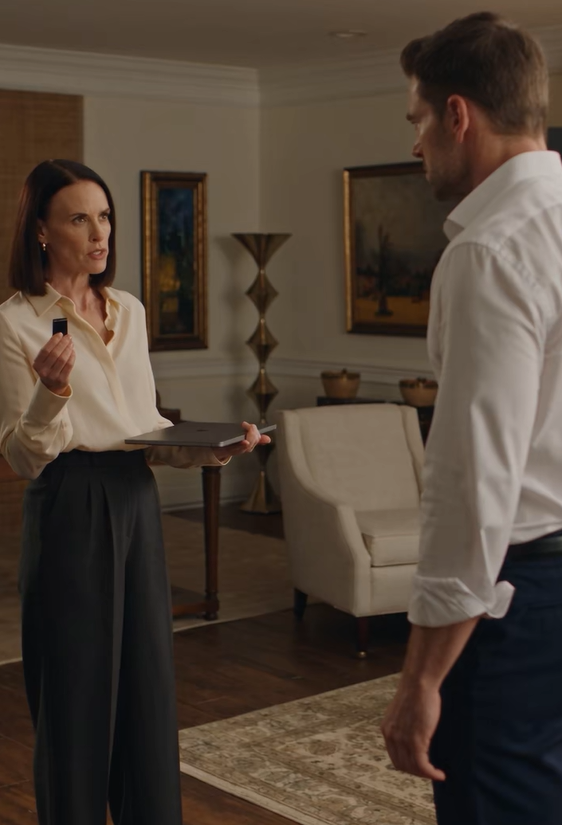
A private investment account containing nearly $1.8 million.
“Whose account?” I asked.
He looked troubled.
“That’s the problem.”
“What?”
“It isn’t Eric’s.”
“Marissa?”
“No.”
“Then whose?”
Samuel turned the screen toward me.
My own name appeared.
Natalie Brooks.
I stared.
“I’ve never seen this account.”
“I know.”
“How can it be mine?”
“It was opened using your Social Security number, copies of your identification, and your electronic signature.”
My skin went cold.
Eric hadn’t merely stolen from me.
He had built the theft in my name.
If investigators discovered it without context, it would appear that I had embezzled money from my own company and concealed it offshore through layered accounts.
Catherine understood immediately.
“He wasn’t planning to leave Natalie with nothing.”
Samuel nodded.
“He was planning to leave her with the crime.”
Eric was arrested four days later.
Fraud.
Identity theft.
Unauthorized access to business systems.