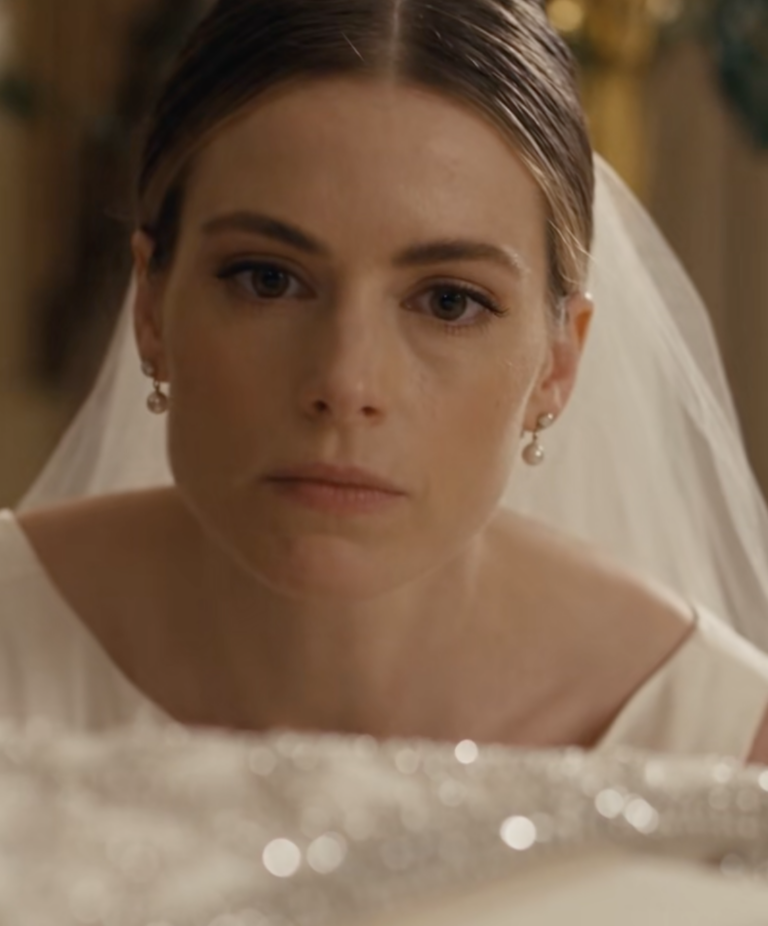
“She talks about you constantly.”
“As a problem.”
“No.”
“As someone she has to fix.”
Lila looked away.
I leaned against the railing.
For a while, neither of us spoke.
Then she whispered,
“She fixes me too.”
That surprised me.
Lila rubbed her arms.
“She told me nobody would care about me if I stopped being interesting.”
I looked at her.
“She said what?”
“When my numbers started dropping.”
Her voice cracked.
“She said I was wasting everything she built for me. She said people only notice women like us when we give them something beautiful to look at.”
I suddenly saw my sister differently.
Not innocently.
Not forgiven.
But clearly.
We had been raised in the same house and taught opposite versions of the same lesson.
I had been taught:
Be obedient enough to deserve love.
Lila had been taught:
Be impressive enough to deserve love.
Neither of us had been taught that love wasn’t supposed to require earning.
“You still chose to hurt me,” I said.
She nodded.
Tears slid down her cheeks.
“I know.”
No excuse.
No denial.
Just those two words.
It was the first honest thing she’d said all day.
“I don’t know if I can forgive you.”
“I know.”
“I may never trust you the way I did.”
She looked down.
“I know.”
I waited.
She whispered,
“I’m sorry.”
Not I’m sorry you were upset.
Not I’m sorry it got out of control.
Not I’m sorry but Mom—
Just:
“I’m sorry.”
I left her on the balcony.
Forgiveness, I had learned, was not another decision that had to be made on somebody else’s schedule.
Three weeks later, Celestine Bridal terminated its agreement with Whitmore Events and issued a public statement saying the contract had been submitted with unauthorized signatures.
My mother returned the remaining money.
She sold her second house to repay the rest.
Her company survived, barely.
Lila lost several sponsors.
Ryan did not come back.
And my mother didn’t speak to me for seventy-four days.
I counted.
Not because I wanted to.
Because some habits take longer to disappear than others.
On day seventy-five, an envelope arrived.
No return address.
Inside was a single photograph.
Me.
At the altar.
Standing in my ivory satin gown after the glittering shell had fallen away.
My head was tilted back.
I was laughing.
I hadn’t known anyone took that picture.
Behind it, in my mother’s handwriting, were nine words.
I finally understand why this dress looks like you.
Nothing else.
No apology.
Not yet.
But I kept the photograph.
Six months later, Daniel and I moved into a small house twenty minutes outside the city.
Mrs. Bellamy framed one of my original gown sketches for our hallway.