“I had noticed.”
Abigail lowered her voice.
“A man entering a widow’s establishment after midnight invites interpretations.”
“And apparently most of them eat breakfast with you.”
Abigail’s nostrils flared.
“This town protected your reputation after Elias died.”
Maribel laughed once.
It contained no humor.
“Protected it?”
“We have been charitable.”
“My husband and newborn son died within two weeks of one another. People brought me casseroles for six days, then began asking whether I planned to sell the bakery.”
Abigail stiffened.
“That is unfair.”
“So is starving a three-week-old infant because you’re afraid someone might invent a story.”
Abigail’s expression changed.
“What infant?”
Maribel looked directly at her.
“Grace Pierce.”
The silence that followed was delicious.
Abigail blinked.
“Nolan’s baby?”
“Yes.”
“What was she doing here?”
“Dying.”
Abigail went pale.
Maribel wiped flour from her hands.
“His cow died. The goat’s milk had spoiled. Grace couldn’t keep anything down. He rode to three houses seeking help.”
Abigail’s gaze shifted.
Mrs. Palmer.
Mrs. Doyle.
Perhaps Abigail herself had heard the knocking.
“He came to me,” Maribel continued. “I fed her.”
Abigail stared.
Understanding arrived slowly.
Then violently.
Her mouth opened.
“Oh.”
“Yes.”
“Oh, Maribel.”
“Say whatever sentence is forming in your head, Abigail.”
“But you—”
“Still produce milk?”
Abigail flushed crimson.
Maribel’s voice remained steady.
“I buried my son six weeks ago. My body did not bury him with me.”
The older woman looked stricken.
For once, Widow Creek’s unofficial judge had nothing to say.
Maribel returned to the dough.
Before leaving, Abigail bought three loaves.
The gossip became worse by afternoon.
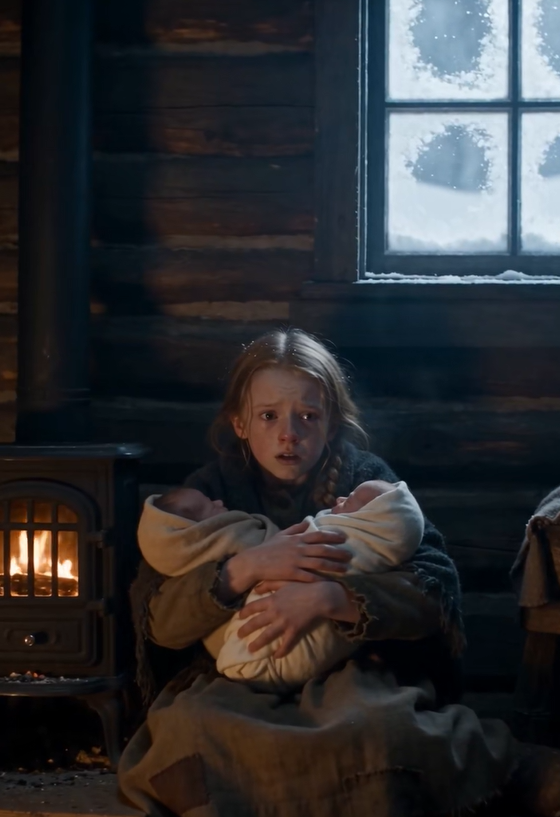
For twelve days, Nolan brought Grace to Honey Lantern.
Sometimes before sunrise.
Sometimes after closing.
Sometimes in the middle of the afternoon, when Maribel locked the front door and ignored scandalized faces peering through the glass.
Grace slowly strengthened.
Color returned to her cheeks.
Her cries became louder.
Her grip tightened.
She began studying Maribel’s face with enormous blue-gray eyes.
The first time Grace smiled, Nolan was holding her beside the oven.
Maribel had just dusted flour from her apron and leaned toward the baby.
“Well, look who finally decided the world might be tolerable.”
Grace’s mouth opened in a soft, gummy grin.
Nolan froze.
“What?”
“She smiled.”
“No.”
“She did.”
“Grace.”
The baby stared at him.
Nothing.
Nolan frowned.
Maribel laughed.
And Grace smiled again.
Nolan looked offended.
“She never does that for me.”
“You have a frightening face.”
“So I’ve been told.”
Grace made a bubbling sound.
Maribel laughed harder.
Nolan stared at her then.
Not at the baby.
At Maribel.
She noticed.
And stopped laughing.
For one suspended moment, grief loosened its grip on both of them.
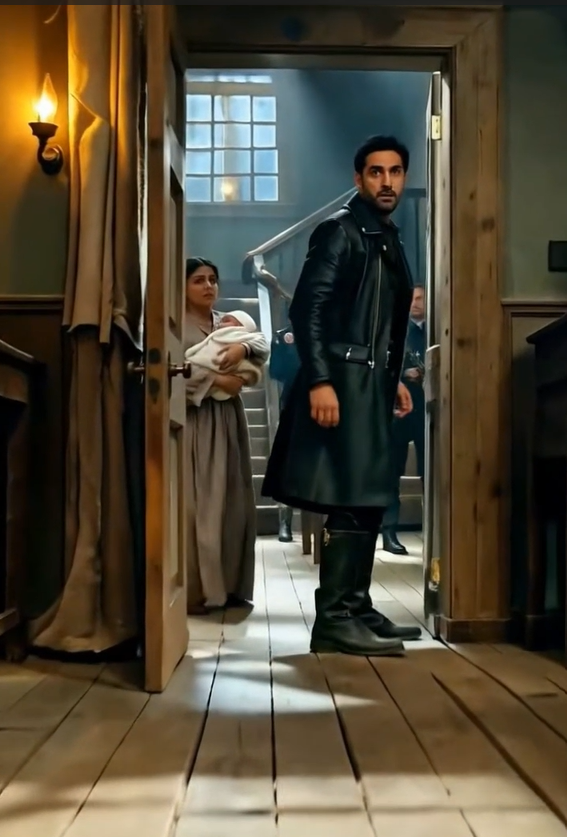
Then someone hammered on the bakery door.
Dr. Horace Venn stood outside.
Maribel’s warmth vanished.
The doctor had attended Matthew’s birth.
He had also attended Matthew’s death.
And Grace’s mother’s.
Maribel unlocked the door.
Dr. Venn entered, removing his hat.
He was a narrow man in his fifties with pale whiskers and a permanent smell of medicinal alcohol.
“Mrs. Quinn.”
“Doctor.”
His eyes moved to Nolan.
Then Grace.
“I hear the child has improved.”
Nolan’s shoulders stiffened.