The moment I clicked the next file, my mother stopped looking angry.
She looked hunted.
The ballroom screen changed from the forged signature page to a corporate transfer agreement stamped with the crest of Monroe Heritage Trust.
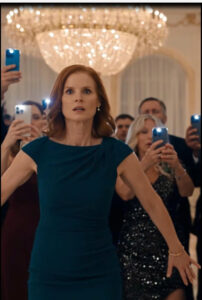
Nearly three hundred people stared upward beneath the crystal chandeliers of Charleston’s Wentworth Grand Hotel.
At the bottom of the document was my name.
ISABELLA ROSE MONROE.
Next to it was a date from six months earlier.
And beneath that, in language dry enough to hide a knife, was a sentence transferring my beneficial interest in the trust to a company called V.M. Heritage Holdings, LLC.
My mother’s face became so pale that even beneath the warm chandelier light, she looked almost gray.
I lifted the microphone.
“I’ve never heard of V.M. Heritage Holdings.”
A murmur moved through the ballroom.
My mother stepped forward.
“That’s enough.”
Her voice was low now.
Not commanding.
Afraid.
Daniel remained between us, one hand resting lightly against my back.
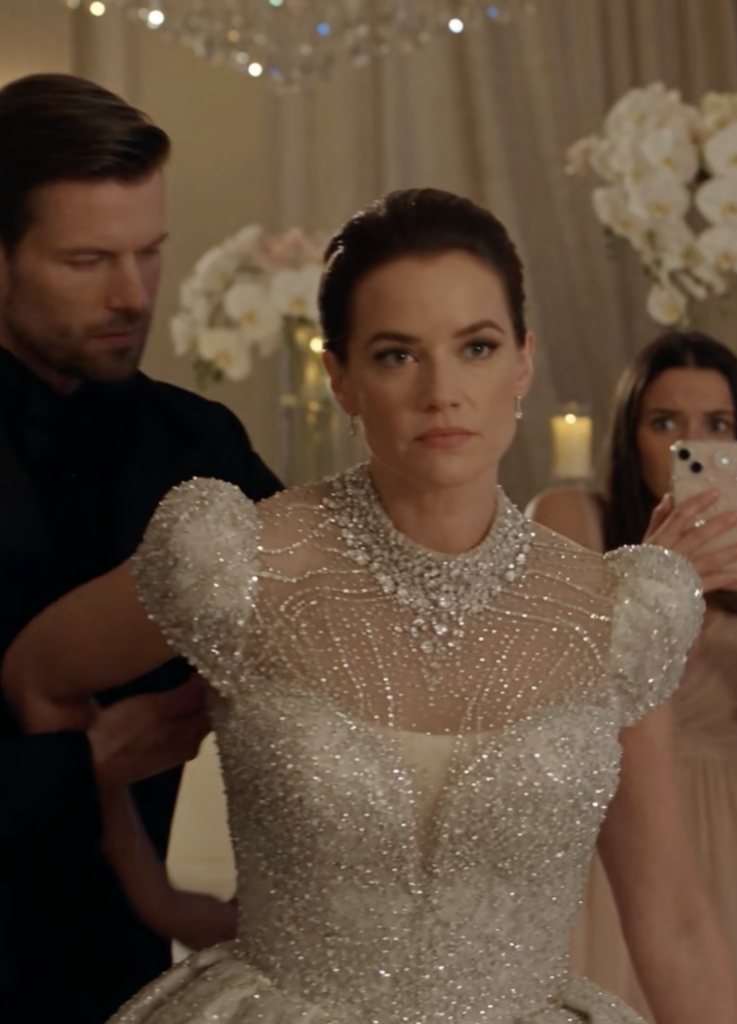
I looked down at the enormous crystal-covered outer skirt lying around my feet like the carcass of some ridiculous jeweled animal.
Inside its lining, Alessandra’s assistant had discovered the documents only hours earlier.
A hidden pocket.
A forged signature.
And the first thread of something far larger than a ruined wedding dress.
My grandmother’s attorney, Marcus Hale, walked slowly toward us from the ballroom doors.
He was seventy, silver-haired, narrow-faced, and famous in Charleston for making men with private jets nervous without ever raising his voice.
He carried a weathered blue leather folder.
My mother stared at it.
Then at him.
“Marcus,” she whispered.
He stopped beside the front row.
“Victoria.”
That was all he said.
But something passed between them.
Recognition.
History.
Fear.
My younger sister Lila stood ten feet away, gripping her phone so tightly her knuckles had gone white.
I looked at her.
She wouldn’t meet my eyes.
“Mom,” I said, “tell everyone what that company is.”
Victoria straightened.
It was almost impressive how quickly she rebuilt herself.
Her shoulders pulled back.
Her chin rose.
For thirty-one years I had watched her perform this transformation.
Whenever a restaurant misplaced her reservation.
Whenever a contractor questioned her.
Whenever my father disagreed with her.
Whenever I cried.
Victoria Monroe did not lose control.
She simply replaced reality with one she preferred.
“This is absurd,” she said. “You’ve completely misunderstood private estate documents.”
“Then explain them.”
“Not here.”
“Why?”
“Because this is your wedding.”
I almost laughed.
Five minutes earlier she had been perfectly comfortable using my wedding to control what I wore.
Now privacy mattered.
I glanced toward the guests.
Bankers.
Attorneys.
Architects.
Politicians.
Old Charleston families whose names appeared on libraries and hospital wings.
Victoria had spent forty years constructing her reputation among people like these.
She had selected the guest list almost as carefully as she had selected my unwanted dress.
That was why I had decided not to expose her in private.
She had always relied on appearances.
So I gave her an audience.
I turned back to the screen.
“According to this agreement, I transferred my entire interest in Grandmother Eleanor’s trust six months ago.”
Victoria said nothing.
“The problem is that six months ago, I was in Copenhagen for three weeks working on the Harcourt Museum project.”
A photograph appeared on the screen.
Me standing beside the museum’s renovation team.
Date-stamped.
Then another.
My passport entry record.
Then hotel invoices.
Then flight records.
Marcus had obtained them after Daniel sent him the documents that morning.