Sarah did not look proud of it.
“It made you leave home. It made Father stop watching you.”
“You let me hate myself to keep me alive.”
“Yes.”
The truth hurt.
But for once, it did not feel like poison.
It felt like a wound being opened so it could finally heal.
By sunrise, Redstone Flats belonged to its women.
Evelyn’s riders had already alerted federal marshals in Santa Fe.
Sarah had duplicated the records weeks earlier and mailed copies to three newspapers, two judges outside the territory, and a United States attorney.
Sheriff Vale’s attempt to burn the evidence had come too late.
Judge Merritt tried to flee.
Ruth shot his horse out from under him.
When Caleb looked at her afterward, she shrugged.
“I missed.”
They both knew she had not.
By noon, twenty-seven men were under guard.
By evening, forty-three more names had been connected to the operation.
The network spread across four territories.
Bankers.
Rail agents.
Hotel owners.
Deputies.
Judges.
Families who sold daughters and later pretended they had run away.
Priests who accepted donations.
Doctors who falsified death certificates.
Men who lived respectably because the suffering they purchased happened behind locked doors.
Redstone Flats had not looked the other way.
Redstone Flats had been built on the looking away.
Weeks later, Caleb stood outside the burned remains of the opera house.
Ruth joined him.
She wore boots now.
A clean blue dress.
Her hair was braided down her back.
“You leaving?”
“Thinking about it.”
“Where?”
“Anywhere.”
“That your usual solution?”
He glanced at her.
“Usually.”
She smiled faintly.
Sarah had taken temporary charge of documenting every victim.
Annie planned to return to Oregon.
Evelyn was helping rescued women contact surviving families—when they wanted to.
Some did not.
Caleb understood that now.
Blood did not always mean home.
Sometimes home was the place built after blood failed you.
Ruth leaned against the fence.
“They found another ledger.”
Caleb stiffened.
“Where?”
“In your father’s old house.”
Caleb turned slowly.
His childhood home had stood abandoned outside town for years.
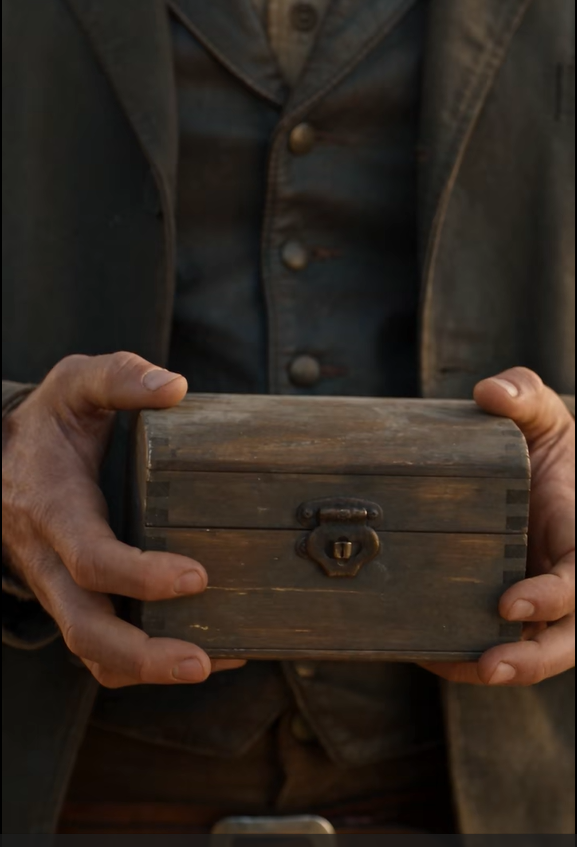
Ruth handed him a small book.
The leather was cracked.
Inside were names and dates written in his father’s hand.
Caleb recognized it instantly.
Near the back, one page had been folded.
He opened it.
Three names.
Sarah Crane — daughter.
Caleb Crane — son.
Then a third.
Caleb’s eyes narrowed.
Ruth Crane — daughter.
He stopped breathing.
Ruth stared at him.
“What?”
Caleb looked from the ledger to her face.
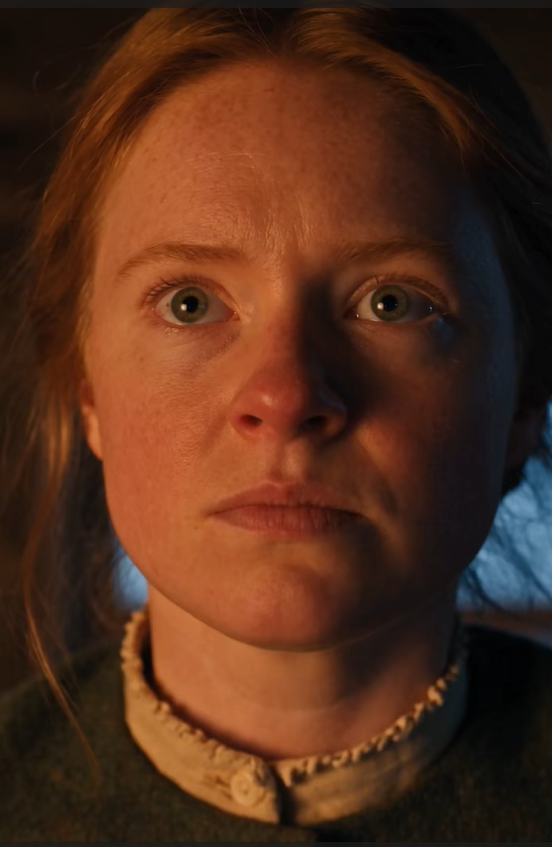
Hazel eyes.
His mother had hazel eyes.
So had Sarah.
So did Ruth.
Ruth shook her head.
“No.”
Caleb turned another page.
There was a note.
Ruth placed with Bell family, 1871. Payment complete.
The desert seemed to go silent again.
Ruth stepped backward.
“No.”
Caleb could barely speak.
“How old are you?”
“Twenty.”
“What month were you born?”
“November.”
He closed his eyes.
Sarah appeared behind them.
She saw the ledger.
Then Ruth.
Her face changed.
“You found it.”
Caleb turned.
“You knew?”
Sarah began to cry.
Ruth whispered, “Knew what?”
Sarah walked toward her.
“Our father had another child.”
Ruth shook her head violently.
“No.”
“With a woman he kept near Santa Fe.”
“No.”
“She died giving birth.”
Ruth stumbled back.
“The Bells bought you.”
Her face twisted.
“No. Martha was my sister.”