“Alive?”
“Yes.”
“For thirty-two years?”
“Yes.”
“And he never came back?”
Nalin did not answer.
Corvin’s voice rose.
“He was alive for thirty-two years and never came back?”
The older warrior dismounted.
He approached slowly.
Nalin translated as he spoke.
“This is Yiska.
My mother’s brother.”
Yiska said several quiet words.
Nalin continued.
“He says your father tried to return.”
“When?”
“Many times.”
Corvin’s anger broke through.
“Then where the hell is he?”
Nalin looked directly at him.
“Three days north.”
Corvin laughed bitterly.
“Three days.”
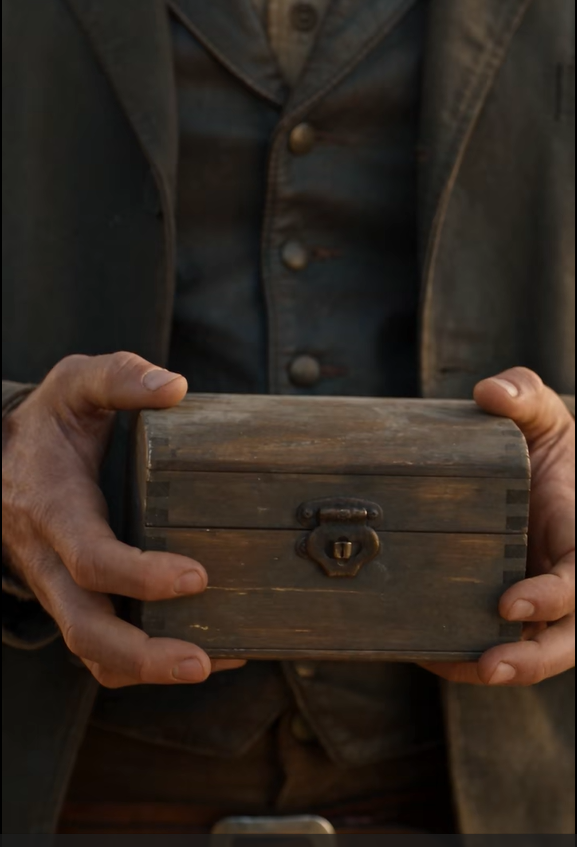
His fingers tightened around the watch.
“Three days away.”
He turned toward his cabin.
For thirty-two years he had lived believing he was the last Torne.
Believing his father had died protecting them.
Believing his mother had become a widow before thirty.
Believing—
His gaze landed on the carved symbol above the porch.
Nalin saw him looking.
“What is that?”
Corvin pointed.
“The mark.
You recognized it.”
Her expression changed.
“That is why we came.”
Corvin faced her.
“I thought you came because of my father.”
“No.”
“What does it mean?”
Nalin looked toward Yiska.
He said something quietly.
She hesitated before translating.
“It means
the man who lives here is marked for death.
”
Corvin went very still.
The warriors did not encircle Corvin’s ranch to threaten him.
They had come to protect him.
That truth proved almost harder to believe.
According to Nalin, the mark above Corvin’s porch had been used twenty years earlier by a clandestine network of raiders, corrupt freight contractors, and renegade scalp hunters who preyed on isolated settlements and Native camps alike.
They marked properties with symbols indicating where stolen goods, ammunition, or records had been hidden.
The circle with three lines meant something specific.
Witness buried.
Evidence remains.
Corvin stared at the carving.
“This has been here since I bought the ranch.”
“When?”
“Twelve years ago.”
“From whom?”
“Bank auction.
Previous owner disappeared.”
Yiska spoke.
Nalin translated.
“He did not disappear.”
Corvin looked at her.
“He was found last winter.”
“Where?”
“Two days south.
Bones in a ravine.”
Corvin felt cold despite the heat.
Nalin pointed toward the porch.
“Yesterday, when I saw that mark, I knew this ranch mattered.”
“You brought three hundred men because of a carving?”
“No.”
Nalin’s gaze hardened.
“I brought three hundred because the men connected to that symbol saw me come here.”
Corvin’s stomach dropped.
“Who?”
“I was not injured by accident.”
She touched the bandage near her temple.
“I was following three riders south.
They carried rifles stamped with an old territorial freight mark.
They realized I had followed them.”
“You think they’re coming here?”
Nalin shook her head.
“They are already here.”
Corvin’s hand went toward his revolver.
The surrounding riders reacted immediately.
Not against him.
Toward the hills.
Yiska shouted.
Men shifted.
Rifles came free.
Corvin saw nothing.
Then—
a glint.
High on the western ridge.
Glass reflecting sunlight.
“Down!”
Nalin slammed into him.
A rifle cracked.
Wood exploded from the porch post where Corvin’s head had been.
Chaos erupted.
Apache riders surged toward the western slope.
Shots echoed.
Horses thundered.
Corvin rolled behind the well.
Nalin crouched beside him with a rifle already in her hands.