
She Came to Marry a Stranger Because Home Was Worse. On Their Wedding Night, the Locked Trunk Revealed Why He Had Been Chosen.
The moment Samuel Hale saw Eleanor look at him,
he knew something was terribly wrong
.
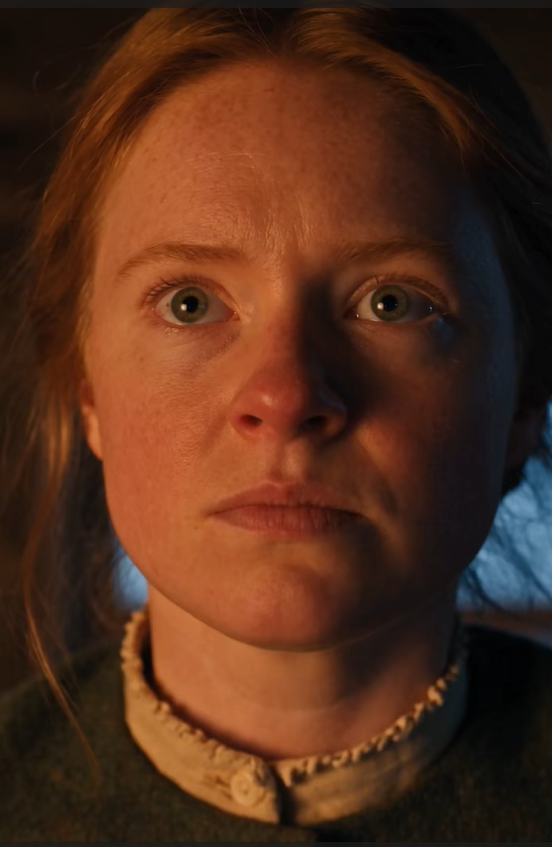
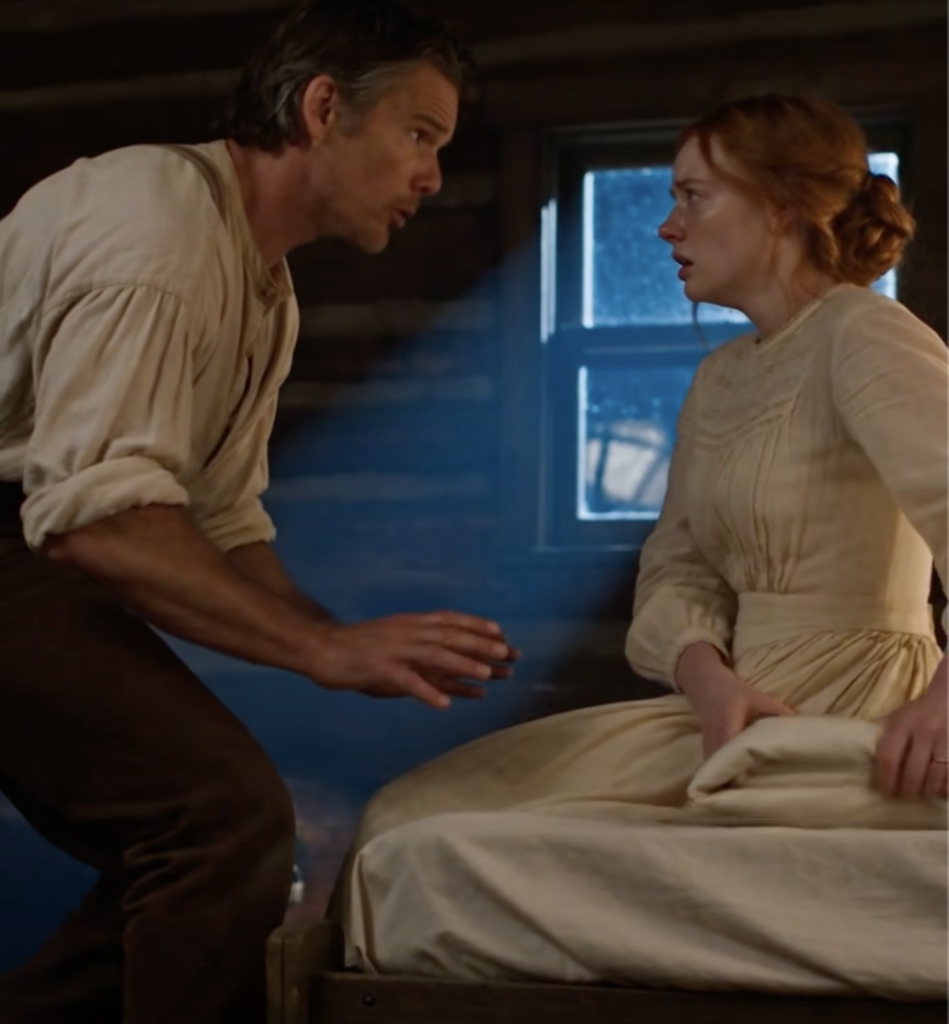
She was not looking at him like a young bride on her wedding night.
She looked like a frightened woman staring at a door, convinced it was about to lock behind her forever.
Her fingers had twisted themselves into the white bedsheet until her knuckles turned pale.
Her breathing was shallow.
Her shoulders were rigid beneath the plain linen nightdress she had changed into after the wedding supper.
And the future Samuel had quietly imagined for nearly three months began crumbling before it had even started.
This was not shyness.
It was not modest embarrassment.
It was terror.
Outside, the Kansas wind whispered through tall summer grass beneath an enormous black sky.
Somewhere near the corral, a horse stamped once against the hard earth.
The little ranch house creaked as warm night air pushed against its rough timber walls.
Abilene, Kansas.
Summer of 1868.
Samuel Hale had lived alone on those eighty acres for almost ten years.
Ten years of eating supper across from an empty chair.
Ten years of mending his own shirts badly, burning biscuits regularly, and waking before dawn with no voice in the house except his own.
He had once believed loneliness was something a man could simply become accustomed to.
He had been wrong.
So the previous winter, after far too many evenings spent watching snow collect against the windows, Samuel had done something he had sworn he would never do.
He placed a matrimonial advertisement in the
Kansas Weekly Herald
.
Rancher, thirty-eight.
Widowed.
Respectable.
Own land and livestock.
Seeking sensible woman willing to share honest work and quiet life.
Marriage intended.
There had been no poetry in it.
No promises of romance.
Samuel had learned long ago that promises could become graves if a man made too many.
Then Eleanor Whitfield wrote back.
Her first letter had been careful.
Her second had been warmer.
By the fifth, Samuel found himself carrying her pages in his shirt pocket while repairing fences.
She wrote about books she had read, bread she wanted to learn to bake, the sound of summer rain on rooftops, and how she dreamed of living somewhere with enough sky that a person could breathe.
Samuel had never seen her face until she stepped from the stagecoach in Abilene.
She was smaller than he had imagined.
Twenty-one years old, with dark auburn hair pinned neatly beneath a traveling bonnet and gray-blue eyes that seemed too watchful for someone so young.
She carried one modest carpetbag.
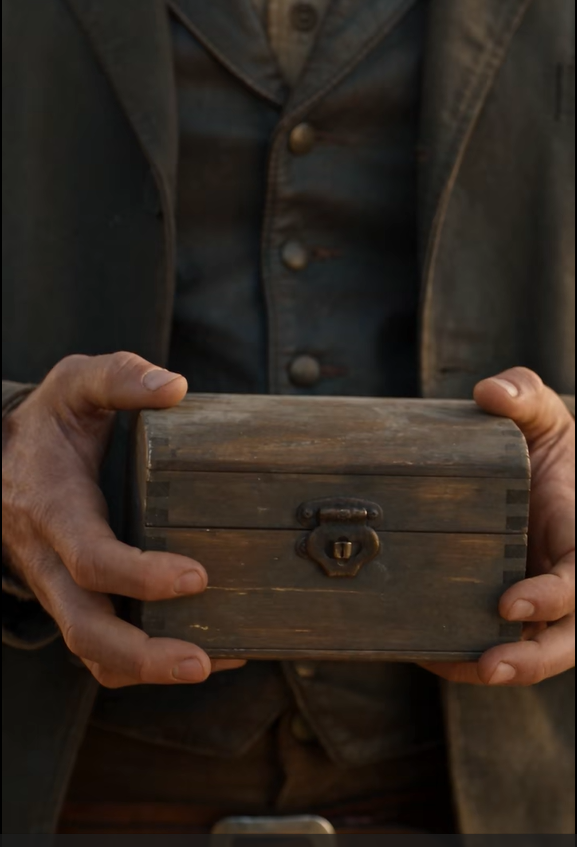
And a
heavy, iron-locked trunk
that she refused to let the driver handle roughly.
Samuel remembered noticing that.
He also remembered everything else.
How Eleanor startled when a man shouted across the station.
How she flinched when a wagon wheel cracked against a stone.
How she glanced behind them repeatedly during the ride to the ranch.
He had told himself she was nervous.
She was marrying a stranger.
Who wouldn’t be?
They married three days later beneath the cottonwood beside Samuel’s cabin.