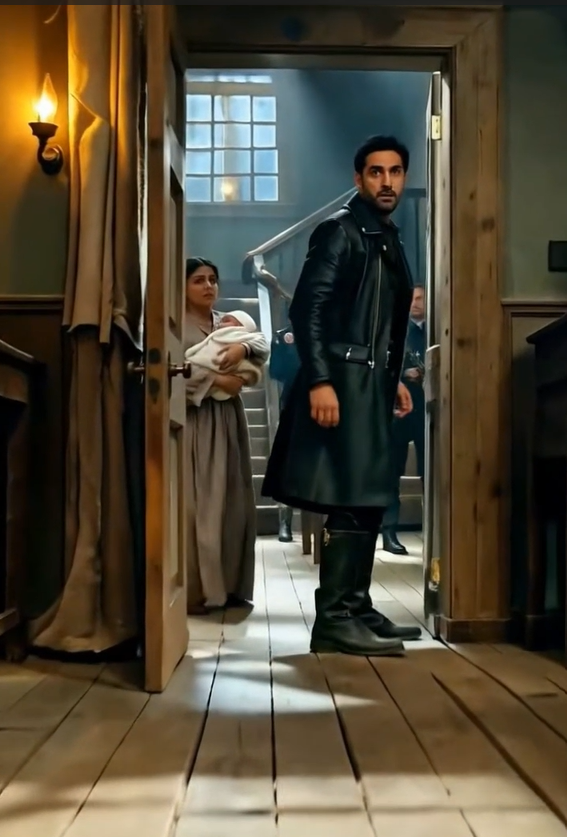
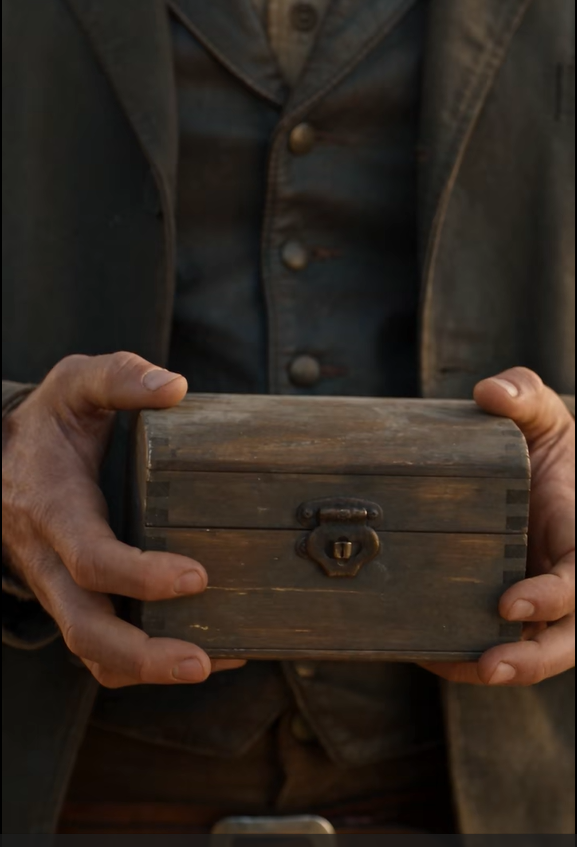
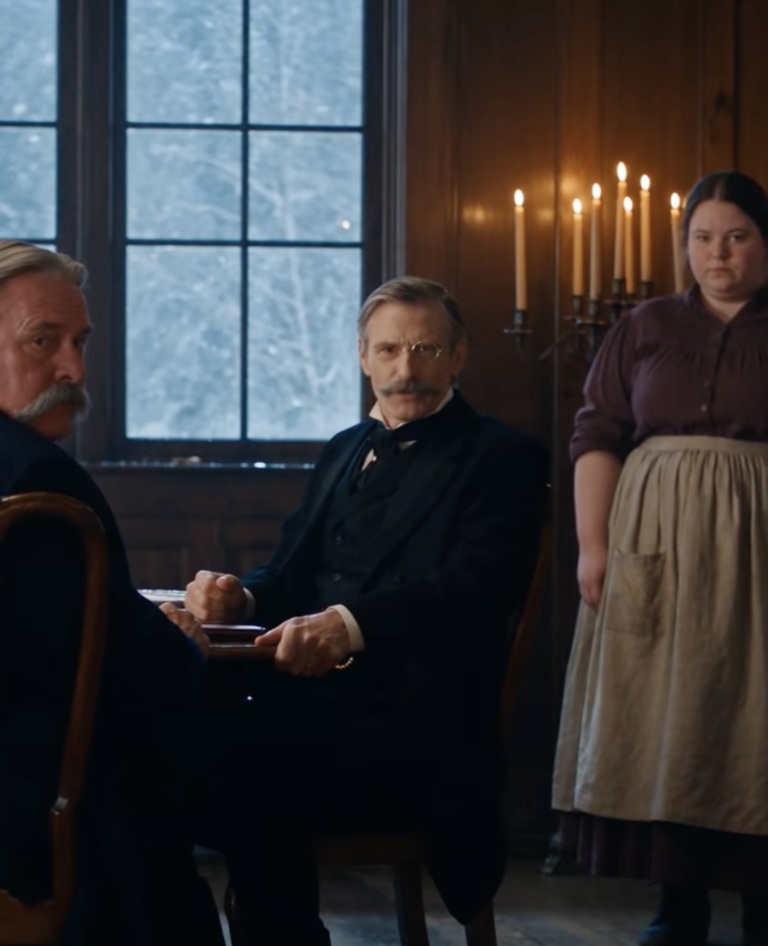
But they discovered something better than recovering the past.
They built a future.
Naya became Corvin’s partner in the ranch.
This caused occasional complications because she considered most of Corvin’s cattle-handling methods foolish.
Corvin considered her horse-training methods impossible.
She proved him wrong so frequently that he eventually stopped arguing where horses were concerned.
Travelers began using the well.
Settlers.
Army scouts.
Apache families.
Mexican traders.
Prospectors.
Children.
Nobody was asked for money.
Nobody was asked which side of a boundary they belonged on.
Corvin kept the old metal ladle hanging from the well post.
Years later, a traveling journalist heard the story and asked Corvin whether it was true that three hundred Apache warriors had once surrounded his ranch because he gave water to a woman.
Corvin considered the question.
Naya was nearby repairing a saddle.
Elena sat beneath the cottonwoods.
Children chased one another around the corral.
The ranch that had once been built on murder and lies had become something Gideon Torne would never have understood.
A place where people met without immediately reaching for weapons.
Corvin finally answered.
“No.”
The journalist blinked.
“No?”
Corvin looked toward the ridges.
He could still remember that morning perfectly.
Hundreds of riders silhouetted against sunrise.
The terrible silence.
His certainty that he was about to die.
“No,” Corvin repeated.
“They didn’t surround my ranch because I gave her water.”
The journalist lifted his pencil.
“Then why?”
Corvin smiled.
“Because thirty years earlier, a dying man hoped his stolen son might someday become someone who would.”
The journalist stared at him.
Corvin lifted the old ladle from its hook.
For years, he had wondered whether Samuel Torne would have recognized the man his son became.
Now he knew the answer.
Samuel had never needed Corvin to remember him.
He had only needed Corvin to remember the kind of man he wanted his son to be.
At that moment a dusty rider appeared on the southern trail.
Young.
Exhausted.
His horse barely walking.
Corvin lowered the ladle into the well.
The rope creaked.
Cold water rose from the darkness.
The stranger reached the fence.
“I hate to trouble you,” he said, “but could I possibly—”
Corvin held out the ladle.
The stranger stopped.
“You don’t even know who I am.”
Corvin looked toward Naya.
She was watching him.
The faintest smile appeared on her face.
Corvin smiled back.
Then he turned toward the traveler.
“You’re thirsty.”
He placed the water in the stranger’s hands.
“That’s enough.”