
Ayana Chose the Dusty Stranger Beneath the Cottonwood. By Sunrise, They Learned He Had Been Sent There to Die.
More than one hundred respected warriors came to ask for Ayana’s hand.
She rejected every single one.
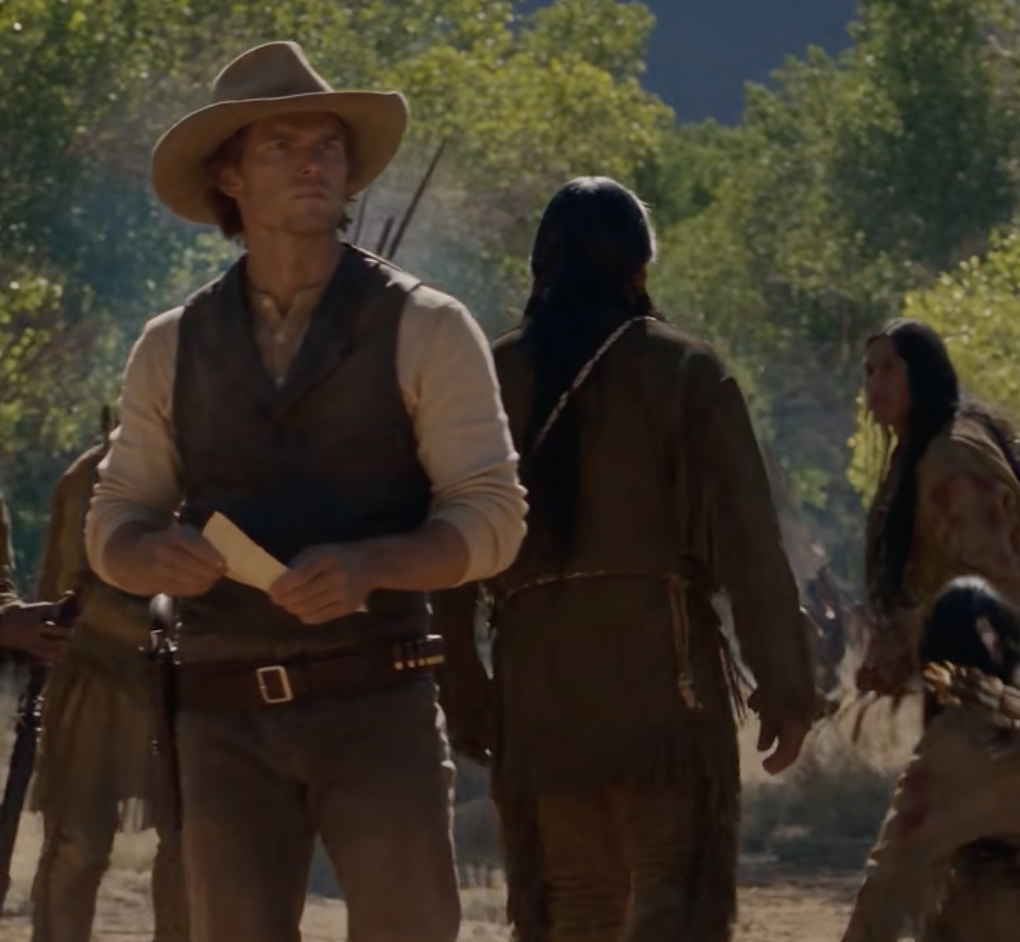
Then, just as the entire Apache village began wondering whether Chief Whitehawk’s daughter intended to marry anyone at all, Ayana rose, crossed the gathering, and pointed at a dusty stranger standing beneath a cottonwood tree.
“I want him.”
The stranger nearly dropped his hat.
But by sunrise, marriage would be the least dangerous thing awaiting Ethan Walker.
Because someone had not brought him to the village so he could become a husband.
Someone had brought him there to become a corpse.
Spring came reluctantly to the Arizona Territory in 1873.
For a few precious weeks, yellow wildflowers pushed through cracked earth, cottonwoods turned bright along narrow streams, and cool winds moved through the red canyons before summer returned to bake the land hard as fired clay.
Hidden beyond a maze of cliffs stood the village led by Chief Whitehawk.
The gathering that year was unlike any in recent memory.
Families had traveled from distant camps.
Hunters, horsemen, elders, children, cousins, widows, grandmothers, and respected warriors filled the clearing from sunrise.
All because of Whitehawk’s only daughter.
Ayana.
At twenty-three, she had become known far beyond her father’s village.
Not merely because she was beautiful.
Though she was.
Her black hair fell thick down her back, her dark eyes missed very little, and when she smiled unexpectedly, even stern old men occasionally forgot what they had been saying.
But beauty was not what made people remember her.
Ayana could track a wounded deer across rock.
She could ride bareback through terrain where experienced horsemen hesitated.
She could recognize nearly every medicinal plant growing within two days’ journey.
And she possessed a calmness that unsettled arrogant people.
When others shouted, Ayana listened.
When others bragged, she watched.
When others tried to frighten her, she often looked amused.
Whitehawk had raised her after her mother died when Ayana was seven.
He had never treated her like something fragile.
And when the question of marriage came, he had given her the same freedom.
The choice would be hers.
No wealth could buy her.
No reputation could pressure her.
No warrior’s strength could force her agreement.
But that did not prevent men from trying to impress her.
By midmorning, more than forty had already stepped forward.
One demonstrated extraordinary control of his horse between narrow stone markers.
Ayana thanked him.
“No.”
Another struck distant targets with such accuracy that people murmured in admiration.
“No.”
A third spoke proudly of protecting families during a dangerous journey.
Ayana listened carefully.
Then shook her head.
By midday, curiosity had become astonishment.
By afternoon, astonishment had become nervous humor.
By late afternoon, more than one hundred men had heard the same answer.
No.
Even Whitehawk eventually leaned toward his friend Stone Elk.
“Perhaps she has decided to marry the mountains.”
Stone Elk scratched his gray beard.
“The mountains complain less than husbands.”
Whitehawk almost smiled.
Ayana heard them.
“I heard that.”
Stone Elk immediately became fascinated by the sky.
Then the final warrior stepped away.
Silence settled across the clearing.
Whitehawk stood.
“Ayana.”
His daughter looked toward him.
“You have listened to every man who came.”
“Yes.”
“And none has your answer?”