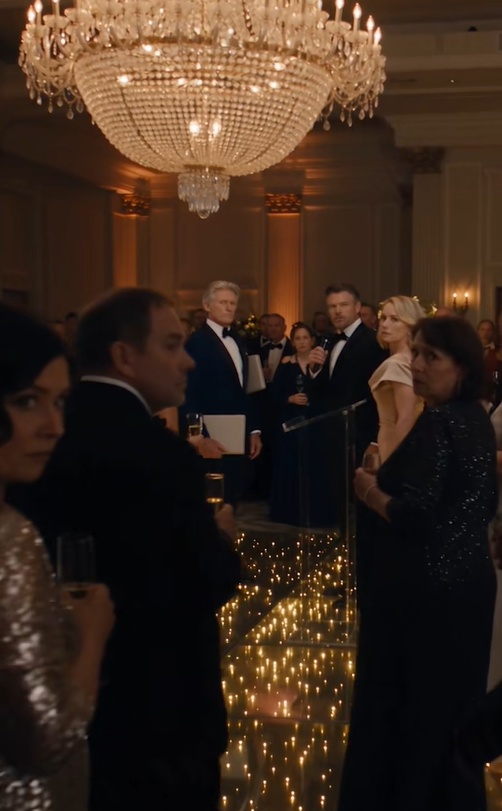
“I suppose it isn’t.”
She looked at Caroline.
“I loved you too.”
Caroline said nothing.
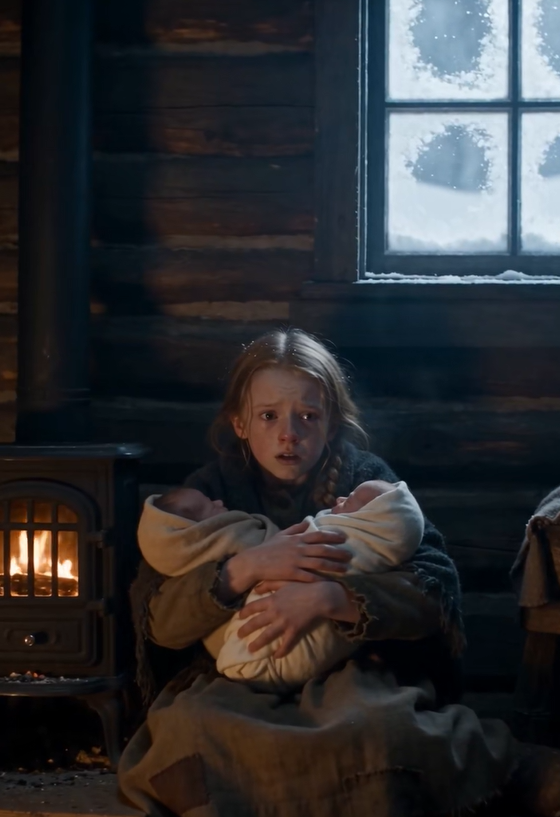
“I was seventeen,” Eleanor continued. “My father told me I had disgraced the family. My mother told me no respectable man would marry a girl with a child. When the doctors said there were two babies…”
Her voice broke.
“They separated you before I held you.”
Caroline looked away.
“I spent my entire life convincing myself it had been necessary.”
I said quietly, “And then you became them.”
Eleanor closed her eyes.
“Yes.”
No excuses.
That was the first truthful thing she had given me.
“I thought control was how families survived,” she whispered.
“No,” I said. “It’s how families become prisons.”
She nodded.
Then she looked toward my sons.
“May I meet them?”
“No.”
The word came easily.
Pain crossed her face.
I did not enjoy it.
But boundaries were not cruelty merely because the person hearing them was hurt.
“Not today,” I added.
Her eyes lifted.
“Maybe someday. If they want to. If you prove you can know them without owning them.”
Eleanor nodded.
Then she walked away.
I watched her go.
Caroline leaned against my shoulder.
“Do you think people change?”
“Sometimes.”
“And Eleanor?”
I watched the old woman cross the lawn alone.
“I think she just discovered she has to.”
Six months later, Montgomery Holdings announced a restructuring.
Not because Liam ordered it.
He was six.
His primary corporate interests were pancakes and dinosaurs.
Marcus arranged independent trustees and protections ensuring that none of my children could be used as instruments in a family business dispute.
Sinclair Digital remained mine.
Completely independent.
Ethan began seeing the boys twice a month under a gradual reunification plan.
The first visit was awkward.
The second was worse.
On the third, Noah asked him why his hair looked “like ours but older.”
By the sixth, Ethan knew which boy hated peas, which one slept with socks on, and which one pretended not to be afraid of thunderstorms.
He missed five years.
Nothing could restore them.
But I eventually learned that punishment and accountability were not the same thing.
I did not forgive Ethan by pretending the past had not happened.
I forgave him by refusing to let the past control every future decision.
Caroline moved to Chicago.
Not into my penthouse.
We agreed that discovering a twin sister was enough intimacy for one year.
She rented an apartment twelve minutes away.
Every Thursday, we had dinner.
Sometimes we talked until midnight.
Sometimes we argued.
Once we discovered we both hated cilantro and laughed for five straight minutes because somehow that felt more shocking than shared DNA.
And Eleanor?
She did something nobody expected.
She resigned from the Montgomery Holdings board.
Then she transferred every personally controlled voting share into an independent family trust that explicitly prohibited her from directing the trustees.
No announcement.
No press conference.
No attempt to turn repentance into publicity.
Three months later, a package arrived.
Inside was no jewelry.
No money.
No legal document.
Just a photograph.
Two newborn babies wrapped in white hospital blankets.
On the back, Eleanor had written:
You were together first. I am sorry I allowed the world to separate you.
Caroline and I framed it.
Not because everything was forgiven.
Because it was true.
But the final surprise came nearly a year after the wedding that never happened.
Marcus called me into his office.
“There’s something you need to see.”
I groaned.
“If another secret relative appears, I’m changing my number.”