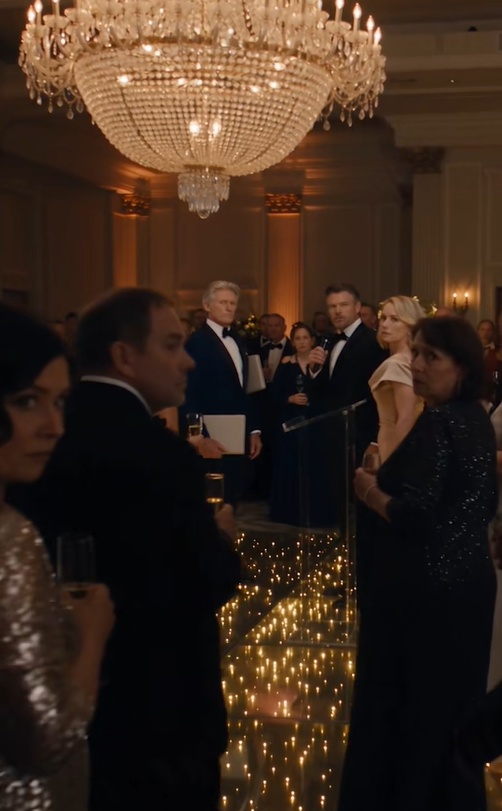
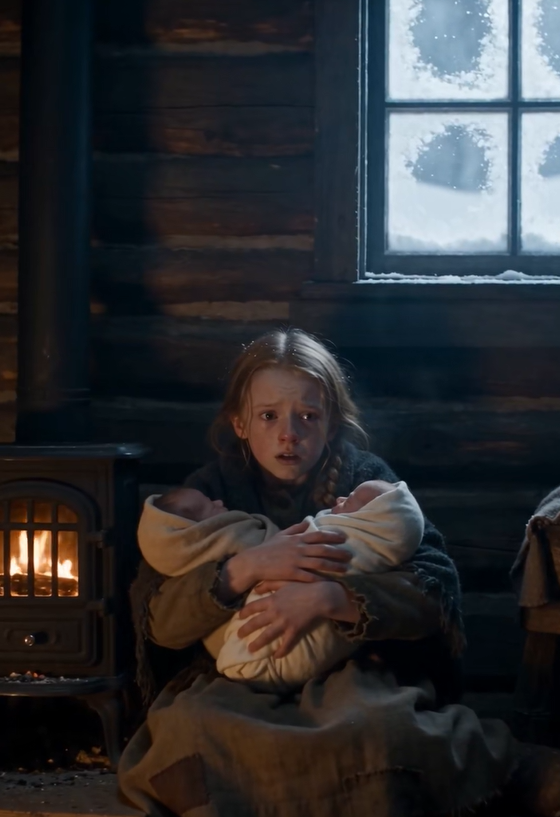
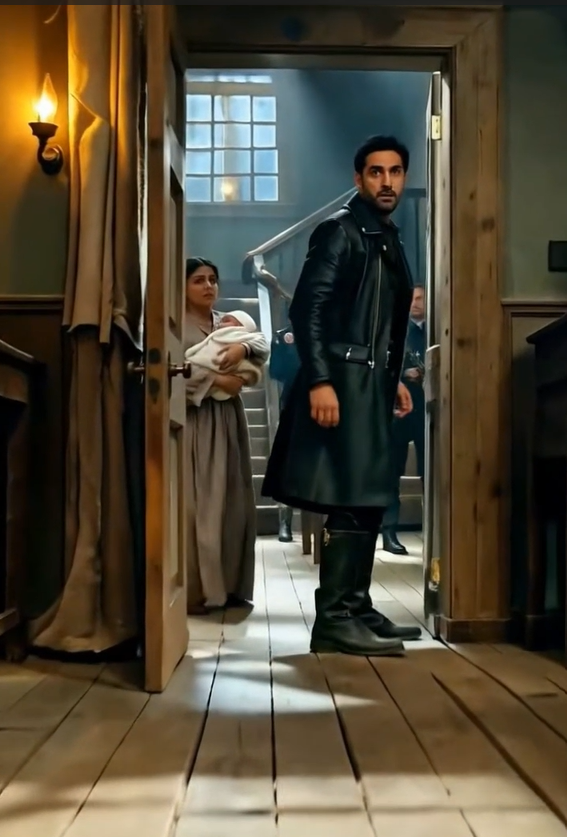
Publishers offered book deals.
People who had laughed beside the Bellweather pool suddenly claimed they had always sensed Ethan was “different.”
Ethan refused nearly all of them.
Six months after the ruling, he stood on a construction site in work boots and a faded shirt.
A reporter found him anyway.
She stared at the steel frame rising behind him.
“You inherited more than a hundred million dollars,” she said. “Why are you still dressing like this?”
Ethan looked down at his shirt.
It was plain.
Cheap, by the standards of the people at that rooftop party.
He smiled.
“My brother had one just like it.”
The reporter glanced toward the sign at the entrance.
THE DANIEL COLE CENTER FOR CONSTRUCTION SAFETY
Funded with Ethan’s inheritance, the center provided free legal assistance to whistleblowers, emergency support for injured construction workers, scholarships for workers’ children, and independent safety inspections for projects across Florida.
The reporter asked, “Do you ever think about that party?”
“All the time.”
“What do you remember most?”
Ethan considered the question.
Not Charles in handcuffs.
Not Blake’s confession.
Not Ross learning Ethan was his son.
Not even the photograph.
He remembered Daniel’s handwriting.
Don’t become them.
Ethan looked at the building.
“My brother died because powerful people believed ordinary workers were invisible.”
He paused.
“So I remember the moment everyone finally looked.”
The reporter lowered her microphone.
“And Blake?”
Ethan’s expression softened slightly.
Blake Harrington had been sentenced to five years.
Two weeks earlier, Ethan had received a letter from him.
No excuses.
No requests.
Only an apology.
At the bottom, Blake had written:
I laughed at you because I thought your clothes told me what you were worth. The truth is, I was wearing everything money could buy because I had no idea what I was worth without it.
Ethan had not answered yet.
Maybe someday he would.
Maybe he wouldn’t.
Forgiveness, he had learned, was not the same as pretending something never happened.
The reporter thanked him and walked away.
Ethan remained beside the construction fence.
Workers moved across the site.
Harnesses secured.
Bolts documented.
Independent inspectors present.
Every procedure visible.
Every failure report protected from alteration.
Every worker empowered to stop the job.
Near the entrance stood a bronze plaque.
Ethan walked toward it.
Daniel’s photograph was engraved at the top.
Beneath it were words Ethan had chosen from his brother’s letter:
DO THE RIGHT THING EVEN WHEN THE WRONG PEOPLE HAVE MORE POWER.
Ethan touched the edge of the plaque.
“You were right,” he whispered.
A breeze moved through the unfinished building.
For one impossible second, Ethan could almost hear Daniel laughing.
Not the cruel laughter from the rooftop.
Daniel’s laugh.
Warm.
Loud.
Alive.
Ethan smiled through tears.
Then his phone vibrated.
A message.
From Natalie Mercer.
She had spent the previous year establishing a foundation in her father’s name to protect engineering whistleblowers.
Her message contained a photograph.
Ethan opened it.
The photograph showed a construction crew standing in front of a newly completed affordable-housing complex.
Above them was a banner:
SAMUEL MERCER RESIDENCES — OPENING DAY
Underneath, Natalie had written:
Dad finally got to approve one.
Ethan laughed softly.
Then another message arrived.
A photograph from his mother.
She had found an old box.
Inside was a picture Ethan had never seen.
Maya was young.
Barely twenty-five.
She stood outside a tiny apartment holding two babies.
Daniel was asleep against her shoulder.
Ethan was wrapped in a blue blanket.
Behind them, handwritten in faded ink, were four words:
My boys. My new life.
Ethan stared at the photograph for a long time.