Tick.
Tick.
Tick.
It sounded impossibly loud.
“My father was buried with that.”
The gray-haired man finally spoke.
His English was accented but precise.
“No.”
Corvin’s eyes narrowed.
“I put it inside his coat myself.”
“We opened the grave.”
Silence.
Corvin’s face hardened.
“You did what?”
The tall woman dismounted.
She moved between them before Corvin could step forward.
“We did not dishonor him.”
“You dug up my father.”
“To fulfill his promise.”
“I don’t care what you call it.”
The woman’s eyes flashed.
“And yet he asked us to.”
That stopped him.
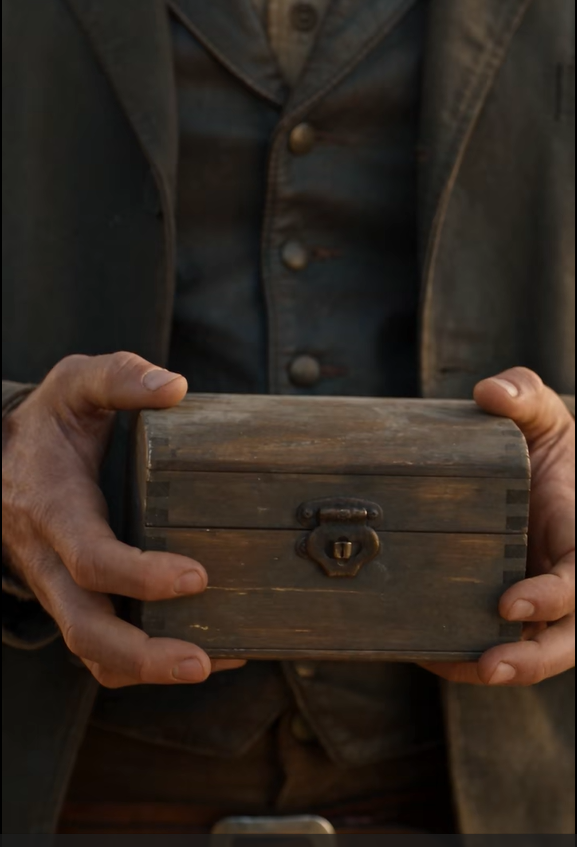
The old man held out the watch.
Corvin did not take it.
“There was a letter,” he said.
“What letter?”
The old man pointed toward the cabin.
“Inside.”
Corvin stared at him.
“You’ve been inside my house?”
“No.”
“Then how do you know?”
“Because Gideon Torne put it there.”
Corvin almost laughed.
“My father has been dead eleven years.”
“Yes.”
The old man looked toward the cabin window.
“And he knew this morning would come.”
A chill that had nothing to do with the dawn moved down Corvin’s back.
The woman spoke.
“Look behind the shelf where you keep your ledger.”
Corvin said nothing.
“How do you know where I keep it?”
“Because Gideon told us where you would.”
The three hundred riders remained outside.
Only the woman and the old man entered the cabin.
Corvin kept his rifle within reach.
He did not apologize for it.
The woman glanced around.
The room was simple.
Bed.
Table.
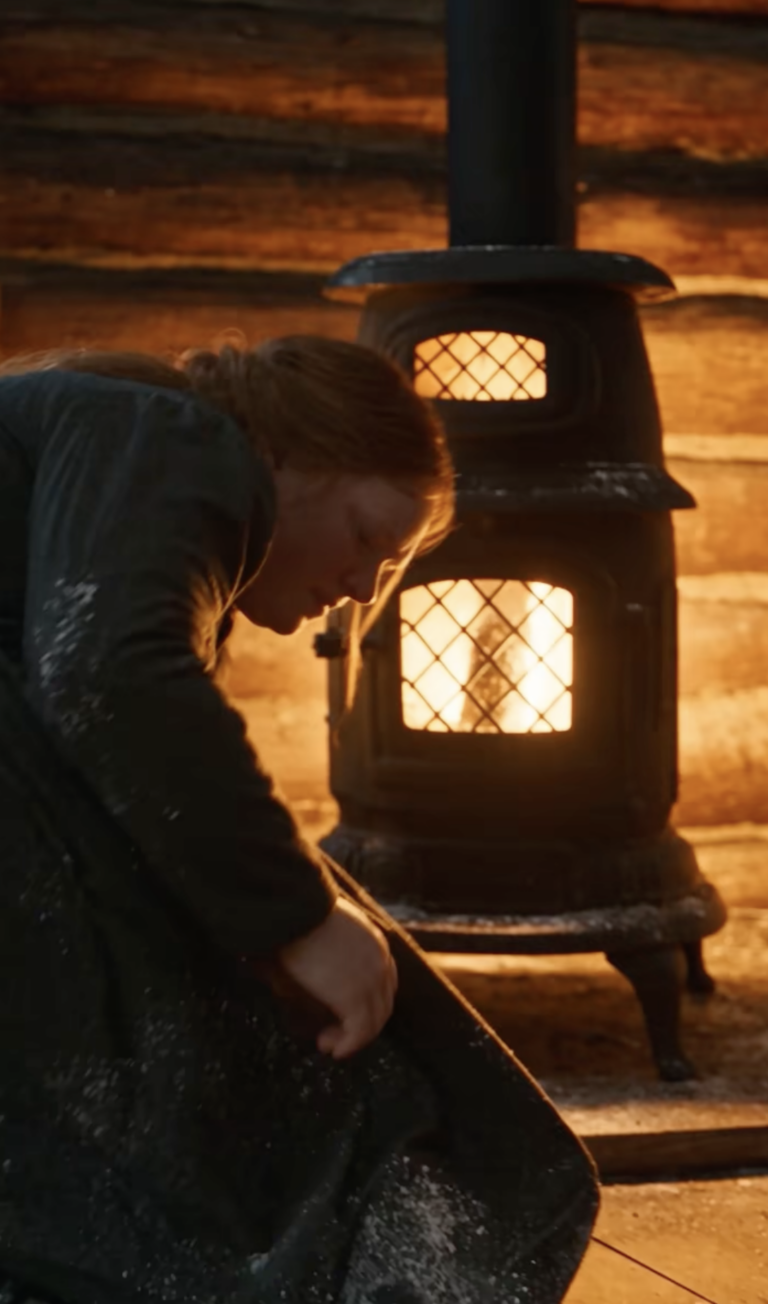
Iron stove.
Two chairs.
One photograph of Gideon Torne.
The old man stopped before the photograph.
For the first time, his expression changed.
Grief.
“You knew him,” Corvin said.
The man nodded.
“Well?”
“Better than you think.”
The tall woman approached the wooden shelf.
Corvin’s ledger sat between a Bible and a tin box of ammunition.
She removed them.
Behind the shelf was bare wall.
“Nothing.”
She ran her fingers along the boards.
Then pressed one.
A narrow wooden panel shifted.
Corvin stared.
He had lived in the cabin seventeen years.
He had never seen it.
The woman pulled the panel free.
Inside was an oilcloth bundle.
Corvin’s anger disappeared.
He reached toward it.
The old man stopped him.
“Before you open that, you should know my name.”
Corvin looked at him.
The man touched his chest.
“Kele.”
Then he gestured toward the woman.
“She is my daughter.”
Corvin looked at her.
She gave him a name in her own language, one he could not properly repeat.
After hearing him fail twice, she finally said, “Mara will do.”
“Mara.”
She nodded.
Kele looked again toward Gideon’s photograph.
“Gideon came to our people thirty-one winters ago.”
“For what?”
“To trade horses.”
Corvin frowned.
“My father hated horses.”
“He hated bad horses.”
Mara almost smiled.
Kele continued.
“He stayed three months.”
“Why?”
This time the old man looked directly at Corvin.
“Because he fell in love with my sister.”
Corvin did not move.
The words entered the room and seemed to change its shape.
“My mother was from Missouri.”
“That is what Gideon told you.”
“My mother’s name was Anne Torne.”
“Her English name.”
Corvin shook his head.
“No.”
Kele said nothing.
“No.”
The word came harder.
“My mother died giving birth to me.”
Kele lowered his eyes.
“Yes.”
That answer struck differently.
Corvin sat slowly.
Mara remained standing.
Kele continued.
“My sister loved Gideon.
Gideon loved her.
They lived between two worlds that wanted nothing to do with each other.”
Corvin’s mouth was dry.
“You’re saying my mother was Apache.”