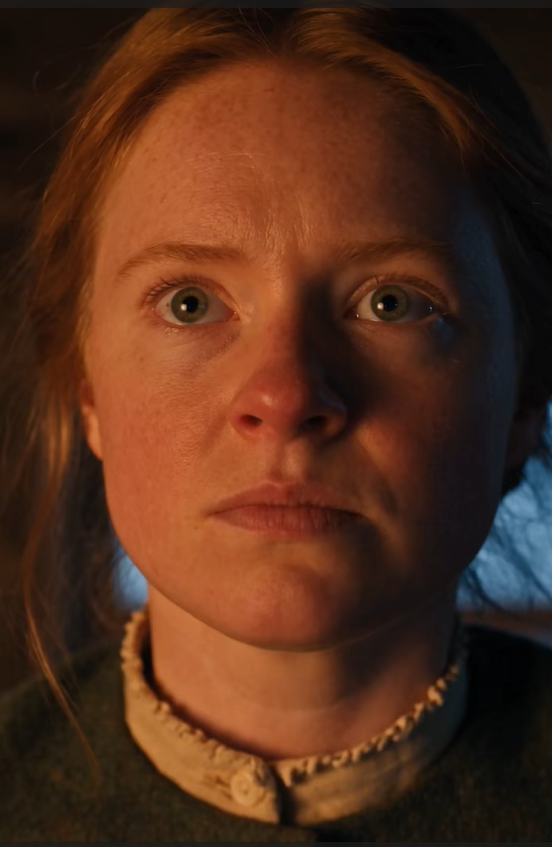
Sela’s eyes held his.
“She wanted us to discover what kind of man you had become first.”
Corvin remembered the previous afternoon.
A bleeding stranger.
A metal ladle.
Three drinks of water.
“You came here looking for me.”
“Yes.”
“You knew exactly where you were.”
“Yes.”
His mouth fell open.
“You let me think you were lost.”
“I was being hunted.”
“But you came to this ranch intentionally.”
“Yes.”
Corvin stared.
Then another thought struck him.
“Was giving you water the test?”
Sela shook her head.
“No.”
“Then what was?”
She smiled.
“Everything after.”
The sunrise.
Nantan’s body.
His own knife.
Three hundred armed men.
Pike.
Crowe.
The choice between fear and truth.
Corvin understood.
“You wanted to know whether I would turn against your people to save myself.”
“Our people,” Sela corrected.
Corvin looked at her sharply.
She didn’t look away.
Something moved along the eastern ridge.
Beyan descended alone.
Sela’s father stopped near them and dismounted.
He was not Corvin’s father.
Not by blood.
Not by obligation.
Yet when the older man approached, there was something strangely vulnerable in his face.
Beyan said several words.
Corvin looked at Sela.
“What did he say?”
Her smile deepened.
“He says your mother described you poorly.”
Corvin stared.
Then Beyan added something else.
Sela laughed.
“What?”
“He says she told him you were handsome.”
Corvin snorted despite himself.
“Smart woman.”
Sela translated.
Beyan actually smiled.
Then the old man extended his hand.
Not ceremonially.
Not dramatically.
Simply one man to another.
Corvin took it.
Beyan’s grip was strong.
Sela translated his next words.
“Blood tells us where a man began. Choice tells us who he became.”
Corvin looked around the ranch.
His ranch.
Except it wasn’t.
Not legally.
Not morally.
Not anymore.
He remembered his father’s journal.
The land beneath my house was never honestly mine.
Corvin stood.
“Tell your father something.”
Sela waited.
“Tell him I’m giving the land back.”
Her eyebrows rose.
“All of it.”
She translated.
Beyan listened.
Then shook his head.
Corvin frowned.
“What did he say?”
“He said no.”
“No?”
Sela almost laughed.
“You thought three hundred people rode here to steal your little house?”
“It’s not little.”
“The roof leans.”
“It has character.”
She translated again.
Beyan spoke at length.
Sela listened.
Then turned to Corvin.
“The original agreement did not say one people owned the spring.”
“What did it say?”
“That water belonged to everyone who crossed this valley peacefully.”
Corvin looked toward the well.
Sela continued.
“Your father tried to protect that agreement.”
Beyan spoke again.
“He says the ranch can remain yours.”
Corvin shook his head.
“I don’t want stolen land.”
“Then do not steal it.”
He frowned.
Sela nodded toward the well.
“Keep it open.”
That simple?
After murder?
After thirty years of lies?
After three hundred armed riders?
Open the well.
Corvin looked toward the horizon.
“Yes.”
Months passed.
The investigation reached Tucson.
Then Washington.
Captain Crowe’s records exposed officers, cattle buyers, clerks, and land speculators who had spent years manufacturing violence for profit.
Some escaped punishment.
Others did not.
History rarely corrected itself cleanly.
But Red Mesa changed.