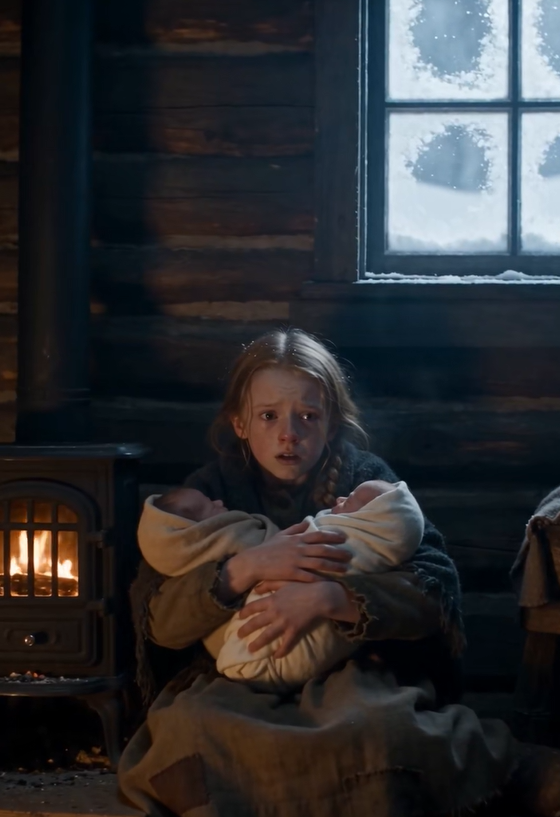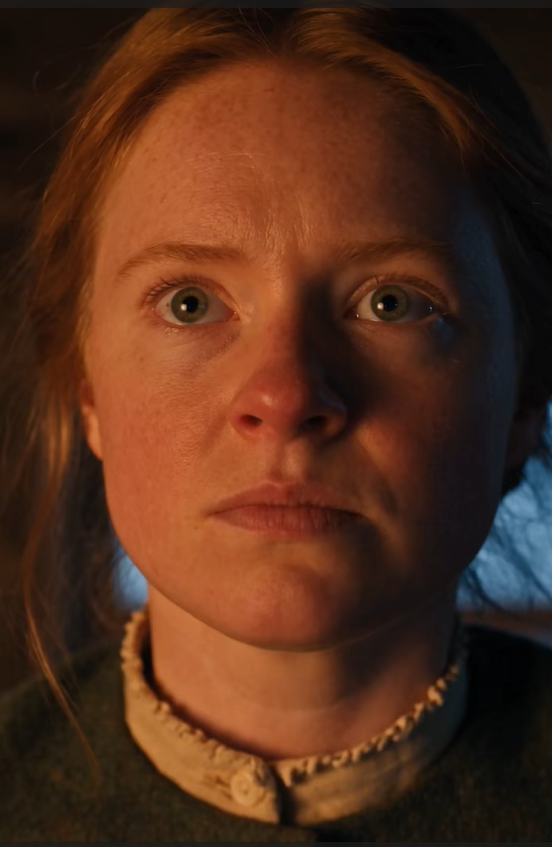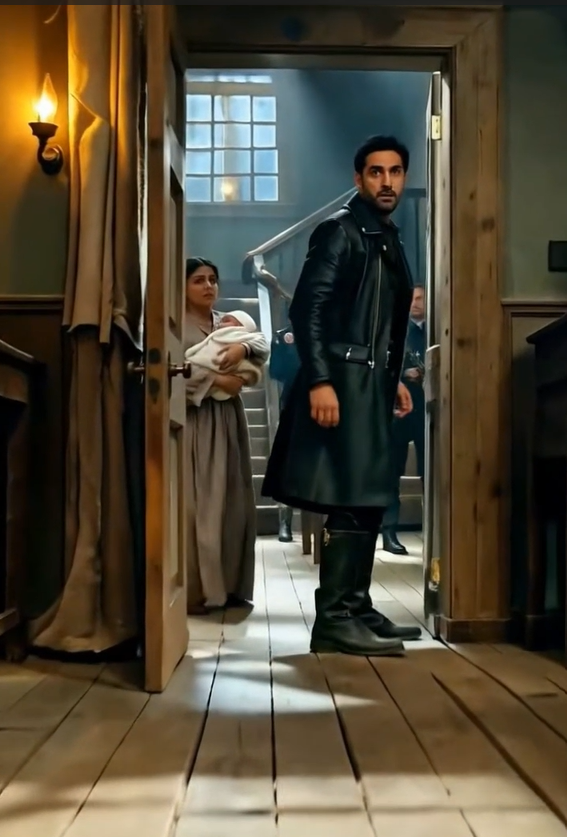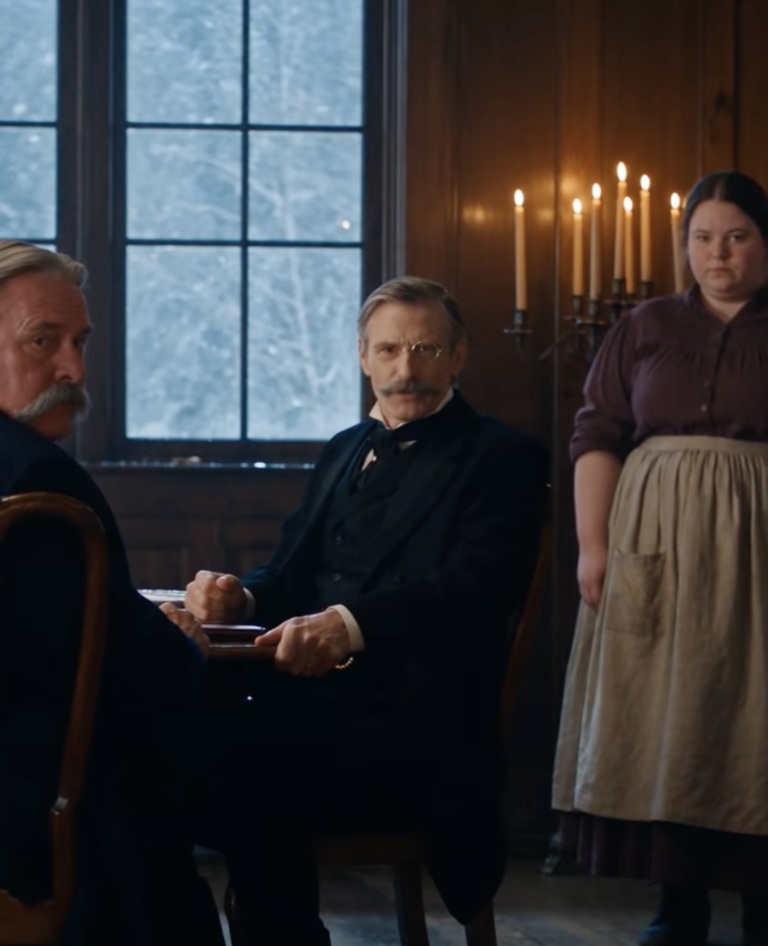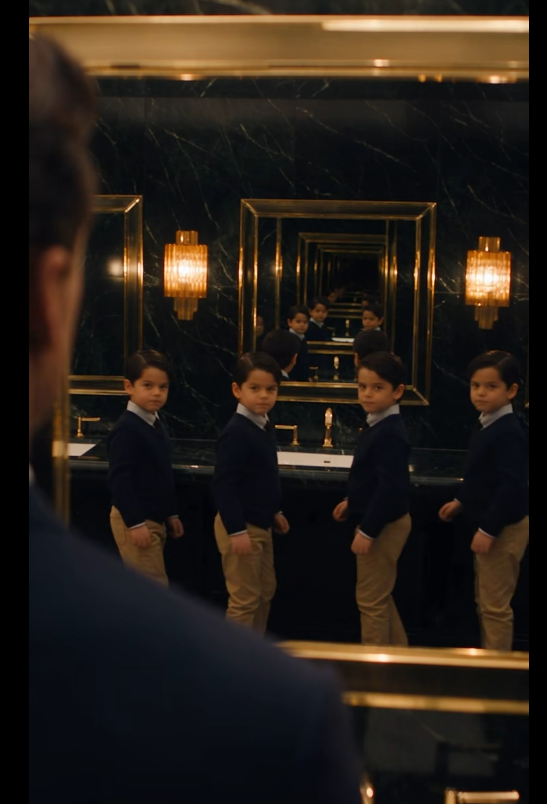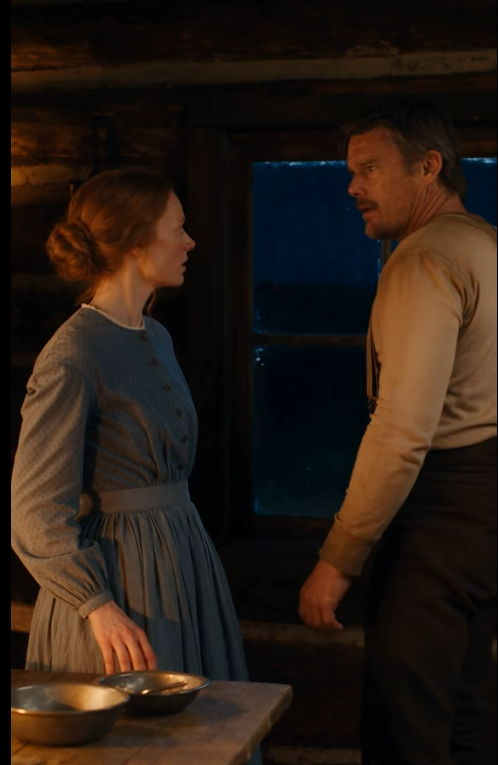
The first thing Nora Callaway learned about her new husband was that he had not come to meet her.
The second was that his four-year-old son was cooking supper for six children.
By the time Nora discovered the third thing, it was already too late to turn around.
The stagecoach had vanished into a cloud of Wyoming dust nearly two hours earlier, leaving her alone in Sorrow Creek with one battered trunk, eleven dollars sewn into the lining of her coat, and an old iron key that had belonged to her mother.
At twenty-six, Nora had become the wife of a man she had never met.
His name was Harlan Greer.
Widower.
Rancher.
Father of six sons.
The marriage had been arranged by correspondence and completed by proxy through a minister three counties away. Nora had received three short letters bearing Harlan’s name.
None were romantic.
The first said he needed a wife who understood hard work.
The second said his boys needed stability more than affection.
The third contained directions to the ranch.
Nora had appreciated the honesty.
After years of being told that a poor woman with no dowry ought to be grateful for any offer at all, she preferred a man who did not pretend marriage was a fairy tale.
Still, she had expected him to meet the coach.
No one came.
So Nora picked up her trunk.
And walked.
Two miles later, wind-burned and furious, she found the ranch.
The sprawling house looked as if three different men had built it during three different arguments. Stone formed the oldest section. Rough timber leaned from the newer rooms. A patched roof sagged over the kitchen.
A boy stood on the porch.
He looked about twelve.
Thin.
Brown-haired.
Suspicious.
“You Nora?”
“I suppose that depends.”
“On what?”
“Whether this is Harlan Greer’s ranch.”
The boy nodded.
“Then yes.”
He studied her trunk.
“You walk?”
“Yes.”
“From town?”
“Yes.”
His eyebrows rose.
Nora narrowed her eyes.
“Are all Greer men this conversational?”
Something flickered in the boy’s face.
Almost a smile.
“I’m Cade.”
“I gathered you weren’t Harlan.”
That earned her the smile.
It vanished quickly.
Inside, Nora discovered the rest.
Seventeen-year-old Thomas watched from the barn door but refused to approach.
Fourteen-year-old Eli sat sharpening a knife at the kitchen table.
Ten-year-old Porter hid behind the staircase.
Seven-year-old Reeve stared openly at her from the hallway.
And then Nora smelled smoke.
She rushed into the kitchen.
A tiny boy stood on a wooden stool beside the stove, both hands wrapped around a long spoon as he fought a blackened pot of cornmeal mush.
His red hair stuck to his sweating forehead.
Smoke curled upward.
“I’m making supper,” he announced.
Nora stared at him.
“How old are you?”
“Four.”
“Who told you to cook?”
“Nobody.”
“Then why are you?”
The boy looked at her as though the answer were obvious.
“Because everybody’s hungry.”
Something inside Nora broke.
Not loudly.
Not dramatically.
It simply cracked in a place she had spent years making hard.
A four-year-old child believed feeding six brothers was his responsibility.
Nora put down her trunk.
“What’s your name?”
“Rue.”
“Rue, move over.”