He didn’t.
Tessa pulled the chair closer to herself.
“This seat is for my mother when she arrives,” she said.
Her mother never arrived.
I would learn later that she had never intended to.
That empty chair had existed for one reason.
Me.
But that knowledge came afterward.
That night, I simply nodded.
“Enjoy your dinner,” I said.
Tessa blinked.
Apparently, she had expected tears.
Perhaps yelling.
Perhaps a scene.
Instead, I lifted my coat from the back of a side chair and walked toward the door.
“Mom,” Reid finally said.
I stopped.
Hope is a cruel habit.
Even after everything, I still hoped he would fix it.
He didn’t.
“You don’t have to be dramatic.”
Something inside me became very still.
I turned around.
“I’m not being dramatic.”
His cheeks flushed.
“We’re celebrating. Tessa made a joke. Just… don’t turn this into something bigger.”
Tessa smiled.
I looked at the two of them.
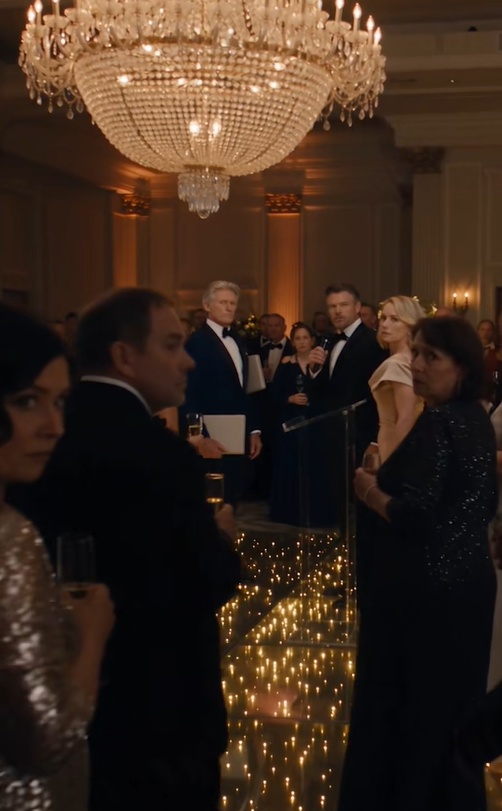
Then at the people who had watched.
“I wouldn’t dream of it.”
I walked out.
Nobody followed.
The night air outside was cold enough to sting my face.
For almost sixty years, whenever I was hurt, my instinct had been to keep moving.
Maybe that came from my father, who believed self-pity was a luxury poor people could not afford.
Maybe it came from the thirty-seven years I had spent in trucking, where breakdowns happened during storms, drivers quit without warning, fuel prices jumped overnight, and crying solved absolutely nothing.
I walked three blocks.
At the corner of Sycamore and Grant, I found an empty bench beneath a streetlamp.
Traffic hissed over wet pavement.
I sat down.
Then I took out my phone.
My first call went to my attorney, Jonah Mercer.
He answered on the second ring.
“Wilma?”
“We’re accepting the offer.”
There was silence.
Jonah knew exactly which offer I meant.
For eleven months, he had been negotiating the sale of Tate Meridian Freight, the transportation company I had built from a single leased truck and three hundred dollars in borrowed cash.
At seventy-two, I was tired.
Not tired of work.
Tired of being responsible for thousands of people’s livelihoods every morning when I woke up.
The final bid had arrived two days earlier.
Jonah had advised me to sleep on it.
“One hundred sixty-five million,” he said carefully. “The full offer?”
“Yes.”
“Wilma, yesterday you wanted another week.”
“I’ve changed my mind.”
“May I ask what happened?”
I looked toward the restaurant several blocks behind me.
Warm golden windows glowed against the darkness.
“My family clarified my priorities.”
Jonah knew me well enough not to press.
“Then I’ll notify them tonight.”
“Do it.”
I ended the call.
My second call went to the restaurant manager, Mr. Alvarez.
“This is Mrs. Tate.”
His voice changed immediately.
“Good evening, Mrs. Tate. Is everything all right?”
“No.”
A pause.
Then quietly, “I’m sorry.”
He knew.
Of course he knew.
In expensive restaurants, staff see everything.
“Remove my card from the reservation.”
Another pause.
“Certainly.”
“Do not notify the table.”