They lived in a house valued at nearly two million dollars.
And yet they could not pay a four-thousand-dollar restaurant bill.
“How is that possible?” I asked.
Another silence.
“Cash-flow issue.”
I closed my eyes.
There are sentences mothers hear that tell them much more than the speaker intends.
That was one of them.
“Put me on speaker,” I said.
“What?”
“Put me on speaker.”
“Mom, don’t—”
“Now.”
A click sounded.
Slowly, the voices inside the dining room faded.
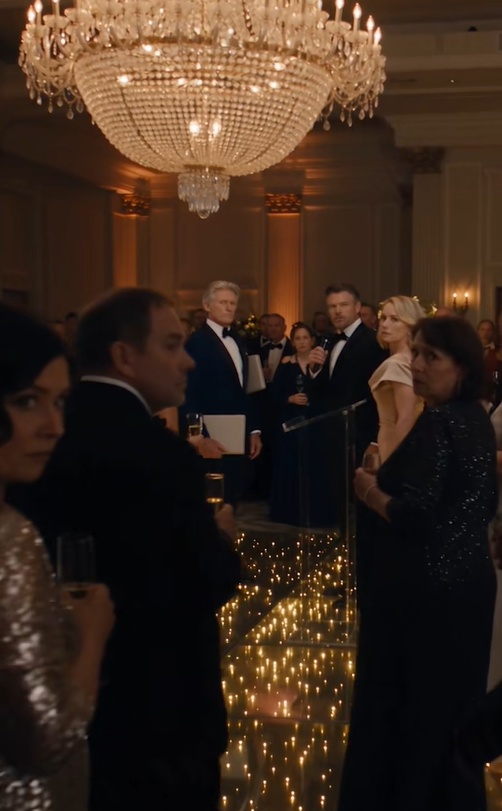
Twenty-four people became quiet.
The same people who had watched me leave.
I spoke calmly.
“I have an announcement.”
Nobody moved.
“The dinner you are enjoying tonight was supposed to be my gift to Reid.”
A faint murmur.
“I paid for the room, the flowers, the menu and the wine.”
Someone whispered, “Oh my God.”
Tessa said nothing.
“I removed my payment because I decided I would no longer finance a celebration where I had been deliberately humiliated.”
Reid whispered, “Mom, please.”
I continued.
“And since everyone seems interested in deciding where I belong, perhaps it is time I explain something about myself.”
My hand was steady.
“My name is Wilma Tate.”
A glass clinked somewhere through the speaker.
“For thirty-seven years, I have owned Tate Meridian Freight.”
This time the room truly went silent.
Even Reid said nothing.
“Three hours ago, the company was mine. Twenty minutes ago, I instructed my attorney to accept an offer to sell it.”
Tessa’s voice came faintly.
“What?”
“The offer is for one hundred sixty-five million dollars.”
I could hear breathing.
Nothing else.
Then Reid said one word.
“Mom?”
His tone had changed completely.
I hated that.
Not because he was shocked.
Because suddenly I mattered.
“What are you talking about?”
“The company your father and I started.”
“You told me Dad sold it.”
“No. I told you your father left the business before he died. You assumed that meant it had been sold.”
“Why would you hide something like this?”
“I never hid it. You stopped asking about my life twenty years ago.”
“Mom, you can’t sell a company like that impulsively.”
There it was.
The word.
Impulsively.
Then he said another.
“Especially at your age.”
The hair on my arms rose.
Not because of the insult.
Because of the wording.
The sentence sounded rehearsed.
“Reid,” I said slowly, “why does my age concern you?”
“It doesn’t.”
“You just said it did.”
“I’m worried you’re making emotional financial decisions.”
Tessa interrupted.
“Exactly.”
Exactly.
Again.
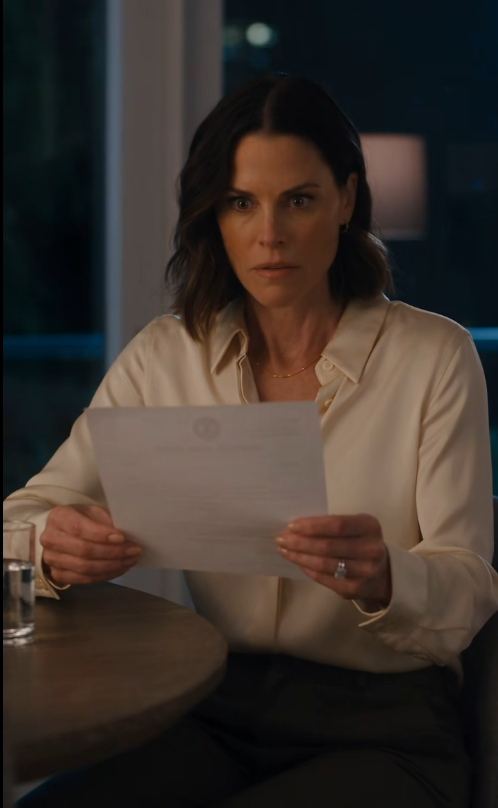
I stared into my dark apartment.
Something old and sharp inside me awakened.
The same instinct that had saved my company during bankruptcies, lawsuits and attempted takeovers.
Something was wrong.
I kept my voice gentle.
“You’re right.”
Reid went silent.
“I am?”
“Perhaps we should discuss my finances properly.”
Relief rushed into his voice.
“Yes. Absolutely.”
“Come to my apartment tomorrow at ten.”
“Should we bring anything?”
“No.”
I paused.
“Bring Tessa.”
Then I hung up.
At 9:41 p.m., I called Jonah again.
“I need you at my apartment tomorrow.”
“What happened?”
I repeated Reid’s words.