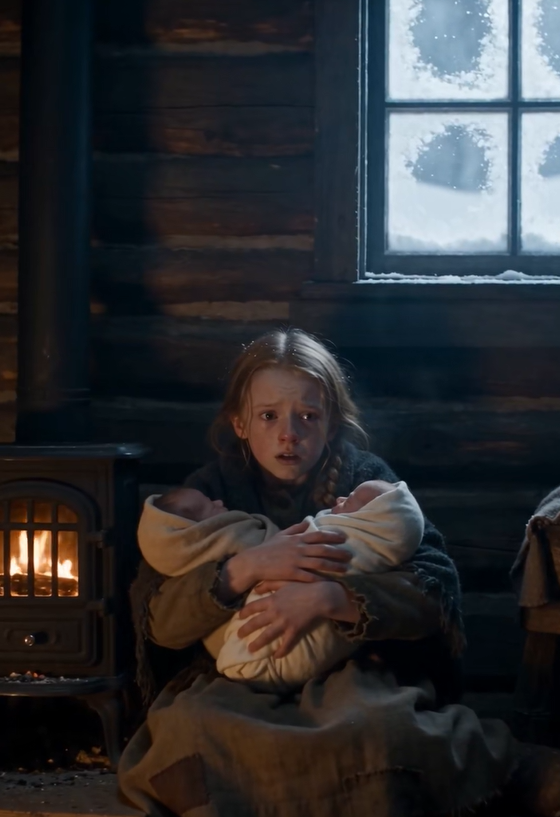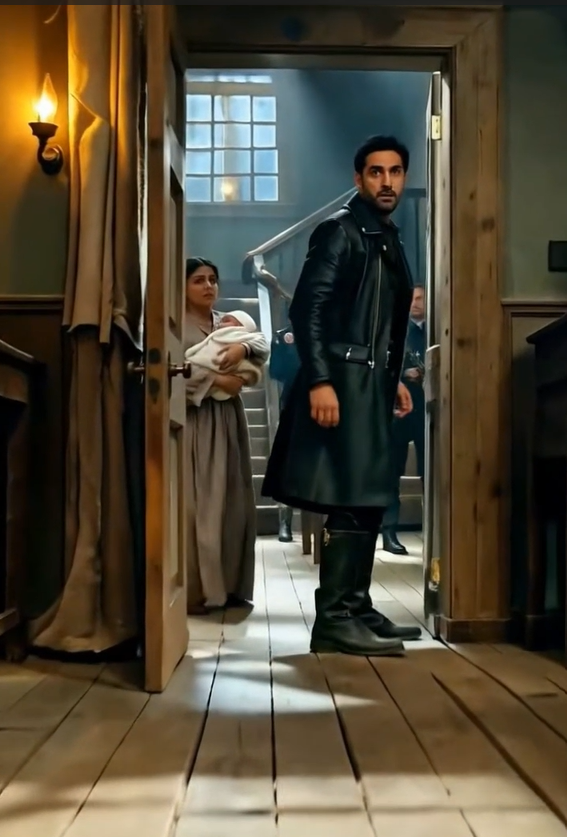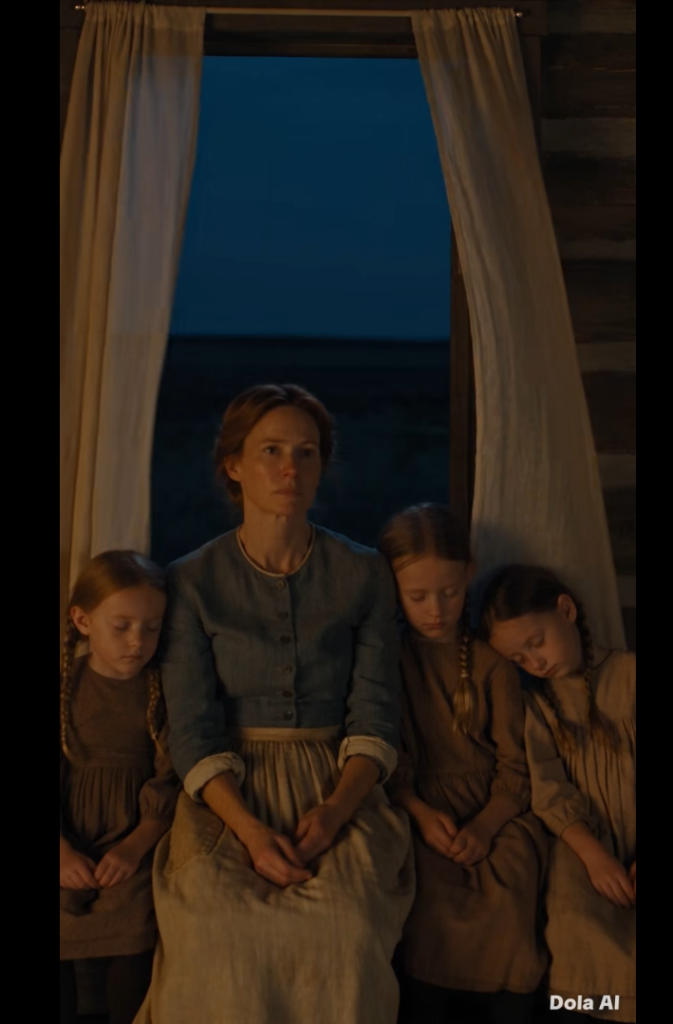
The Widow Knocked on the Loneliest Cowboy’s Door With Three Hungry Daughters. She Never Imagined the Ranch Had Been Waiting for Her Long Before She Arrived.
The first thing Mabel Harlo heard when she stepped into Sorrow Creek was a stranger predicting how long it would take before her children began begging.
“Three days,” the man said from beneath the awning of the general store. “Maybe four.”
Someone laughed.
Mabel kept walking.
Her youngest daughter, Elsie, tightened her little hand around two of Mabel’s fingers.
“Mama?”
“Keep your eyes forward, sweetheart.”
“But they’re laughing.”
“I know.”
“Why?”
Mabel swallowed against the stone lodged in her throat.
“Because some people laugh when they don’t know what else to do.”
That was a lie.
They knew exactly what they were doing.
Everyone in Sorrow Creek had already decided what Mabel Harlo was.
A penniless widow.
Three hungry daughters.
No home.
No husband coming back.
No future worth betting on.
The townspeople did not see the woman who had buried Samuel Harlo with her own hands shaking so badly she could barely release the first fistful of earth onto his coffin.
They had not watched the bank take the little white house where her daughters had been born.
They had not seen Mabel sell Samuel’s tools, their walnut dining table, her wedding china, and finally the gold brooch her mother had given her.
They had not watched her divide one potato between four plates and tell the girls she had already eaten.
They saw only what remained.
A faded brown dress.
A patched traveling coat.
A battered carpetbag.
And three thin children whose shoes had walked too many miles.
But they had overlooked one thing.
Mabel had already survived everything they thought would destroy her.
She could survive them too.
Her daughters walked behind her in descending order of age.
Lottie, ten, had Samuel’s serious gray eyes and had begun trying to behave like a second mother.
June, seven, was quieter, watching everything.
Elsie, four, still believed that every bad thing could be fixed if her mother hugged her hard enough.
That faith frightened Mabel more than hunger did.
Because Mabel no longer knew if it was true.
She spent the morning asking for work.
The hotel manager looked at the girls and shook his head.
“I need chambermaids, not families.”
At the bakery, the owner said he had enough help.
At the laundry, a red-faced woman glanced at Mabel’s raw hands and then at her children.
“No.”
The boarding house needed a cook until its owner discovered Mabel had nowhere to leave the girls.
“No children in my kitchen.”
By noon, Mabel possessed twelve cents.
Twelve cents and three daughters trying not to say they were hungry.
They stood outside the general store while Mabel calculated whether twelve cents could buy enough flour to make something edible over a borrowed stove she did not possess.
That was when a broad man lounging near a hitching rail noticed her.