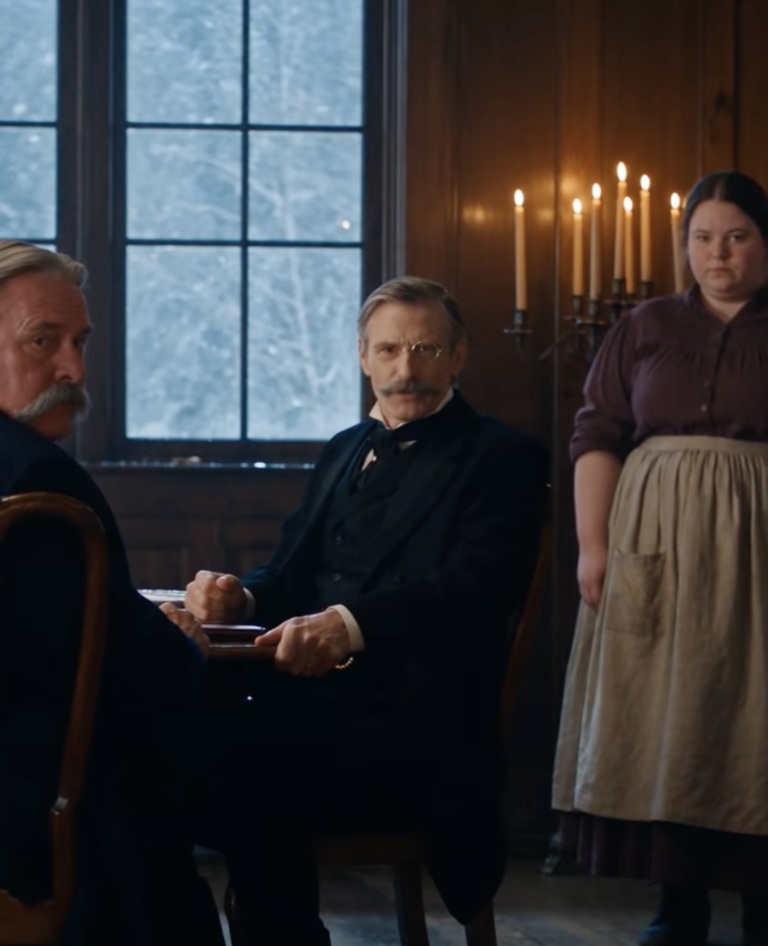
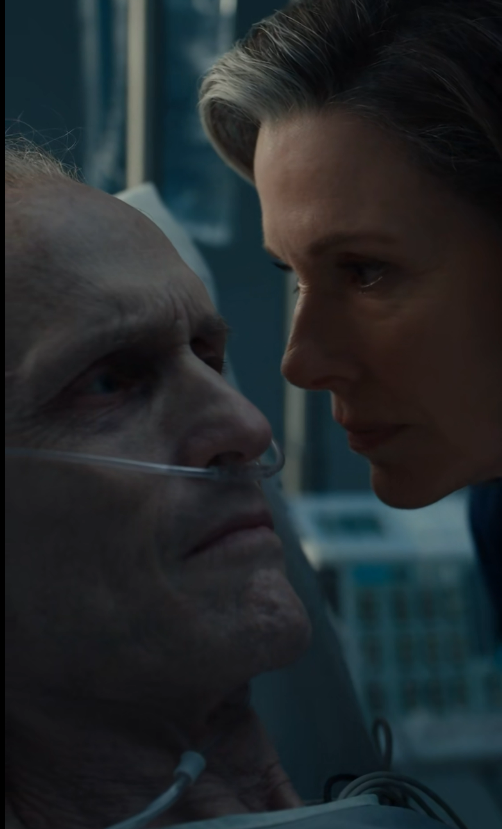
But what mattered was the final paragraph.
The attorney had attempted to contact me.
Twice.
Both letters had been signed for at my address.
I had never seen them.
I looked at Melissa.
She stared at the floor.
“Where are they?”
No answer.
“Where are the letters?”
Daniel turned toward his wife.
“Melissa?”
She began crying.
Not softly.
Not gracefully.
The tears came instantly.
“I was trying to protect us.”
Daniel stared at her.
“From what?”
“You don’t understand.”
“Then explain it.”
Melissa stood.
“I found the first letter months ago. It mentioned the Mercer property and inheritance. I thought—”
“You thought what?” I asked.
She wiped her face.
“I thought Daniel might be entitled to something.”
“So you opened my mail?”
“I panicked.”
“No. You made a decision.”
She looked at Daniel.
“We had nothing.”
That was when another truth came out.
Daniel’s failed business opportunity had not merely cost them their savings.
He had personally guaranteed debt.
Nearly $280,000.
I gripped the back of a chair.
“You told me you lost the investment.”
Daniel’s eyes filled with tears.
“I was ashamed.”
Melissa spoke faster now.
“When I saw the letter, I thought maybe the house was partly Daniel’s. Then we found the drawer. The documents were confusing. There were two Daniels, partnership papers, references to inheritance—”
“So you decided my home belonged to you?”
“I thought eventually it might.”
“Eventually?”
She said nothing.
I understood exactly what she meant.
After I died.
The room seemed suddenly very cold.
“You moved into my house,” I said quietly. “You opened my mail. You searched my husband’s private papers. And then you began treating me like an inconvenience because you thought all you had to do was wait.”
“That isn’t fair.”
“No?”
“I never wanted you dead.”
“I didn’t say you did.”
Melissa opened her mouth.
Then closed it.
I looked at Daniel.
“And you?”
His answer came painfully slowly.
“I knew about the papers.”
“Did you know about the letters?”
He shook his head.
I believed him.
Perhaps because I desperately wanted to.
Perhaps because he looked like the frightened boy who used to confess when he broke something.
But belief and forgiveness are not the same thing.
“You have one hour,” I said.
Melissa stared at me.
“For what?”
“To pack.”
Daniel looked stunned.
“Mom—”
“You came here for three months. You stayed nine. Tonight, you watched your wife remove me from my own Christmas table.”
“I didn’t know how to stop it.”
I looked at him.
“That is the problem, Daniel. You always knew what was wrong. You simply preferred me to suffer rather than make Melissa uncomfortable.”
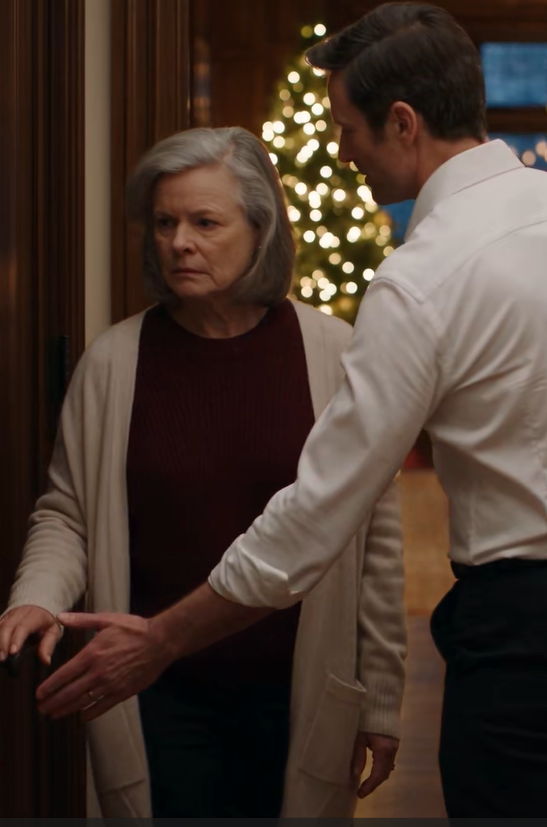
He began crying.
I almost did too.
But I had spent nine months shrinking.
I was finished.
The guests left quietly.
No one finished dinner.
Melissa packed upstairs while Daniel sat alone in the hallway.
At 10:40 that Christmas night, my son carried the final suitcase to their car.
Before leaving, he turned.
“I’m sorry.”
I wanted to hug him.
Instead, I said, “I know.”
Because sometimes love means refusing to erase consequences.