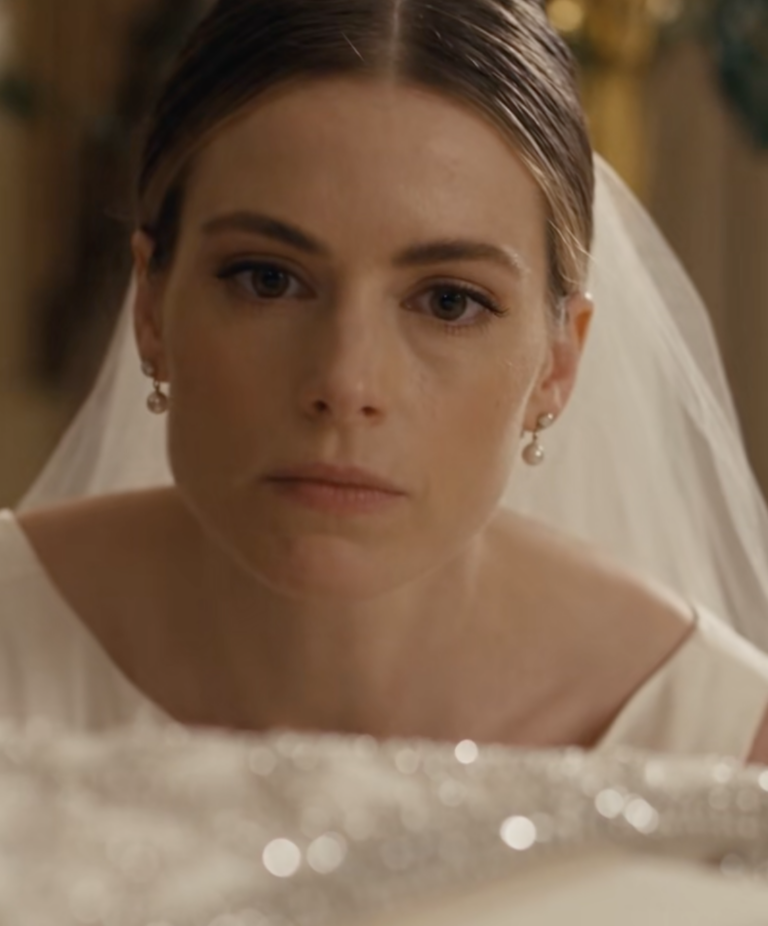
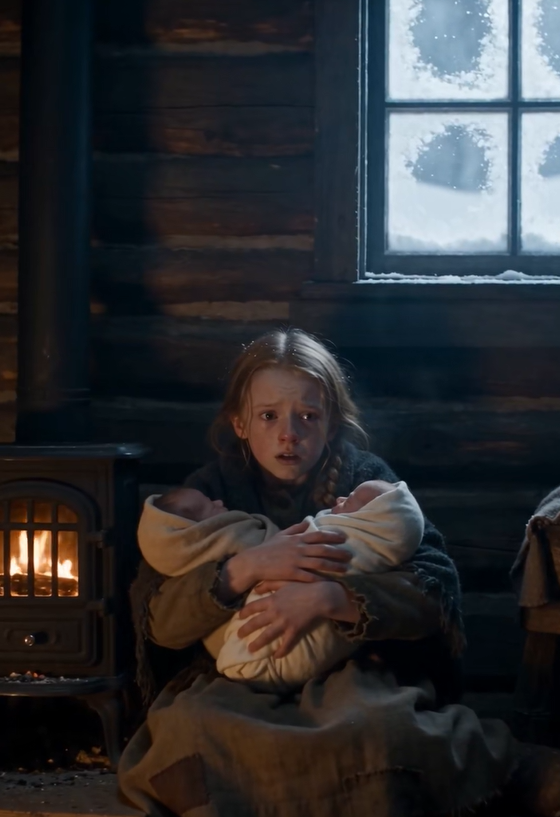
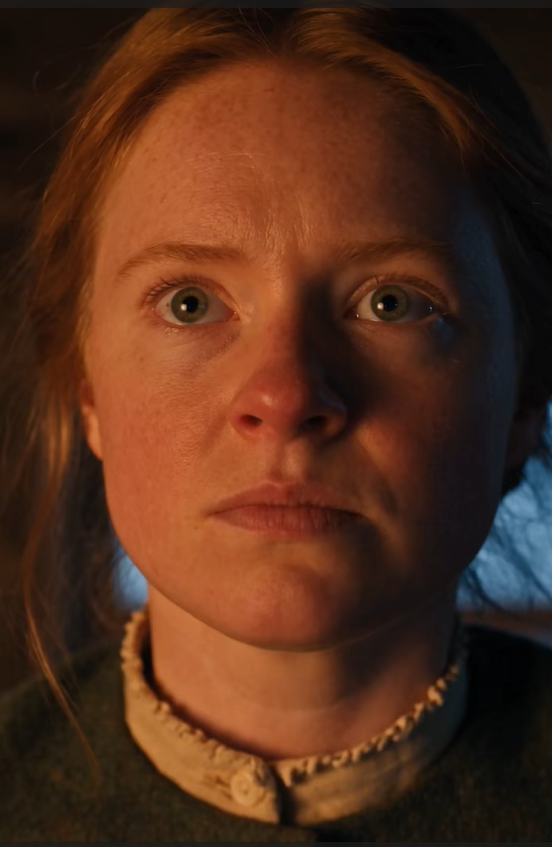
Coffee spilled across the table.
Caleb stood.
Mae didn’t move.
“What?”
She was staring at him.
“Jacob Rusk?”
“My father.”
Mae’s face had gone white.
“Mae?”
She reached beneath the collar of Caleb’s oversized shirt.
For half a second his body tensed.
Then she withdrew the brass key.
Caleb stared at it.
Mae placed it on the table.
“I’ve seen your father’s name.”
Caleb did not breathe.
“Where?”
“In Owen’s ledger.”
Outside, darkness swallowed the prairie.
Inside the cabin, the fire snapped softly.
Caleb remained motionless.
“What ledger?”
Mae clasped her hands together to stop them shaking.
“Owen keeps records.”
“Business records?”
“No.”
Her eyes met his.
“People.”
Caleb slowly sat.
Mae continued.
“When I married him, I thought the Draytons were only wealthy. Proud, maybe. Controlling.”
She laughed without humor.
“I didn’t understand what control meant yet.”
For months after the wedding, Owen had been charming.
Then came corrections.
Don’t wear that.
Don’t speak to him.
You ate enough.
Why are you smiling?
Who were you looking at?
Soon corrections became accusations.
Accusations became punishments.
When Mae resisted, Owen explained that no one would believe her.
He was right.
Once, she had gone to the sheriff.
Sheriff Nathan Drayton listened quietly.
Then drove her home himself.
Owen broke two of her fingers that night.
Another time Mae told Reverend Cooke.
The preacher asked what she had done to provoke her husband.
By the following Sunday, everyone in church was whispering that Mae had a nervous temperament.
Mercy Bend had not failed to see what was happening.
It had simply decided seeing was inconvenient.
Then, three weeks earlier, Mae found the ledger.
“Owen was drunk,” she said. “He’d fallen asleep in his office.”
She had gone inside looking for money.
Enough for a stage ticket east.
Instead she found a locked drawer.
The key had been in Owen’s vest.
Inside lay a dark red ledger.
“There were names,” Mae whispered.
“Whose?”
“Ranchers. Widows. merchants. Railroad surveyors. Judges.”
Caleb’s expression hardened.
“Beside the names were amounts. Dates. Notes.”
“What kind of notes?”
Mae swallowed.
“Pressure applied.”
Caleb’s eyes became still.
“Accident arranged.”
A muscle moved in his jaw.
“Debt transferred.”
Then Mae said the words that hollowed the room.
“Jacob Rusk—refused southern transfer.”
Caleb stared at her.
“What else?”
Mae closed her eyes.
“I only saw one line.”
“Tell me.”
“Caleb—”
“Tell me.”
Her voice dropped.
“J. Rusk. Miller’s Cut. J. Hale paid fifty dollars.”
Caleb stood so abruptly his chair crashed backward.
Mae recoiled.
He stopped immediately.
For a moment his anger vanished beneath shame.
“Sorry.”
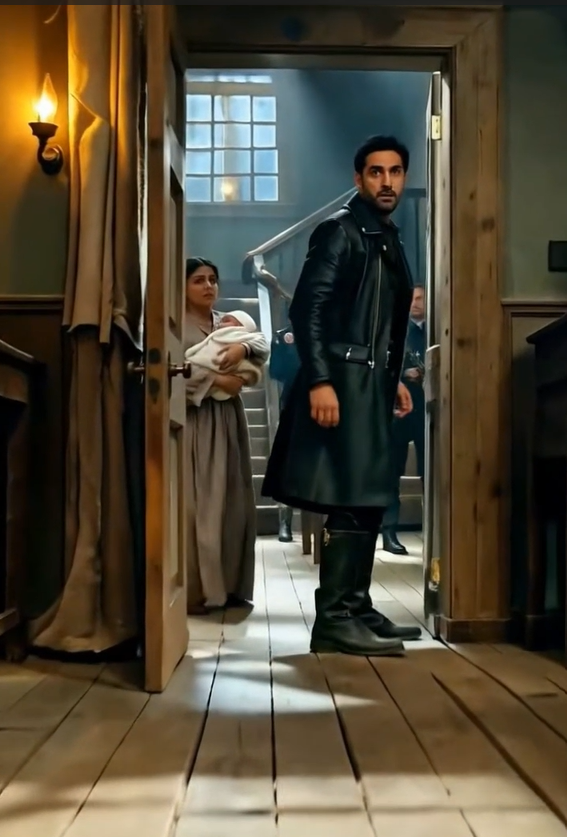
He walked outside.
The door remained open.
Mae could see his silhouette beside the porch rail.
He stood there a long time.
Then she heard something she never expected.
Not shouting.
Not curses.
A single broken sound.
A man grieving his father eleven years too late.
Caleb did not sleep.
Neither did Mae.
Just before dawn, hoofbeats came from the south.
Six riders.
Caleb stood at the window.
“Company.”
Mae’s blood went cold.
She rushed toward the back door.
Caleb caught himself before touching her.
“Wait.”
“They’ll kill you.”