That mattered.
“I know.”
He walked away.
Two years after that wedding, I received an invitation.
Heavy cream paper.
Elegant lettering.
For half a second, my body reacted before my mind did.
Then I saw the names.
Maya Torres and Daniel Chen.
Maya was getting married.
At Leo’s House.
She wanted a small ceremony beneath the oak trees.
I called her.
“You cannot possibly want a wedding here after what happened.”
“Exactly why I do.”
“That makes no sense.”
“It makes perfect sense.”
“Maya.”
She laughed.
“Clara, Julian does not get permanent ownership of weddings on your property.”
I became quiet.
She added:
“Neither does Chloe.”
So Maya married Daniel beneath the same trees where Julian once announced he was selling my home.
No glass ballroom.
No imported orchids.
No three-hundred-thousand-dollar production.
Forty people.
String lights.
Barbecue.
A chocolate cake that leaned slightly to one side.
Children from the family residence made paper flowers.
I wore blue.
Not black.
Halfway through the reception, one little boy tugged my sleeve.
His name was Theo.
Five years old.
Leukemia.
His mother had been staying at Leo’s House for six weeks.
“Miss Clara?”
“Yes?”
He held up a drawing.
A dinosaur.
Green.
Too many legs.
I laughed.
“That’s beautiful.”
“It’s Leo.”
My throat closed.
“You know about Leo?”
“Mom told me.”
Theo looked toward the sign.
“He built this place.”
I nearly corrected him.
Leo had not built anything.
He had been four.
He never knew this place would exist.
Then I stopped.
Children understand legacy differently.
Maybe Theo’s version was better.
“Yes,” I whispered.
“He did.”
Sometimes people ask me about the wedding.
Reporters did for a while because Gavin Rourke’s case became public.
Internet strangers turned the security footage into entertainment.
People loved the moment Chloe’s marriage certificate appeared.
They loved Julian’s face when he heard she said he only thought the baby was his.
They loved the spectacle.
I understood.
Spectacle is easier than grief.
But those moments are not what I remember most.
I remember Monday afternoon.
Leo’s juice cup.
Mud on my heels.
Julian telling me to stop crying.
I remember discovering the deed beneath my sweaters.
I remember sitting in Maya’s office listening to my husband plan around my devastation.
I remember watching him promise forever to someone else five days after lowering our child into the earth.
And I remember the second before I stepped onto that stage.
I could have destroyed Julian for revenge.
Part of me wanted to.
Instead, I told the truth.
There is a difference.
Revenge asks:
How much can I hurt you?
Truth asks:
What happens when I stop helping you hide what you did?
Julian destroyed his own marriage.
Chloe destroyed her own disguise.
Gavin destroyed his own career.
I did not have to manufacture their consequences.
I simply stopped protecting them from reality.
That became the most important lesson of my life.
Grief had not made me stupid.
But it had changed me.
It stripped away my appetite for pretending.
For politeness that required self-betrayal.
For relationships held together only because one person was willing to swallow every wound.
Losing Leo taught me that life could disappear even when you begged it not to.
Julian mistook that knowledge for weakness.
It became the opposite.
Once you have held the hand of your dying child, there are very few rooms left in the world frightening enough to make you abandon yourself.
Not a courtroom.
Not a marriage.
Not a ballroom filled with two hundred people.
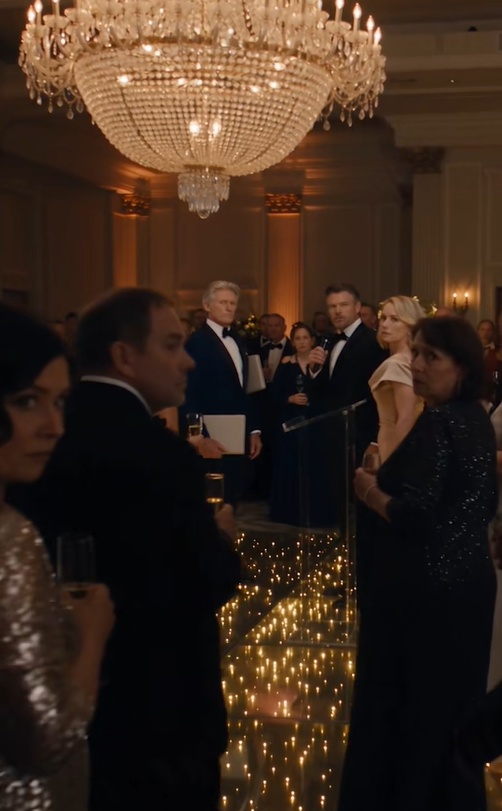
Not even your husband standing beneath a chandelier telling everyone he owns the ground under your feet.
The final irony came years later.
Argent eventually built luxury towers elsewhere.