“Want help?”
“No.”
I raised the axe.
Then lowered it.
Nathan waited.
“I think it should stay.”
He seemed surprised.
“Why?”
I touched the wood.
The scars from my fingernails were still there.
“Because towns forget.”
I looked across Copper Ridge.
Children ran past the courthouse.
Samuel’s forge rang in the distance.
Martha was opening her store.
“If we destroy everything that reminds us of what happened, someday someone might convince our grandchildren it never happened.”
Nathan nodded.
So the post stayed.
We put a bronze plate on it.
Not with my name.
With words Caleb once wrote:
FEAR SURVIVES WHEN GOOD PEOPLE BELIEVE THEY ARE STANDING ALONE.
Nathan stayed in Copper Ridge through that winter.
Then spring.
Then summer.
He repaired a cabin beside the eastern creek.
People began asking questions.
People in small towns consider another person’s business a public resource.
Martha asked me first.
“So?”
“So what?”
“You and Nathan.”
“There is no me and Nathan.”
“Of course.”
She folded cloth behind the counter.
“He only eats supper at your house four nights a week.”
“Three.”
“Five last week.”
“He was repairing the porch.”
“For six months?”
I left without buying the thread I had come for.
Grief is strange.
People speak of it as though it were a room you eventually leave.
It is not.
It is weather.
Some mornings are clear.
Others arrive carrying storms you thought had passed years earlier.
I still talked to Caleb.
Usually at his grave.
Nathan knew.
He never objected.
One October evening, nearly two years after Victor Caldwell was convicted, Nathan accompanied me to the cemetery.
He remained several yards away while I knelt beside Caleb’s stone.
I told Caleb about Samuel’s new grandson.
About Martha’s terrible peach preserves.
About the schoolhouse roof.
Then I told him about Nathan.
“I don’t know what to do,” I whispered.
Wind moved through the cottonwood.
“I loved you.”
My throat tightened.
“I still do.”
Tears came.
“But I’m alive.”
That was the hardest confession I had ever made.
Because for two years, some part of me had believed continuing to live was a betrayal.
I placed my hand against Caleb’s name.
“I think you knew that before I did.”
When I stood, Nathan was waiting by the gate.
He asked no questions.
We walked home.
Halfway there, I slipped my hand into his.
He looked down.
Then at me.
He smiled.
He did not say anything.
That was one of the reasons I loved him.
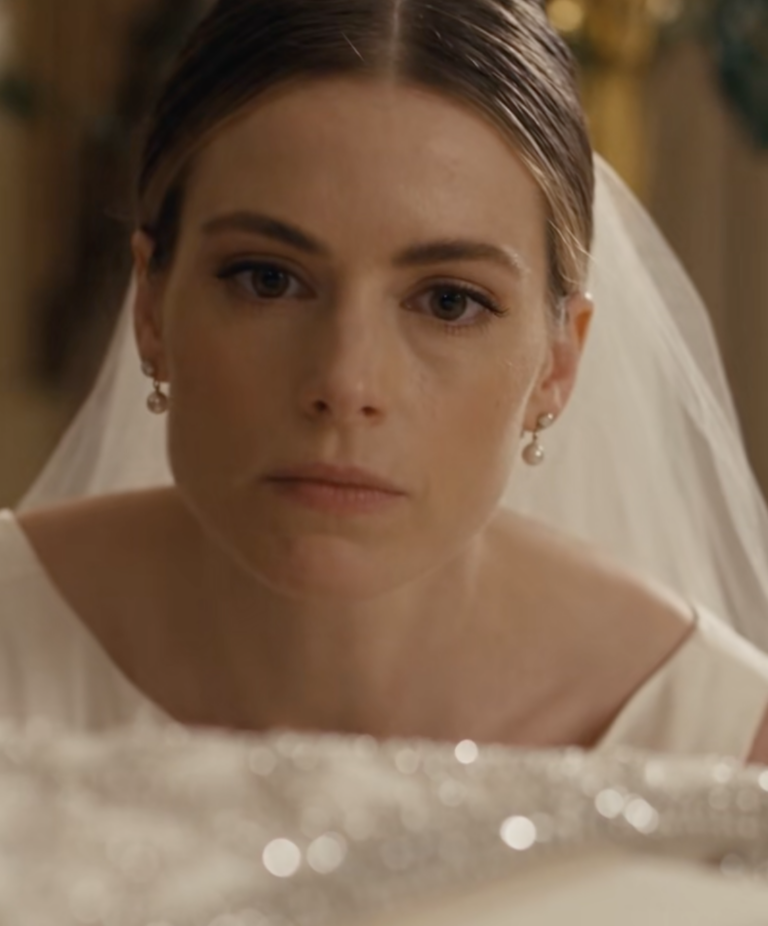
We married the following spring.
Quietly.
No grand ceremony.
No expensive dress.
Martha cried more than I did.
Samuel claimed smoke from the forge had followed him into church.
Nobody believed him.
Afterward, Nathan gave me one final envelope.
“Caleb asked me to wait.”
“Until when?”
Nathan smiled.
“Until you were happy again.”
I sat beneath the cottonwood beside our house and opened it.
Caleb’s handwriting greeted me one final time.
Morgan, if you are reading this, then Nathan finally learned to stop looking miserable long enough to tell you how he feels.
I laughed and cried at once.
Nathan, standing nearby, muttered, “He was insufferable.”
I kept reading.
I imagine learning everything I hid made you furious. I hope so. You deserve to be furious. I should have trusted you with the danger instead of deciding for you what you could bear.