Clay complained bitterly that she rejected too many risky loans.
Tessa complained that Clay approved too many.
They argued about it every Thursday.
Neither ever missed a meeting.
Morgan Creek prospered.
But Tessa never sold the house.
Never sold the creek.
Never sold the ridge where her father had taught her to ride.
And she never removed one particular object from the study.
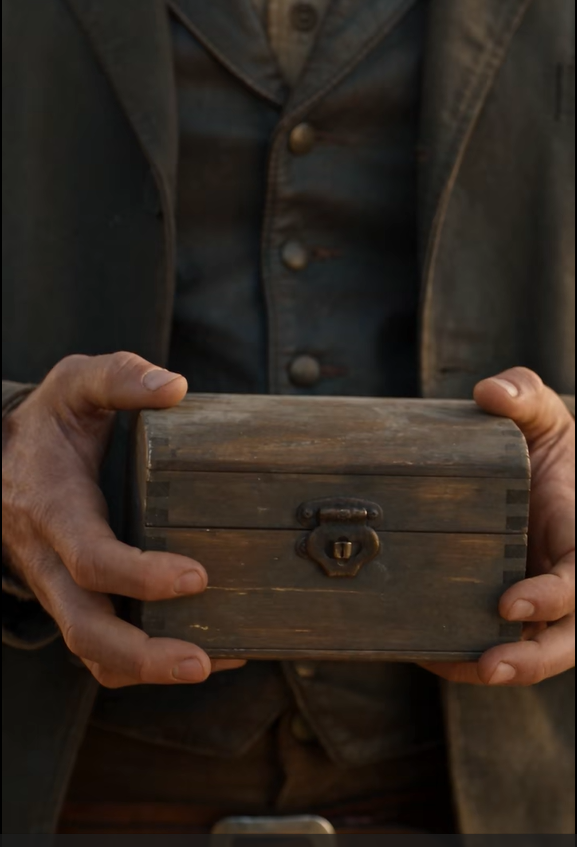
Above Jacob Morgan’s desk she framed the auction notice.
Beside it she placed the receipt for Clay’s twenty-six-thousand-dollar bid.
Visitors sometimes found that strange.
“Why keep the worst day of your life?” they asked.
Tessa always gave the same answer.
“Because it wasn’t.”
The worst day had been believing she was alone.
Believing everything her family built could disappear with one strike of an auctioneer’s hammer.
Believing her father’s death had been meaningless.
Believing a piece of paper could decide where she belonged.
The auction had taught her something different.
Land could be stolen.
Records could be forged.
Powerful men could cheat honest people.
But there were things no hammer could sell.
Loyalty.
Memory.
Truth.
Family.
One September evening, exactly a year after the cattle sale Tessa had once believed she would never live to oversee, she and Clay stood on the ridge above Morgan Creek.
Below them, six hundred cattle moved through golden grass.
Smoke curled from the station chimney.
The creek flashed beneath the setting sun.
Clay leaned against the saddle.
“You realize something?”
“That usually worries me.”
“You technically never lost the ranch.”
Tessa considered this.
“No.”
“And technically I never owned it.”
“No.”
“So that entire auction accomplished nothing.”
Tessa smiled.
“That isn’t true.”
“What did it accomplish?”
She looked across the valley.
At the ranch her grandfather had built.
At the house where her father had raised her.
At the railroad that had come expecting to dictate terms and instead negotiated with her.
At the land returned to families who had believed it gone forever.
Then she looked at Clay.
“It revealed everybody.”
Clay raised an eyebrow.
“Everybody?”
“Puit revealed what he was.”
“True.”
“Sturgis revealed what he was.”
“Also true.”
“My father revealed what he had done.”
Clay grew quiet.
“And you,” Tessa continued, “revealed what you were willing to risk.”
Clay looked uncomfortable.
He always did whenever gratitude came too close.
Tessa smiled.
“Twenty-six thousand dollars was a foolish amount of money.”
“Twenty-two thousand was technically already yours.”
“Borrowed.”
“Approved.”
“Borrowed.”
Clay sighed.
“Fine.”
“And the other four thousand?”
“Investment.”
“In property you legally never owned?”
He frowned.
“When you put it that way, it sounds badly managed.”
Tessa laughed.
The sound carried over Morgan Creek.
Below them, evening settled softly across the valley.
Clay placed his hat back on his head.
“So what do we call it?”
“What?”
“That twenty-six thousand.”
Tessa thought about the courthouse.
The falling hammer.
The terrible silence afterward.
The ride home when she had looked at every tree, ridge, pasture, and stone believing she was seeing them as their owner for the final time.
Then she remembered Clay arriving through the dust.
Wait.
One word.
One impossible word that had opened the door to everything else.
Tessa looked over the land that had never truly stopped belonging to her.
And she answered:
“The best losing bid anyone ever made.”