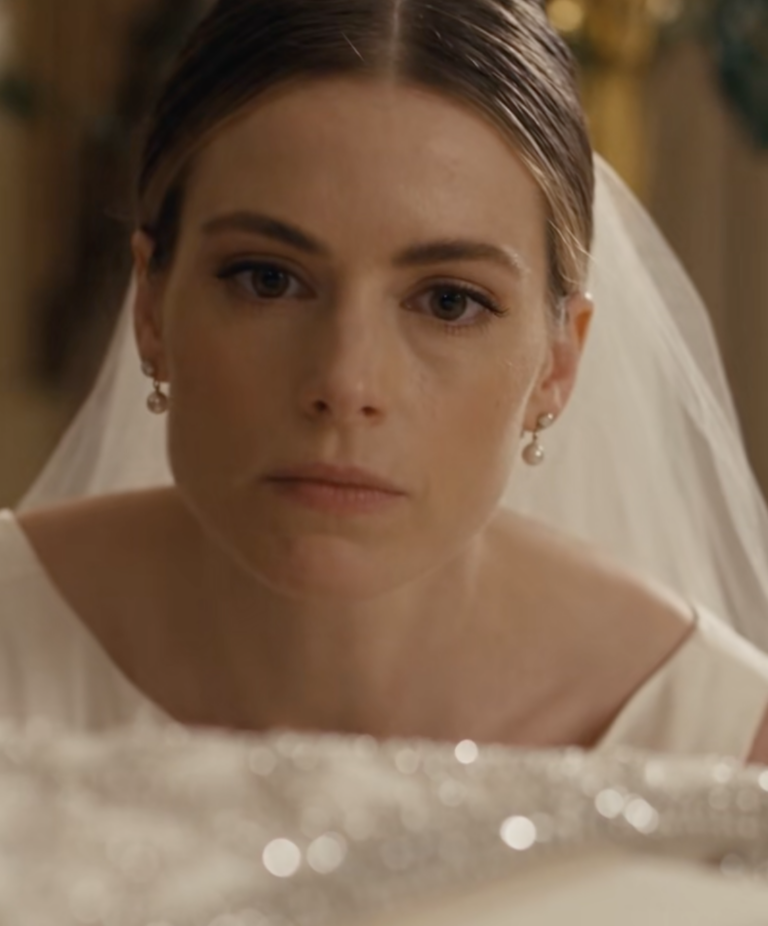
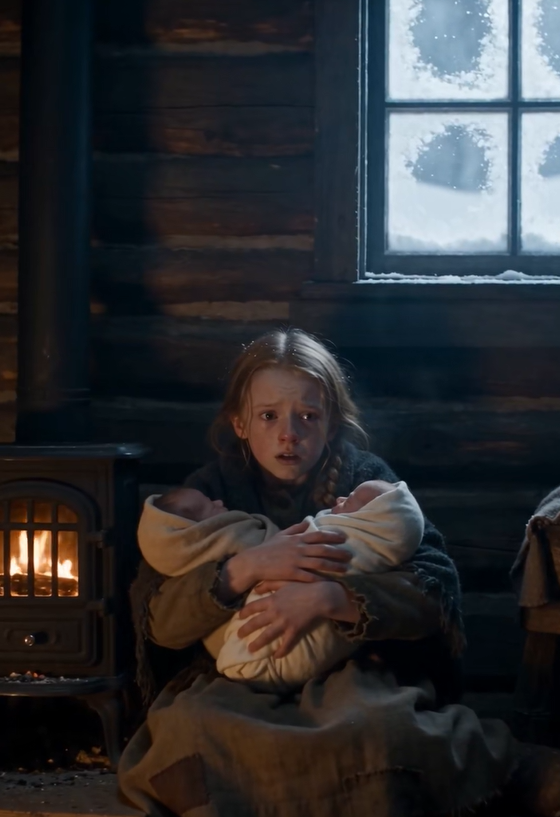
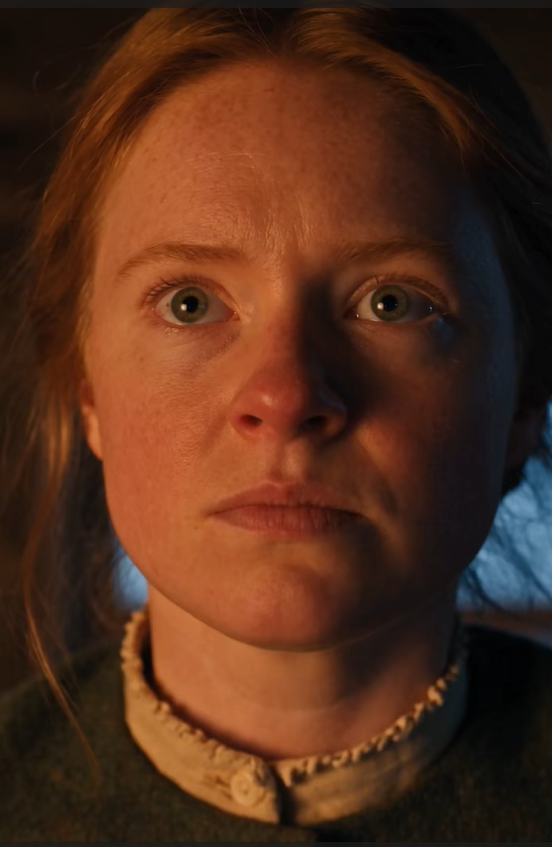
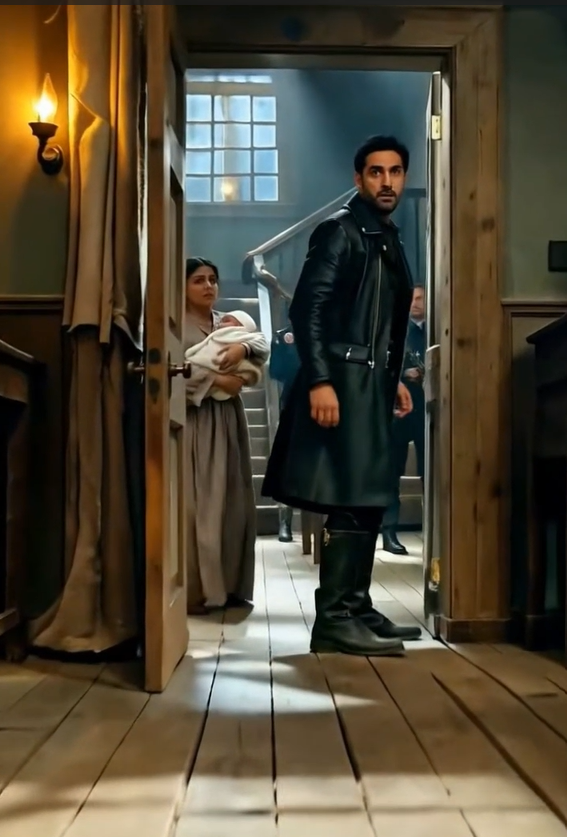
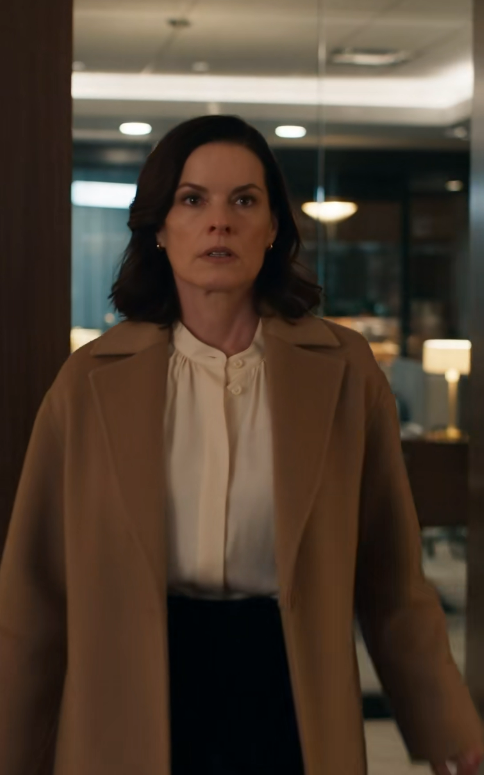
She climbed onto a wagon.
Caleb stood in the crowd beside Anna.
Mae read aloud.
The Larkin Spring water claim would be transferred into a permanent cooperative.
No single person would own it.
Every farm and household in the valley would receive protected access.
And one parcel beside the spring would be reserved forever.
Not for cattle.
Not for crops.
For a house.
A large one.
With locked doors that locked
from the inside.
A place for women who needed somewhere to go.
Mae looked across the gathered faces.
“People kept asking why I stayed.”
Nobody moved.
“Why I didn’t leave sooner.”
Her eyes found Mrs.
Talbot.
Then Beatrice.
Then Anna.
“But that is the wrong question.”
Her voice strengthened.
“The question is why men like Owen are allowed to build cages in plain sight while everybody calls the bars a marriage.”
Silence.
Mae continued.
“I was afraid nobody would believe me.”
She paused.
“Then I learned something worse.”
Several women lowered their eyes.
“Some people did believe me.”
Mae’s voice broke.
“They were simply more afraid of what would happen if they said so.”
She unfolded the deed.
“That fear ends here.”
One by one, people stepped forward to sign as witnesses.
The schoolmistress first.
Then Doctor Bell.
Mrs.
Talbot.
A rancher whose mother’s name appeared in Gideon’s ledger.
Then Beatrice Drayton.
Her hand trembled as she signed.
When she finished, she looked at Mae.
“I don’t deserve your forgiveness.”
Mae studied her.
“No.”
Beatrice flinched.
Mae continued.
“But you deserve the chance to become someone who doesn’t need it.”
Beatrice began to cry.

Winter reached Montana early that year.
By November, snow covered the Drayton ranch.
The government seized portions of the property while the fraud cases proceeded.
The great white house stood empty.
Owen waited in a territorial jail.
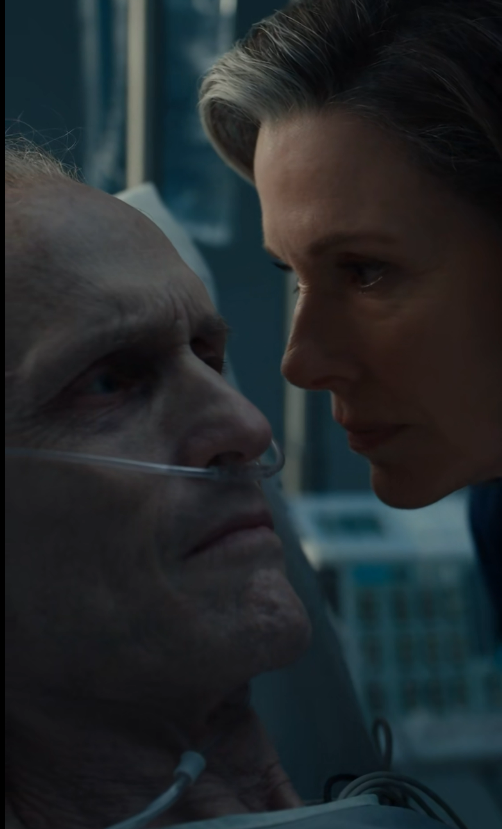
Gideon became ill before trial but lived long enough to hear that nearly every acre he had stolen would be returned.
He died in February.
Not murdered.
Not dramatically.
Just an old man in a narrow prison bed discovering that money could buy almost everything except another morning.
Caleb never visited him.
Anna did.
Caleb asked her why.
She looked toward the mountains.
“I wanted him to see me alive.”
That was all.
The following spring, construction began beside Larkin Spring.
Mae helped hammer the first board.
Caleb protested that her technique was terrible.
She informed him his opinion had not been requested.
Their arguments became famous.
So did their silences.
They did not fall into love quickly.
Mae had spent too long being told that marriage meant surrender.
Caleb had spent too long believing everyone he loved would eventually disappear.
So they moved carefully.
A cup of coffee on the porch.
A ride through cottonwoods.
An offered hand that waited until Mae chose to take it.
Months passed.
Then a year.
One evening, Caleb found Mae sitting beside the spring.
The sunset had turned the Montana sky copper and violet.
Children from town were playing near the new refuge house.
Anna was teaching one of them to skip stones.
Caleb sat beside Mae.
She looked at him.
“Do you remember the day you found me?”
“Hard to forget.”
“I thought you might kill me.”
He frowned.
“That’s flattering.”
“I thought every man might.”
Caleb looked toward the water.
Mae continued.
“Then you put your coat on the ground.”