He Gave Water to a Dying Apache Woman. By Sunrise, Three Hundred Warriors Had Come for the Truth.
The first thing Corvin Torne noticed was that three hundred armed men had surrounded his ranch without making a sound.
No war cries.
No rifles fired into the sky.
No horses charging through the grass.
Only silence.
And somehow, that frightened him more than anything else could have.
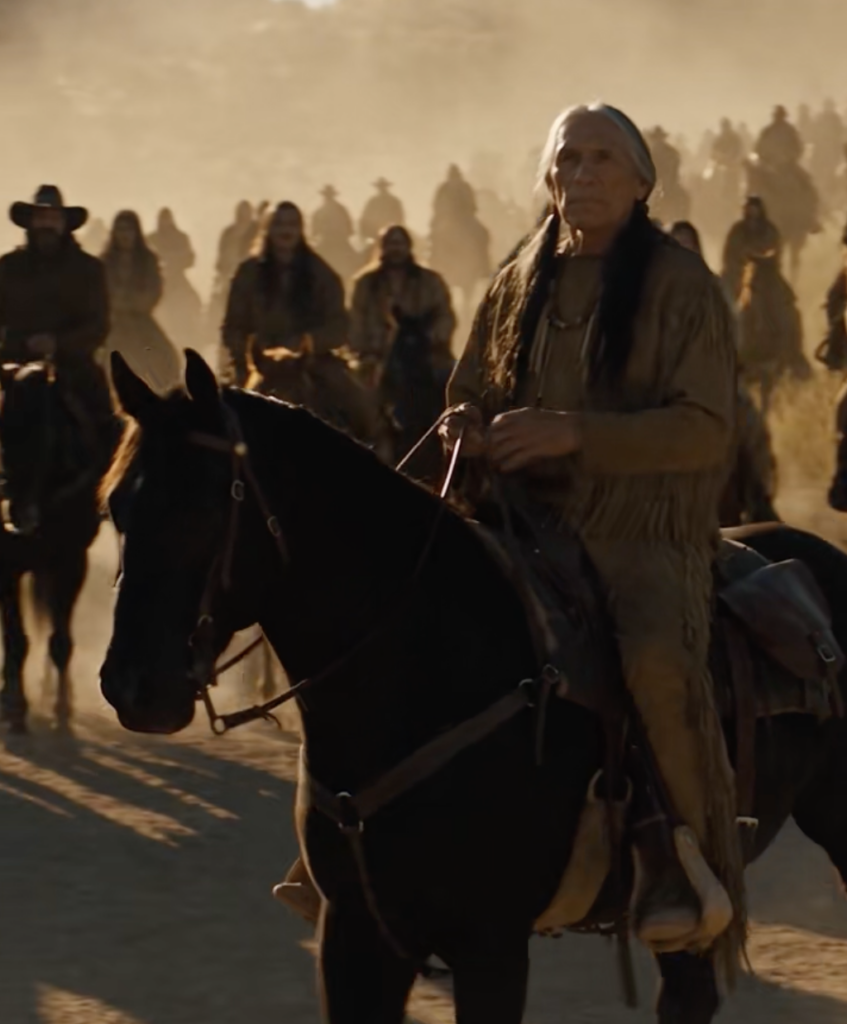
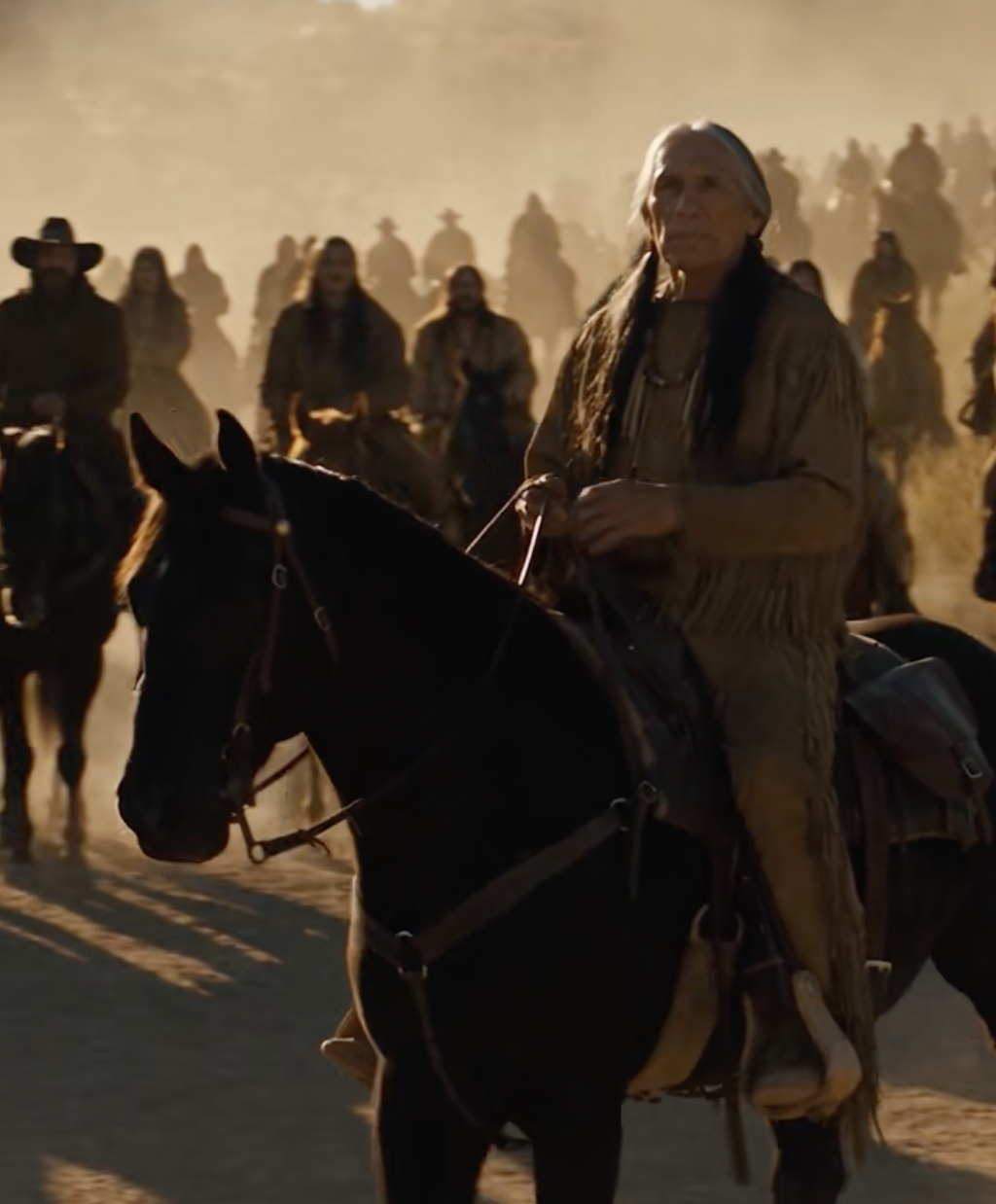
The pale Arizona sunrise crawled across the eastern ridge, turning hundreds of mounted figures into black silhouettes against a sky the color of old copper. Riders stretched along the northern rise, filled the broken hills to the east, and occupied the dry streambed west of Corvin’s cabin.
Every possible road out of the valley had been closed.
Corvin stood beside his porch in an open white shirt and worn trousers, his suspenders hanging loose against his hips.
His Winchester leaned against the doorway six feet behind him.
He did not reach for it.
A rifle might make a man feel brave when facing one enemy.
Against hundreds, it simply gave him something useless to die holding.
Inside the corral, his horses had crowded together in the farthest corner. Even the old chestnut gelding that had once kicked a mountain lion away from a foal stood trembling.
Corvin swallowed.
“All right,” he whispered. “What have I done?”
The answer was standing less than thirty yards away.
The stone well.
Yesterday afternoon, Corvin Torne had given one dying woman three ladles of water.
Now an army appeared to have come to collect the price.
The previous day had been hot enough to make the earth seem dead.
By noon the grass had curled beneath the sun, and the distant mountains floated behind waves of shimmering heat. Corvin had spent most of the afternoon repairing the wooden trough beside the well.
He had just pulled up another bucket when he noticed something leaning against the south fence.
At first he thought someone had thrown a blanket over the railing.
Then the blanket moved.
Corvin set down the bucket.
A woman was struggling to remain upright.
She was extraordinarily tall—nearly six feet, Corvin guessed—and even bent against the fence she possessed an imposing presence. Dust covered her deerskin clothing. Dark hair hung around her face in tangled strands.
One sleeve had been torn.
There was dried blood near her shoulder.
But thirst frightened Corvin more than the wound.
Her lips were split.
Her eyes had that strange distant appearance he had seen in cattle trapped too long without water.
Corvin approached slowly.
“Ma’am?”
The woman raised her head.
Her eyes sharpened instantly.
That alone told Corvin she was stronger than she looked.
He stopped several steps away.
“I’m not coming closer.”
She said nothing.
Corvin glanced toward the well.
Then toward her.
He dipped the wooden ladle into the bucket.
Water spilled across his fingers as he extended it.
“You look like you need this more than I do.”
For several seconds she only stared at him.
There was no begging in her face.
No gratitude.
No fear.
She appeared to be measuring him.