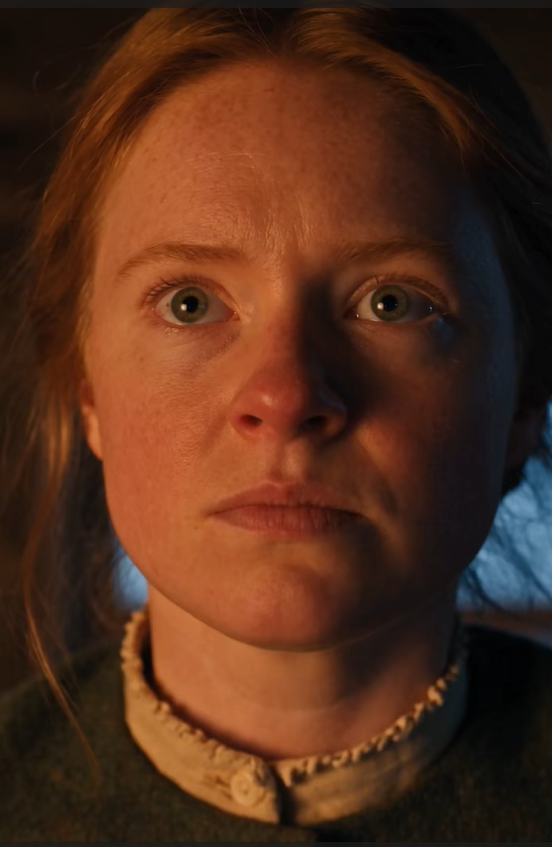
Kessa removed a folded sheet of paper from inside her clothing.
One corner was dark with dried blood.
She extended it.
Corvin hesitated before taking it.
Across the top was the name of the Red Mesa Land and Cattle Company.
Corvin knew the company.
Everyone within two hundred miles did.
It controlled wells, grazing permits, freight contracts, and enough county officials that people joked Red Mesa could have the sunrise arrested if dawn arrived without permission.
Its owner, Silas Vale, had visited Corvin twice during the previous year.
Both times he wanted to purchase the ranch.
Both times Corvin refused.
“I don’t like cities,” Corvin said.
Vale had laughed.
“This isn’t about your miserable cabin, Torne. It’s about the water.”
Corvin had assumed he meant cattle.
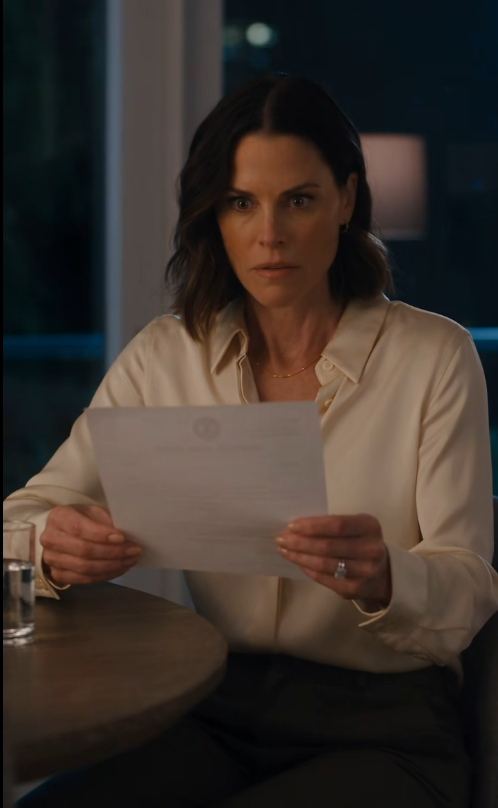
Now he read the paper Kessa had carried.
His mouth went dry.
There were instructions.
Names.
Payment amounts.
A date.
Today’s date.
And three words that made everything else disappear.
Torne must die.
Corvin read it again.
Then once more.
Below that line:
Death to appear result of Apache attack. Property transfer to proceed under county emergency authority. Survivors or witnesses undesirable.
Corvin raised his eyes.
“This could be forged.”
“It could,” Kessa said.
“Where did you get it?”
“From the man carrying it.”
“And where is he?”
“Alive.”
The old warrior added, “Unhappy.”
Despite himself, Corvin almost smiled.
Almost.
“Why would Vale want to kill me? He’s already tried buying the land.”
Kessa pointed toward the well.
“Because you cannot buy what you do not legally own.”
Corvin frowned.
“I own this ranch.”
“No.”
“I have the deed.”
“You have a deed.”
She emphasized the word differently.
Corvin turned toward the old warrior.
“What is she talking about?”
The old man dismounted.
For the first time Corvin noticed how stiffly he moved.
Age had not weakened his authority, but it had certainly entered his bones.
He walked toward the stone well.
“Before your house,” he said, “before your fence, before your cattle, before the road south, there was water here.”
“I figured that.”
The old man touched one weathered stone.
“This spring did not always belong beneath stones.”
Corvin said nothing.
“Our people used this valley when the country was dry. Others used it too. Mexicans. Travelers. Ranchers. Your father came as surveyor.”
“Elias was a carpenter.”
“Later.”
Corvin felt an unpleasant pressure building behind his ribs.
The old man continued.
“He was twenty-seven when Red Mesa’s first owner hired him.”
“Vale’s father?”
“Abraham Vale.”
Kessa looked at Corvin.
“Abraham wanted control of every permanent spring between Red Mesa and the northern cattle trails.”
Corvin looked toward his well.
“He couldn’t own every water hole.”
“He could if maps said the water holes were on his land.”
The truth arrived slowly.
Then all at once.
“My father falsified surveys.”
Neither answered.
They didn’t have to.
Corvin stepped backward.
“No.”
The old man watched him.
“No.”
Corvin’s voice hardened.
“My father wasn’t rich.”
“Because he stopped.”
“Stopped what?”
“Helping them.”
Corvin’s gaze shifted to the well.
A faint memory moved somewhere behind his eyes.
Firelight.
A wagon.
Someone shouting.