“I will not place her beside such a man.”
Maverick glanced toward the shelters.
“So she knows about this?”
“Yes.”
“She agreed?”
“Yes.”
“And I still can’t meet her?”
“No.”
Maverick rubbed both hands over his face.
“How long do I have?”
“Until sunset.”
“Sunset?”
“If you refuse, you leave tonight.”
Maverick looked toward the valley.
The river glowed beneath the sun.
Everything he had wanted was sitting right there.
Yet suddenly the bargain no longer felt like a bargain for land.
Somewhere beyond the shelters was a woman listening to strangers decide whether her scars made her marriageable.
Maverick knew what rejection felt like.
Not because women had rejected him.
Because the world had.
At twelve he had learned what it meant to watch a landlord place his family’s belongings in the rain.
At sixteen he had slept in a stable because he could not afford a room.
At twenty he had been told he lacked the breeding to become foreman.
At twenty-seven he owned one saddle, one horse, fifty-three dollars and a map promising land that might not even be his.
He stared at the river.
Then at the chief.
“Three questions.”
Lobo Negro nodded.
“Does she want children?”
A few listeners exchanged surprised glances.
“I believe so.”
“Does she want to remain here?”
“Yes.”
“Does she have the right to refuse me at the ceremony?”
Lobo Negro became completely still.
Then something like respect entered his face.
“Yes.”
Maverick stood.
“Then so do I.”
“Yes.”
Maverick put on his hat.
“Tell her I accept.”
Three days later, the entire valley gathered beside the river.
Maverick had slept almost none of the previous two nights.
Not because he feared his bride’s appearance.
He feared everything else.
What if she hated him?
What if she had accepted only because her father demanded it?
What if he had allowed his hunger for land to turn him into the kind of man he despised?
When sunset came, he stood beneath the cottonwoods wearing his cleanest white shirt and a dark vest he had not worn since his mother’s funeral.
Then the crowd parted.
A woman walked toward him.
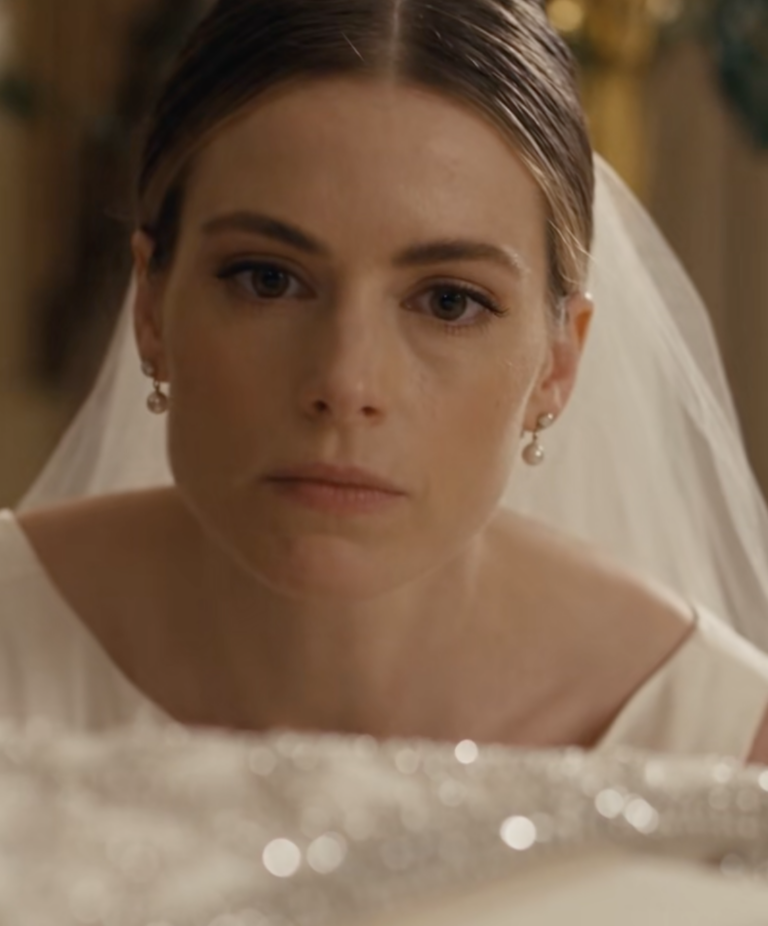
A long white veil covered her face, tiny blue beads sewn along its edges.
She was tall.
Not extraordinarily so, but nearly reaching Maverick’s shoulder.
Her movements were controlled.
Proud.
Only her hands betrayed her.
One thumb pressed repeatedly against the other.
She was terrified.
Maverick’s stomach tightened.
Somebody whispered her name.
“Ayasha.”
He repeated it silently.
Ayasha.
Not the chief’s ugly daughter.
Not the woman no man wanted.
Not the price of a valley.
Ayasha.
She stopped before him.
Lobo Negro approached.
The old chief looked from Maverick to his daughter.
“Once the veil rises,” he said, “there will be no pretending you did not see.”
Maverick frowned.
“I never asked to pretend.”
Ayasha’s hands stopped moving.
Maverick looked at the veil.
Then he spoke softly enough that only she could hear.
“You can still say no.”
Her head lifted.
“And you?”
“I can too.”
“Will you?”
“No.”
“Why?”
Maverick thought about lying.
He could have said because of honor.
Because of destiny.
Because he already felt something for her.
All would have sounded better than the truth.
So he gave her the truth.
“Because I came for the land.”
Her shoulders stiffened.
“But I’m standing here for you.”
Silence.
Then, beneath the veil, he heard the smallest exhale.
“All right,” she whispered.
Lobo Negro reached for the fabric.
Ayasha stopped him.
“No.”
Her hand rose.