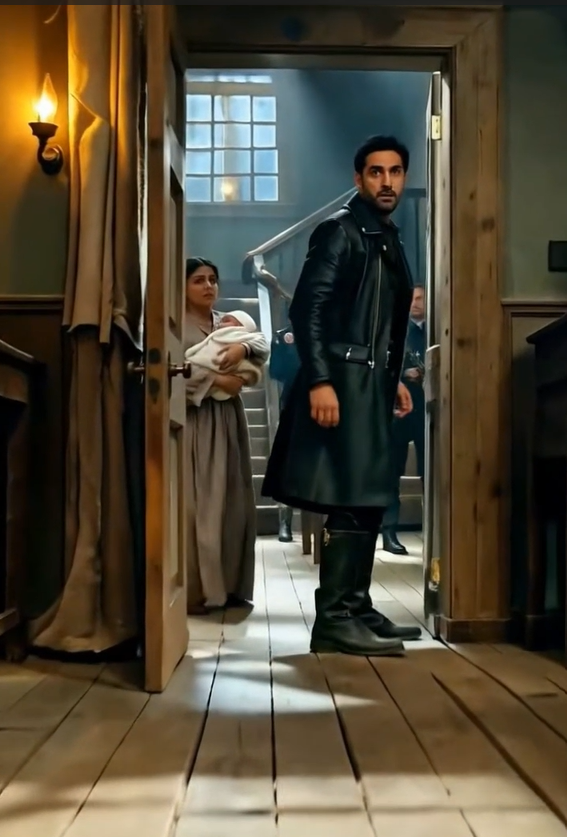
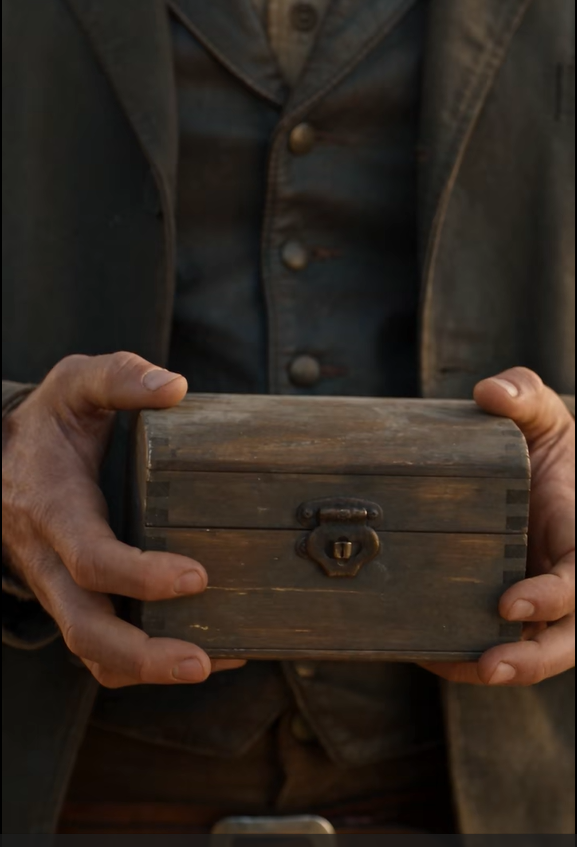
And Maverick finally understood the real test.
The marriage.
The ugliness.
The secrecy.
None of it had been designed to give him land.
It had been designed to discover what kind of man he became when land was placed within reach.
“You think I’m going to steal it.”
“We did not know.”
Maverick’s voice became quiet.
“You still don’t.”
“No.”
That honesty cut deeper than accusation.
He turned toward the door.
“Where are you going?”
“To sleep outside.”
“Maverick—”
“I married a woman who spent a year studying my life and three days pretending not to know my name.”
Ayasha flinched.
He immediately hated himself for noticing.
But he continued.
“I need air.”
He stepped into the night.
Behind him Ayasha whispered, “So do I.”
Three weeks passed.
They remained married.
Barely.
Maverick slept inside again after the second night, though mostly because a thunderstorm flooded the porch.
During daylight he worked beside the river repairing irrigation channels, learning the valley, and trying not to think about the document that might make him wealthy.
Ayasha was everywhere.
She rode better than him.
She knew which soil held water longest.
She could read territorial law.
She could shoot.
She could also make coffee so terrible Maverick accused her of using it to poison enemies.
One morning she placed a cup in front of him.
“Drink.”
Maverick eyed it.
“I prefer death by hanging.”
“You complain too much.”
“You burn coffee twice.”
“That is how my father likes it.”
“Your father has survived war, hunger and displacement.
His taste buds clearly died first.”
Ayasha laughed.
Maverick looked up.
Something shifted between them.
Slowly, dangerously, the marriage stopped feeling like an arrangement.
At night they talked.
At first about ordinary things.
Horses.
Weather.
Food.
Then deeper things.
Maverick told her about his mother sewing late into the night after his father died.
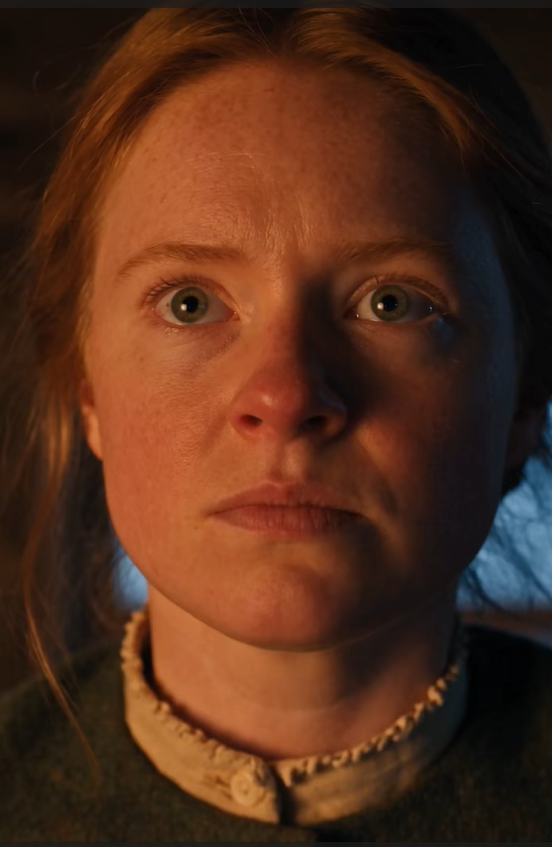
Ayasha told him about the fire.
She had been fourteen.
A lantern overturned inside a shelter during a storm.
Flames trapped two small children.
Ayasha went inside.
She came out carrying both.
One child survived.
The other did not.
“And afterward?”
Maverick asked.
“People stared.”
“Men?”
“Everyone.”
“Your father said men rejected you.”
A strange expression crossed her face.
“That part was not entirely true.”
Maverick groaned.
“Another lie?”
“Several men wanted to marry me.”
He stared.
“How many?”
“Enough.”
“Then why did your father—”
“I rejected them.”
“All?”
“Yes.”
“Why?”
Ayasha looked directly at him.
“Because they saw my scars and tried too hard not to see them.”
Maverick frowned.
“One called me brave every time I entered a room.
Another never looked at the right side of my face.
Another told me I was beautiful so often that I knew he was trying to convince himself.”
Her voice softened.
“I wanted someone who could look at me and eventually forget there was anything unusual to look at.”
Maverick swallowed.
“And have I?”
Ayasha considered him.
“Sometimes.”
“Only sometimes?”
“When you are angry, you stare at my left eye.”
“Why?”
“Because you think the other one cannot see as well.”
He looked embarrassed.
She smiled.
“It can.”
Maverick smiled back.
Then Ayasha touched his hand.
Everything changed.
He did not kiss her that night.
He almost did.
Perhaps that was why what happened the following morning hurt so much.
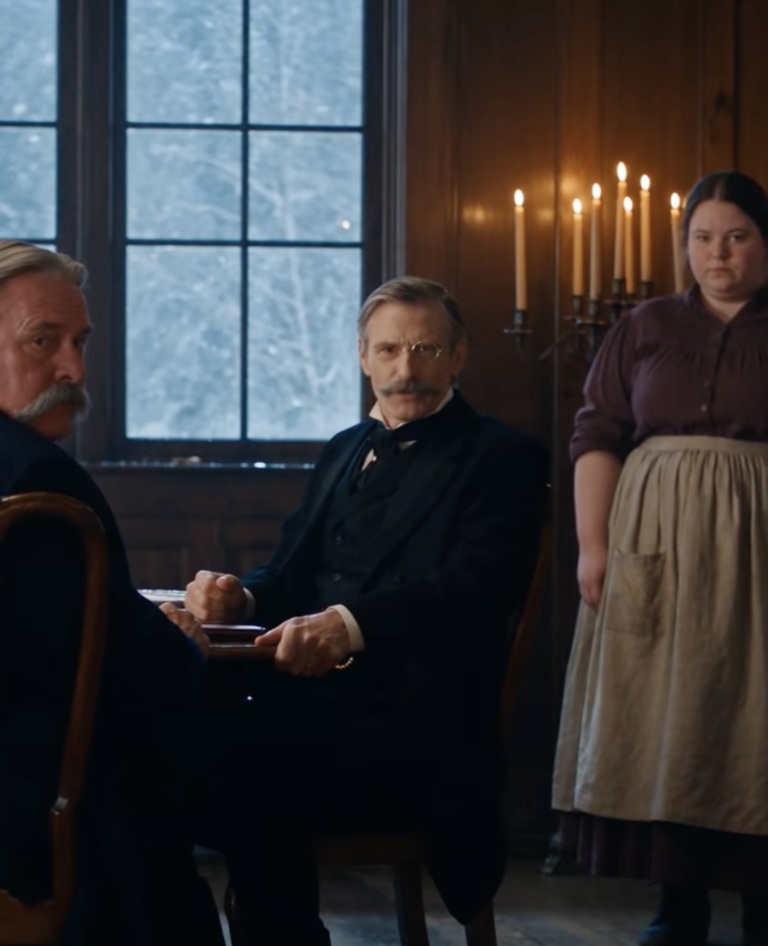
Silas Rourke arrived.
He came with twelve armed men and a United States marshal.
Rourke was nearly seventy.
Thin.
Immaculately dressed despite the dust.
White hair beneath a black hat.
A silver-headed cane.
And when Maverick saw him, something inside his memory stirred.