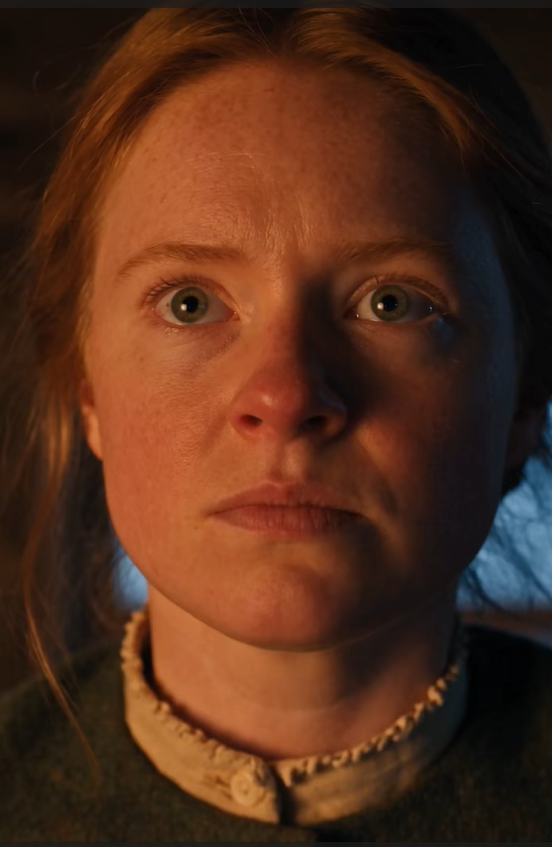
And Helen’s seat.
Helen had discovered that shortly after arriving.
An attendant at the ballroom entrance gave her a strained smile.
“Mrs. Warren, you’re at table nineteen.”
Helen looked at the card.
Table nineteen was nearly hidden behind a marble column near the service doors.
“I believe I was at table one.”
The attendant reddened.
“There was a change this morning.”
“By whom?”
“I’m sorry, ma’am.”
Across the ballroom Clara had been standing beside her mother, holding champagne.
She lifted the glass slightly toward Helen.
A private salute.
A tiny victory.
Helen merely met her eyes.
That had apparently annoyed Clara more than anger would have.
Helen had learned that about her months earlier.
Clara did not merely want obedience.
She wanted visible surrender.
That was why Helen had refused to give it to her.
When David first introduced Clara eleven months earlier, Helen had tried desperately to like her.
David had been lonely for years.
His father, Richard Warren, died when David was twenty-three. After that, David drifted through relationships without staying long enough to build anything.
Then Clara appeared.
She was thirty-one, polished, intelligent, and charming when she chose to be.
She worked in luxury event consulting and spoke effortlessly about art, travel, architecture, and restaurants Helen had never visited.
For the first few months, Helen thought perhaps David had finally found someone who could challenge him.
Then small things began happening.
Clara would correct David’s stories in front of friends.
She rearranged the photographs in his apartment without asking.
She told Helen that David needed “distance from childhood habits.”
Once, during dinner, Helen offered David a second helping of roast chicken.
Clara laughed.
“His mother still feeds him like he’s twelve.”
Everyone at the table laughed politely.
Helen did too.
But David stopped reaching for the chicken.
That was when Helen began watching.
Not interfering.
Watching.
Then came the engagement.
And everything accelerated.
David sold his townhouse and moved into a penthouse Clara had chosen.
He stopped attending Sunday dinners.
He began declining calls.
Then relatives started behaving strangely around Helen.
A cousin failed to invite her to a birthday celebration.
Her sister-in-law stopped responding to messages.
David became colder.
At first Helen assumed Clara had simply complained about her.
Then, three weeks before the wedding, Helen’s nephew Michael called.
“Aunt Helen, I don’t know if I should ask this.”
“Ask.”
“Did you really tell Clara you’d stop the wedding?”
Helen went still.
“What?”
Michael sent screenshots.
A family group chat.
Her photograph.
Her name.
Messages beneath it.
Clara is marrying him for money.
David is making the biggest mistake of his life.
I’ll stop the wedding if I have to.
Helen stared at the images for nearly five minutes.
She had never seen the conversation before.
But Clara had chosen the wrong victim.
Richard Warren had spent forty years building businesses, and Helen had spent thirty-eight of those years beside him.
People saw a polite widow.
What they forgot was that Helen had reviewed contracts at midnight while David slept upstairs.
She had negotiated bank loans when Richard’s first company nearly collapsed.
She had caught an accountant stealing before three professional auditors did.
Helen understood something Clara did not.
A lie usually left paperwork behind.
So Helen began looking.
The first clue came from the number attached to the fake messages.