“What problem?”
“Not exactly a legal one.”
She sat across from me.
“The Reid trust reaches its five-year eligibility review next month.”
I nodded.
“Already?”
“Already.”
“Has he met the conditions?”
Rebecca smiled.
“More than met them.”
I felt something loosen in my chest.
For five years, Reid had accepted no money from me.
No secret help.
No professional favors.
And according to the independent trustee, he had completed more than eighteen hundred documented volunteer hours before taking the nonprofit job.
He did not know anyone was counting.
That was the point.
“So release it when appropriate,” I said.
Rebecca did not move.
“What?”
“There’s something you need to see.”
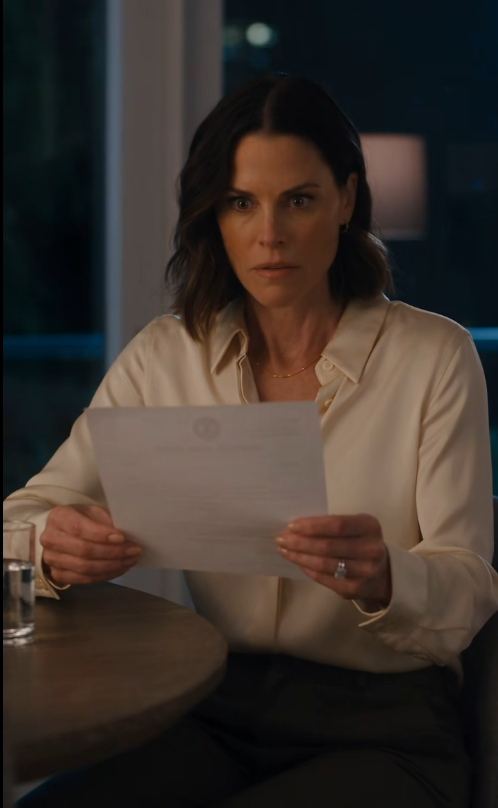
She opened the second folder.
Inside was a copy of the original estate documents.
Then another document I had never seen.
My signature appeared at the bottom.
I stared at it.
“What is this?”
“A codicil.”
“I never signed this.”
“I know.”
My blood went cold.
“Then why does it have my signature?”
“It’s a forgery.”
I looked up sharply.
Rebecca continued.
“We found it during archival digitization. It had been inserted into the old physical file almost six years ago.”
Six years.
The timing struck me immediately.
Before the dinner.
Before the sale.
“What does it do?”
She turned the document toward me.
I read.
And for a moment, the room seemed to tilt.
The forged codicil redirected nearly my entire estate.
Not to Reid.
Not even to Tessa.
To an entity called Sycamore Family Preservation Trust.
Trustee:
Tessa Tate.
My hands went cold.
“How?”
“We investigated before bringing this to you.”
“Who forged my signature?”
Rebecca’s expression changed.
“That is the part you are not expecting.”
I thought of Tessa.
Her entitlement.
Her question about my money.
Her strange certainty.
“Just tell me.”
Rebecca took a breath.
“It wasn’t Tessa.”
I stared at her.
“It was my father.”
I did not understand.
“Jacob?”
She nodded.
“No.”
“I’m afraid so.”
The room went silent.
Jacob Rosen.
My attorney.
My friend.
The man who had handled my affairs for twenty-two years.
“That’s impossible.”
“I wish it were.”
Rebecca showed me records.
Metadata.
Archived correspondence.
A private investigative report.
And then the final piece.
A letter Jacob had left with instructions that Rebecca open it only if she ever discovered the forged document.
His handwriting shook across the page.
Wilma,
If you are reading this, I failed to correct one of the worst mistakes of my career.
Five years ago, Tessa approached me claiming you had promised to restructure your estate because you were worried Reid was financially irresponsible. She produced emails, notes, and a copy of your signature. She offered me money.
I refused.
I looked at Rebecca.
She whispered, “Keep reading.”
Three weeks later, my son Benjamin was arrested.
I remembered.
Jacob’s youngest son had struggled for years with gambling debt.
He owed people far more dangerous than bookmakers. Tessa found out.
My pulse quickened.
She offered to clear Benjamin’s debt if I placed the document in your file. I told myself it would never matter. I told myself you would revise the estate eventually. I told myself I was protecting my son.
I became exactly the kind of man I spent my career warning clients against.
The document is invalid. I preserved evidence proving that. But I lacked the courage to confess.
There is something else you must know.
I stopped breathing.
Reid discovered what Tessa had done.
I read the sentence twice.
Then a third time.
“What?”
Rebecca nodded toward the next page.
He came to my office two days before the promotion dinner.