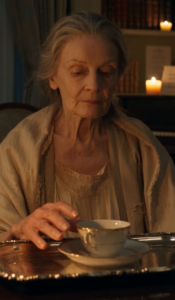
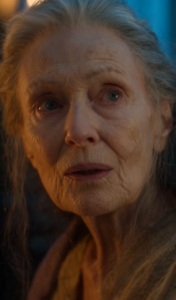
The older woman wiped her face.
“Gerald came to see me yesterday.”
Everyone turned toward him.
“I’ve been ill,” he said. “I started putting my affairs in order. Then I opened the safe.”
Julian laughed bitterly.
“A conscience brought on by a diagnosis.”
Gerald did not deny it.
“I came to tell Eleanor there was a possibility her daughter had survived.”
“A possibility?” Elena repeated.
“I was still a coward yesterday.”
Eleanor looked at the violin.
“He described Samuel. The workshop. The instrument. And suddenly three years of watching you became something I was terrified to believe.”
She reached toward Elena, then stopped herself.
“I asked you to bring the violin because I needed to see the mark Gabriel carved beneath the chin rest.”
Elena knew the mark.
A tiny crescent moon.
Samuel had told her the maker put it there for luck.
“He called you his little moon,” Eleanor whispered.
Elena turned the instrument.
There it was, darkened by years of touch.
For the first time, her father ceased to be a name on a certificate.
He had held this wood.
Bent over it.
Carved a moon so small that only someone holding the violin close would ever find it.
Vanessa had not spoken for several minutes.
Now she said, “The letters.”
Elena looked up.
Vanessa’s mascara had dried in dark lines down her cheeks.
“The ones that came to the staff entrance.”
Elena went cold.
Every few months, an envelope arrived from an old friend of Samuel’s.
He signed himself G.
Samuel had introduced the correspondence when she was sixteen, explaining that his friend lived in an institution and had little contact with the outside world.
The man wrote about music.
Never much about himself.
He asked which pieces she was learning. Whether the violin’s lower strings still sounded warm. Whether she had enough work.
Elena had written back because Samuel asked her to.
Later, because she wanted to.
“You read my letters?”
Vanessa glanced at Julian.
“He asked me to watch for them.”
Maxwell stepped away from his wife as though even the air between them had become contaminated.
“What did you do?”
“Most of them, nothing.”
“Most?”
Vanessa began to cry.
“Three arrived last month.”
Elena remembered.
She had thought G was tired of her. She had written about Samuel’s birthday, about how difficult grief became when everyone assumed it should be finished.
No answer came.
“What did you do with them?”
Vanessa looked at the fireplace.
The old ashes were grey beneath the grate.
Elena stared.
“You burned them.”
“I didn’t know who he was.”
“You knew they were mine.”
Vanessa had no answer.
Elena left the room.
Maxwell called her name, but she kept walking.