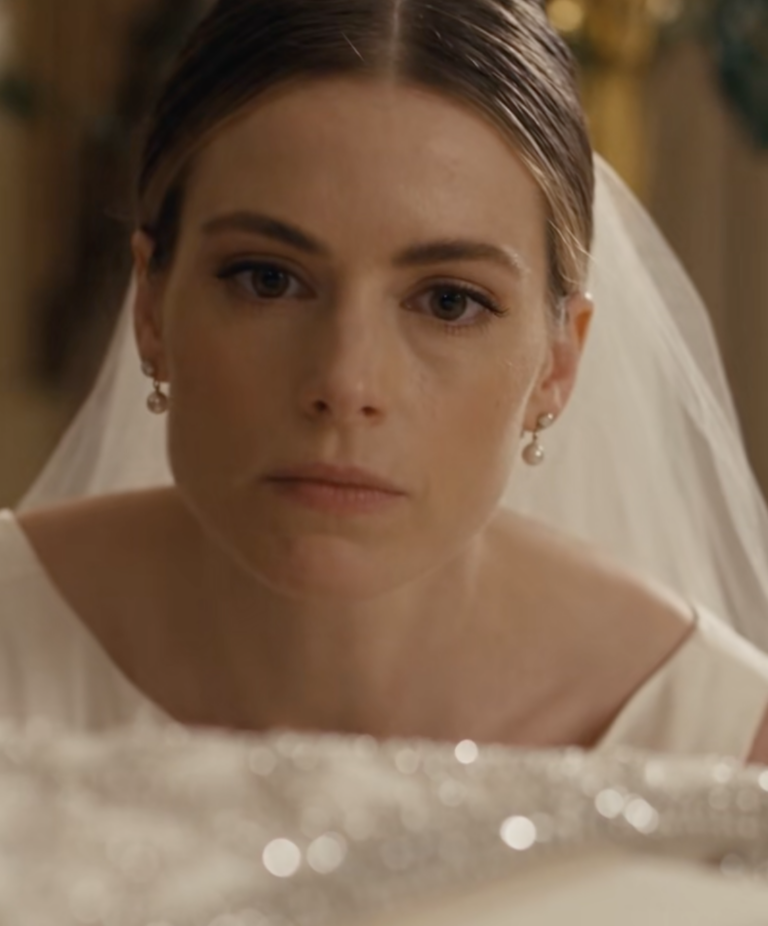
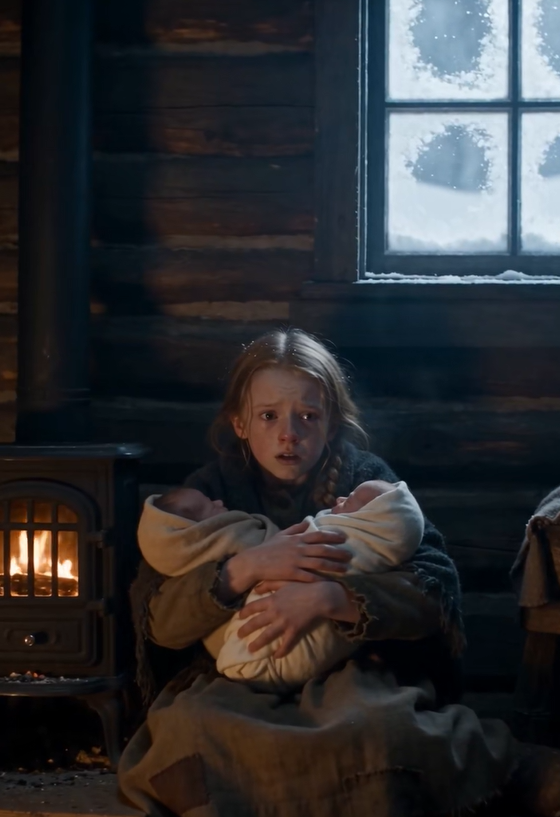
Seven-year-old me had no idea what the fabric meant.
No idea the elegant woman beside me was carrying decades of secrets.
No idea a cruel woman would someday rip that silk apart in front of hundreds of people.
And no idea that the tear would expose a forged transfer, an old embezzlement, a stolen trust and a lie that had poisoned two families for nearly eighty years.
Dad touched the glass.
“I used to think protecting family meant hiding the ugliest things.”
“And now?”
He considered the question.
“Now I think secrets are like rot beneath floorboards.”
He looked at me.
“You can cover them with beautiful rugs. But eventually someone falls through.”
The next evening, hundreds of people attended the exhibition.
Reporters photographed the dress.
Design students studied my restoration stitches.
A young woman stood beside me for nearly ten minutes before finally asking:
“Why didn’t you make the repair invisible?”
I looked through the glass at the long silver scar.
“Because it happened.”
She waited.
“And because repairing something doesn’t require pretending it was never damaged.”
She nodded slowly.
Then moved on.
I stayed behind.
Watching people look.
Not stare.
Look.
There is a difference.
Vanessa had spent her life looking at surfaces and calling that discernment.
She saw labels.
Surnames.
Addresses.
Schools.
Clubs.
Fabric.
She believed class meant being able to identify who belonged above whom.
But beneath all her expensive certainty was a frightened nineteen-year-old girl still trying to reclaim a house she believed had been stolen.
She never questioned the story because the story gave her someone to hate.
And hatred, when carefully polished, can resemble purpose for a very long time.
I sometimes wonder what would have happened if someone had told her the truth at nineteen.
Maybe nothing.
Maybe everything.
But that wasn’t my story to repair.
Mine was simpler.
A woman tore my dress because she believed humiliation would make me disappear.
Instead, the sound of ripping silk stopped a ballroom.
It brought my father downstairs.
It put three hundred witnesses in front of a screen.
It forced secrets out of locked cabinets.
And it exposed something far bigger than Vanessa intended.
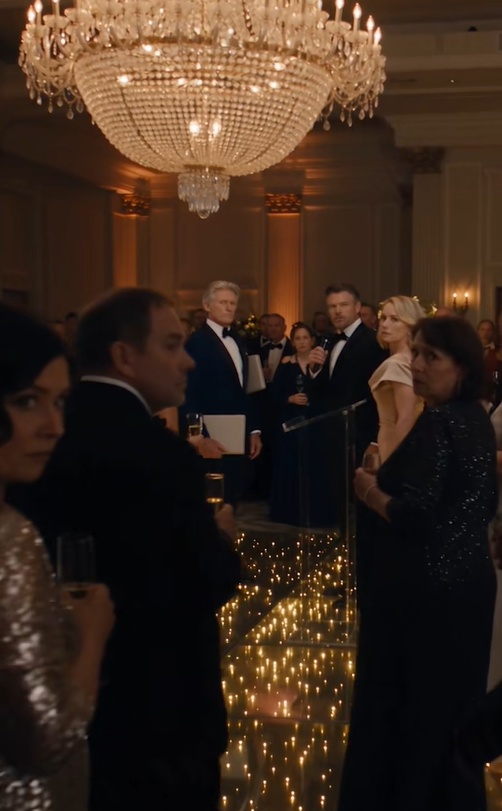
That night, beneath the chandeliers of the Grand Aurelia, Vanessa Sinclair held a strip of silver silk between her fingers and announced:
“Fake fabric. Fake taste. Fake class.”
She was wrong about the fabric.
Wrong about me.
Wrong about my family.
And, in the cruelest twist of all, wrong about the story she had spent her entire life believing.
Because the cheapest thing in that ballroom was never my dress.
It was the lie everyone had been too afraid to tear open.
Tighten the layered reveal sequenceClarify the wedding timeline