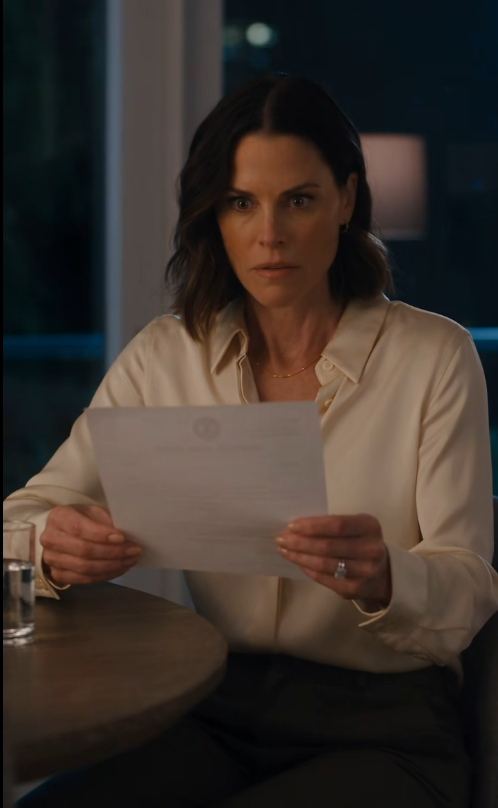
She poured herself tea.
No witnesses.
No raised voice.
“If a child were ever involved,” she said, stirring honey into porcelain, “you should understand something.”
I remember the spoon touching the cup.
Once.
Twice.
Three times.
“Montgomery children remain Montgomerys.”
I stared at her.
“What does that mean?”
“It means our family possesses resources you do not.”
“Are you threatening me?”
She smiled.
“I’m educating you.”
What Eleanor didn’t know was that my phone had been recording.
Two weeks earlier, one of her attorneys had accidentally forwarded me an attachment intended for someone else.
Its title was:
EMERGENCY CUSTODY STRATEGIES — POTENTIAL MINOR HEIR.
There wasn’t a child yet.
At least not one they knew existed.
But they had already researched private investigators.
Custody specialists.
Psychological evaluators.
Judges.
Schools.
Ways to argue that my uncertain income and lack of family support could make me an unstable parent.
There were notes about relocation restrictions.
Media pressure.
Financial exhaustion.
One line had never left me.
Subject may surrender voluntarily if litigation costs exceed resources.
Subject.
That was me.
Not Olivia.
Not Ethan’s wife.
Not a human being.
A subject.
That evening, I bought three pregnancy tests.
All positive.
The doctor confirmed it the following morning.
Three heartbeats.
I cried in the parking garage until I couldn’t see the steering wheel.
Then I did something I would question for years.
I tried to contact Ethan.
Once.
Then twice.
Then three times.
His assistant told me he was unavailable.
I sent an email.
Two days later I received a response from his account.
There is nothing left to discuss.
Do not contact me again.
So I left.
I changed lawyers.
Changed numbers.
Moved to Chicago.
And disappeared from the Montgomery universe.
For the next eight months, I built my survival around fear.
Then Liam arrived screaming.
Noah arrived furious.
Caleb arrived completely silent until the nurse placed him against my chest.
And suddenly fear had three names.
I would have burned down the world before letting Eleanor Montgomery use them as leverage.
So I stayed quiet.
And I built.
At first, Sinclair Digital was me, one laptop, and a folding table beside three bassinets.
I designed campaigns while sterilizing bottles.
Took calls during nap time.
Pitched clients with baby spit on my blouse.
Slept in ninety-minute increments.
Lost contracts.
Won better ones.
Failed.
Adapted.
Built again.
By the time the boys turned three, we had offices in Chicago and New York.
By four, we were handling global luxury brands.
By five, investors valued Sinclair Digital at
nearly three times what remained of Montgomery Holdings
.
That part, I admit, felt good.
But money hadn’t erased the fear.
I still kept the recording.
I kept every email.
Every legal document.
Every message.
Every threat.
I kept them inside an encrypted archive with one name:
INSURANCE.
So when the wedding invitation arrived, I didn’t just choose a dress.
I called my attorney.
“You’re sure?”
Marcus Hale asked.
“No.”
“Excellent.”
I looked up.
Marcus smiled from across the conference table.
“That means you’re thinking.”
He had represented me since my second year in Chicago.
Gray-haired, patient, frighteningly calm.
Beside him sat Dana Cho, a former federal investigator who now specialized in complicated family and corporate disputes.
She turned the invitation beneath the light.
“This handwriting,” Dana said.