The best moment happened a year later.
No cameras.
No audience.
No applause.
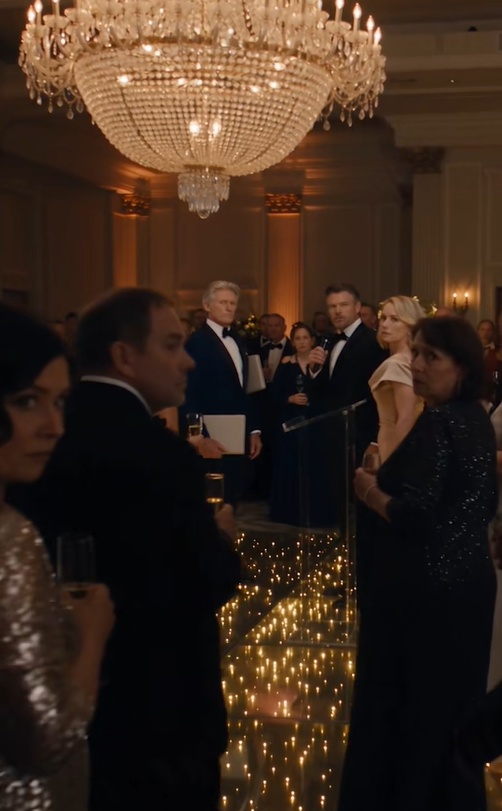
My mother stood beneath the oak tree at sunset while Daniel poured champagne and Lila argued with Julian about music.
She looked up at the thousand tiny lights my father had installed because a nine-year-old girl once asked for them.
Then she turned to me.
“I keep thinking about what your father wrote.”
“What part?”
“That you’re allowed to be where the pattern stops.”
I nodded.
She looked down.
“I think I spent most of my life believing stopping meant losing.”
The evening wind moved through the vines.
“And now?”
I asked.
She looked toward Lila.
Then me.
“Now I think stopping might be the first thing I’ve ever given you freely.”
I didn’t forgive everything in that moment.
That isn’t how forgiveness works.
But I took her hand.
And for once, she didn’t tell me how tightly to hold it.
Years later, when people see my wedding photographs hanging in our house, they usually stop at the same one.
It isn’t the staged portrait.
It isn’t Daniel kissing me beneath the oak tree.
It isn’t the image of the glittering outer gown falling to the ground.
It’s a photograph taken seconds afterward.
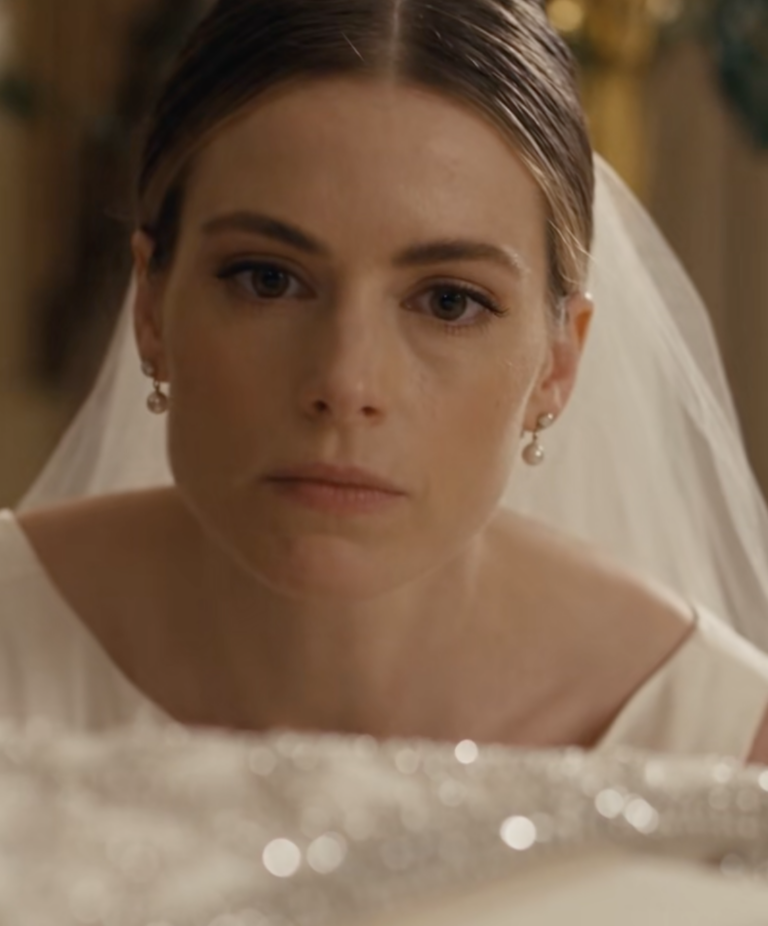
I’m standing in my real dress.
Daniel is laughing.
Lila is holding forty-eight thousand dollars’ worth of rhinestones like a collapsed tent.
Julian is rising from the third row with my father’s envelope.
And my mother is staring at me.
Her expression looks like shock.
Most people assume that’s what it is.
But I know better now.
It was recognition.
Somewhere inside her, before the lawyer spoke, before the trust changed hands, before she knew the vineyard belonged to me, my mother had recognized the scene.
A daughter refusing to wear the future someone else had chosen.
A simple ivory dress hidden beneath expectations.
A wedding becoming a line between generations.
My grandmother had controlled my mother’s wedding.
My mother tried to control mine.
And mine became the last.
That was my father’s real inheritance.
Not the company.
Not the shares.
Not the vineyard.
Not even the house beneath the oak trees.
It was the boundary he had buried inside a legal document and waited years for me to discover.
A boundary that said love did not give anyone ownership.
A boundary my mother crossed.
A boundary that finally taught all three of us how to stop crossing one another.
Sometimes I still think about that morning.
8:17 a.m.
The glittering gown hanging beside the French doors.
My mother holding champagne.
Lila telling me she had saved me from looking cheap.
And myself saying one quiet word.
Okay.
They thought it meant surrender.
It didn’t.
It meant I had finally stopped fighting to make my mother understand me.
I was simply going to choose myself.
Six hours later, beneath the oak tree my father had preserved for me, I did.
And when the dress my mother chose fell away, revealing the one that had been mine all along, I thought I was only taking back my wedding.
I didn’t yet understand.
I was taking back my family, my sister, my father’s legacy, my own name—and a future no one else would ever design for me again.