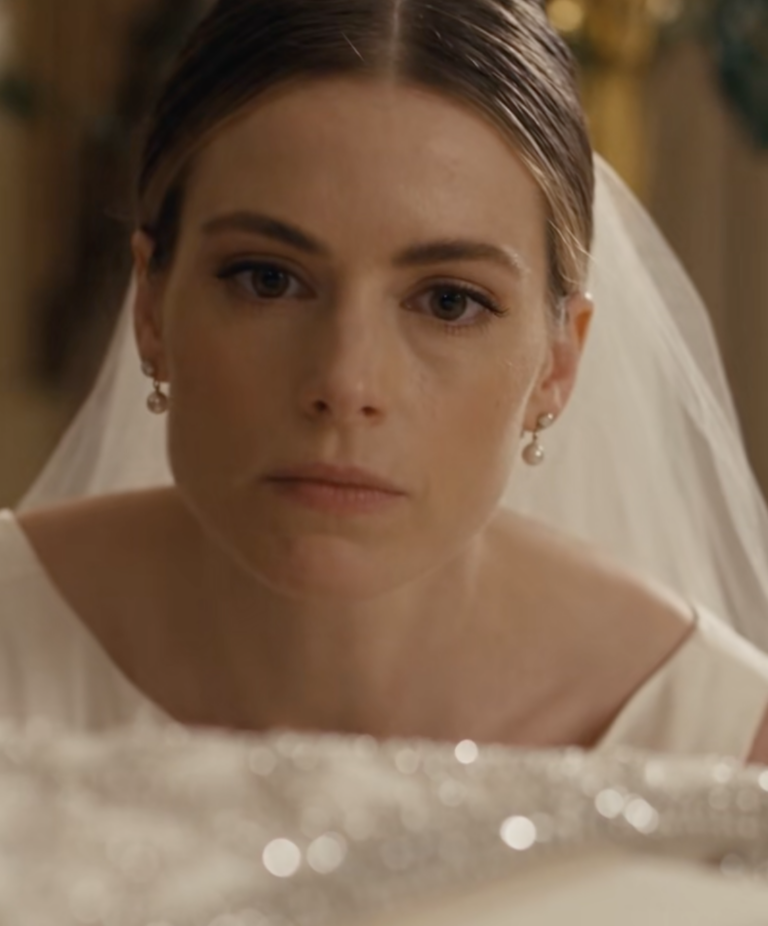
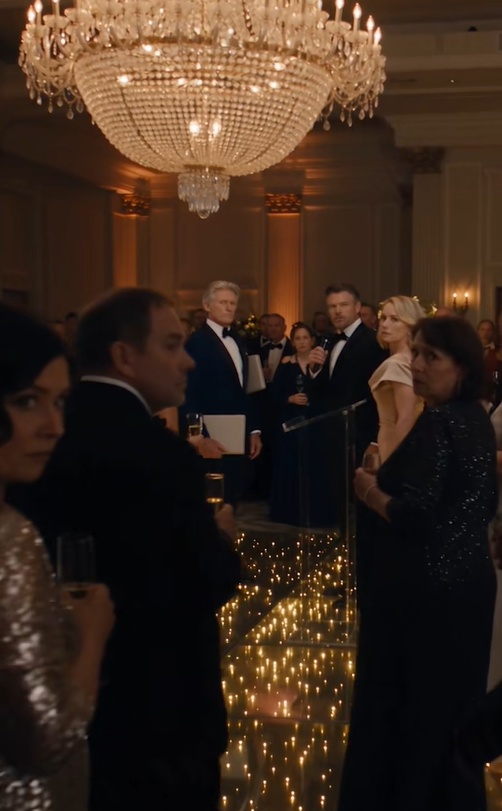
Her dark hair was pinned into a glossy low bun, and she was already wearing the emerald earrings my mother had bought for the bridesmaids.
She glanced at the crystal-covered gown.
“Mom saved you.”
“Saved me from what?”
Lila shrugged.
“Looking cheap.”
There had been a time when those words would have destroyed me.
My mother had spent most of my childhood teaching me that approval was something you earned by becoming easier for other people to admire.
Stand straighter.
Smile naturally.
Not like that.
Don’t argue.
Don’t wear brown.
Don’t cut your hair.
Don’t embarrass the family.
When my father was alive, he sometimes interrupted her.
“Margaret,” he would say quietly.
“She’s a child, not a campaign.”
After he died, no one interrupted her anymore.
Not even me.
But that morning, standing six hours away from my wedding, I didn’t cry.
I walked toward the enormous jeweled dress.
I touched the bodice.
Then I smiled.
“Okay.”
My mother’s champagne flute stopped halfway to her mouth.
“Okay?”
“Yes.”
Suspicion flickered across her face.
Only briefly.
Then came satisfaction.
She thought I had surrendered.
She had no idea Evelyn had called me three days earlier.
Tuesday afternoon, I had been sitting inside a Beverly Hills hotel restaurant with my laptop open, finalizing our seating chart.
My phone vibrated.
EVELYN HART.
I answered.
“Hi—”
“Claire, did you cancel your dress?”
My hand froze above the keyboard.
“What?”
“Did you call this morning and tell me not to deliver it?”
“No.”
Silence.
Then Evelyn exhaled.
“I knew it.”
She told me a woman claiming to speak for me had contacted her studio.
The woman knew my wedding date.
My measurements.
My mother’s name.
Even the delivery schedule.
She said I had changed my mind and demanded that Evelyn refund what remained of my deposit.
Evelyn might have believed her if the caller hadn’t asked one strange question.
Could the professional wedding photographs still be commercially licensed if I wore another designer’s gown?
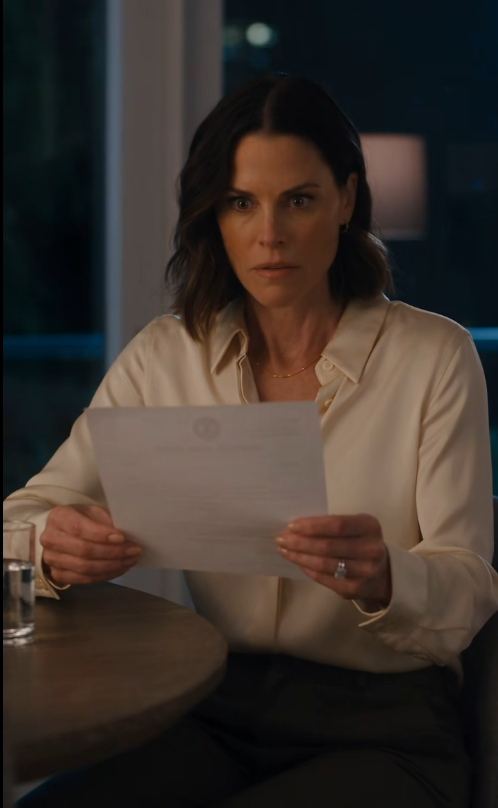
Twenty minutes later, an email arrived.
The attachment made my stomach turn.
A sponsorship agreement.
My mother had secretly negotiated with Belladonna Bridal, a luxury label owned by her longtime friend Celeste Marlowe.
Belladonna would provide a custom crystal gown supposedly valued at $48,000.
In return, the company would receive selected professional photographs from our ceremony, reception, and bridal portraits for print advertising, social media, retail displays, and promotional campaigns.
There was more.
“Featuring Claire Bennett in Belladonna Bridal.”
My full name.
My wedding.
My face.
My photographer’s work.
Sold without my permission.
At the bottom of the third page was a signature.
CLAIRE BENNETT.
It looked almost exactly like mine.
Almost.
I stared at it.
“She forged my signature.”
Evelyn was silent.
Then she said, “Claire, I think you need a lawyer.”
I should have confronted my mother.
Instead, something inside me became very calm.
“What happened to my dress?”
“I still have it.”
“Don’t deliver it.”
Another pause.
“Excuse me?”
“Do exactly what she asked.”
“Claire—”
“Let her think it worked.”
I heard Evelyn’s chair scrape.
“What are you planning?”
I looked at the sponsorship agreement again.
At my forged name.
At twenty-eight years of my mother telling me who I should be.
Then I said:
“I’m going to give her exactly one photograph in that dress.”
Evelyn laughed when I explained the rest.
Then she stopped laughing and said, “That is completely insane.”
“Can you do it?”
Silence.
“Maybe.”
That meant yes.
The gown my mother had arranged was constructed with a separate embellished corset and enormous removable overskirt.
Evelyn took my original dress apart only enough to rebuild the outer waist and reinforce the seams.