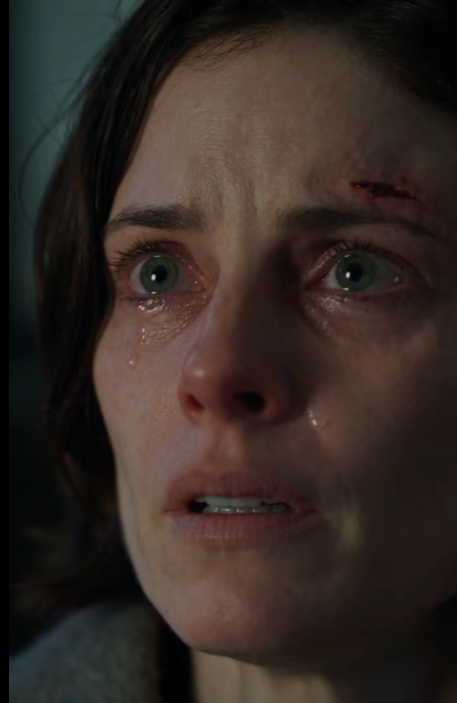
Another portion funded preservation projects across the South.
People called it reckless.
My mother called it unforgivable.
That was how I knew I had probably made the right decision.
I saw her only once during those six months.
She asked to meet me at the old family house.
I found her in my father’s study.
She looked smaller without the armor of public admiration.
“You dismantled everything we built,” she said.
“No.”
I sat opposite her.
“I dismantled the thing you were willing to destroy us to keep.”
She looked toward the window.
“Someday you’ll understand what it costs to maintain a family.”
“I do understand.”
She looked at me.
“It cost us one.”
For the first time, my mother had no answer.
As I stood to leave, she said quietly, “Did you ever wonder why your father left the trust to you instead of Lila?”
I stopped.
“I assumed because I was older.”
“No.”
Something in her voice made me turn.
She looked almost amused.
“He didn’t leave it to his oldest daughter.”
My body went cold.
My mother opened a drawer.
Removed one final envelope.
Placed it on the desk.
“He left it to Margaret’s eldest biological granddaughter.”
I stared at her.
“What are you saying?”
My mother smiled sadly.
And with one sentence, she destroyed the last assumption I had about my family.
“Lila is your father’s daughter, Isabella.”
A pause.
“You aren’t.”
I couldn’t move.
She pushed the envelope toward me.
Inside was a birth certificate.
And beneath it, a letter written thirty-two years earlier.
My mother had been pregnant with me when she married Charles Whitmore.
My biological father was Thomas Bellamy.
Celeste Bellamy’s son.
A young preservation architect who had died in a construction accident six weeks before I was born.
Celeste knew.
My mother knew.
Charles knew.
My grandmother Margaret knew.
That was why Margaret had insisted I remain protected by the trust.
That was why my father—Charles, the man who had raised me—had structured the inheritance around
Margaret’s granddaughter
, not his biological child.
He had known exactly who I was.
And he had chosen me anyway.
My eyes filled.
“Why didn’t you tell me?”
My mother looked down.
“Because Charles wanted you to be his daughter.”
“And you?”
Her voice cracked.
“I wanted the past erased.”
Suddenly, pieces of my life shifted into place.
Why I loved architecture.
Why restoration felt instinctive.
Why Celeste had always watched me with a tenderness I couldn’t explain.
Why my mother had seemed threatened whenever I made choices resembling a life she hadn’t designed.
Thomas Bellamy had been the one decision Evelyn Whitmore had made before marrying into the Whitmore family.
And I was the living evidence of it.
She had not only been controlling me.
She had been trying to control the part of herself she could never erase.
I picked up the envelope.
At the door, I turned.
“You were wrong about one thing.”
“What?”
“You thought telling me this would change who my father was.”
Her face tightened.
I held up Charles’s letter.
“It doesn’t.”