Fourteen years earlier, I would have given every acre I owned for one more evening beside her.
Now she complained that my mattress was too hard.
I laughed for five full minutes.
Rose remained suspicious of generosity.
Healing did not happen because a judge went to jail.
For months she hid biscuits in drawers.
She asked permission before drinking water.
If Catherine bought her shoes, Rose wanted to know how many floors she needed to scrub.
Whenever I brought home candy, she divided it carefully and saved half for later.
One evening I found three apples beneath her pillow.
I sat beside her.
“You know we have more apples?”
“Yes.”
“So why hide these?”
Her eyes dropped.
“In case tomorrow is different.”
I understood.
There are wounds that bleed where nobody can see them.
So I did not tell her she was wrong.
I put a fourth apple beside the others.
“In case it is.”
She stared at me.
Then smiled.
Little by little, the hidden food disappeared.
Samuel grew.
Slowly at first.
Then like a weed.
By spring he had cheeks round enough to make strangers pinch them and a laugh loud enough to frighten chickens.
His first word was not Mama.
Not Rose.
Not even Grandpa.
It was “horse.”
I considered this proof of intelligence.
Catherine disagreed.
Rose started school.
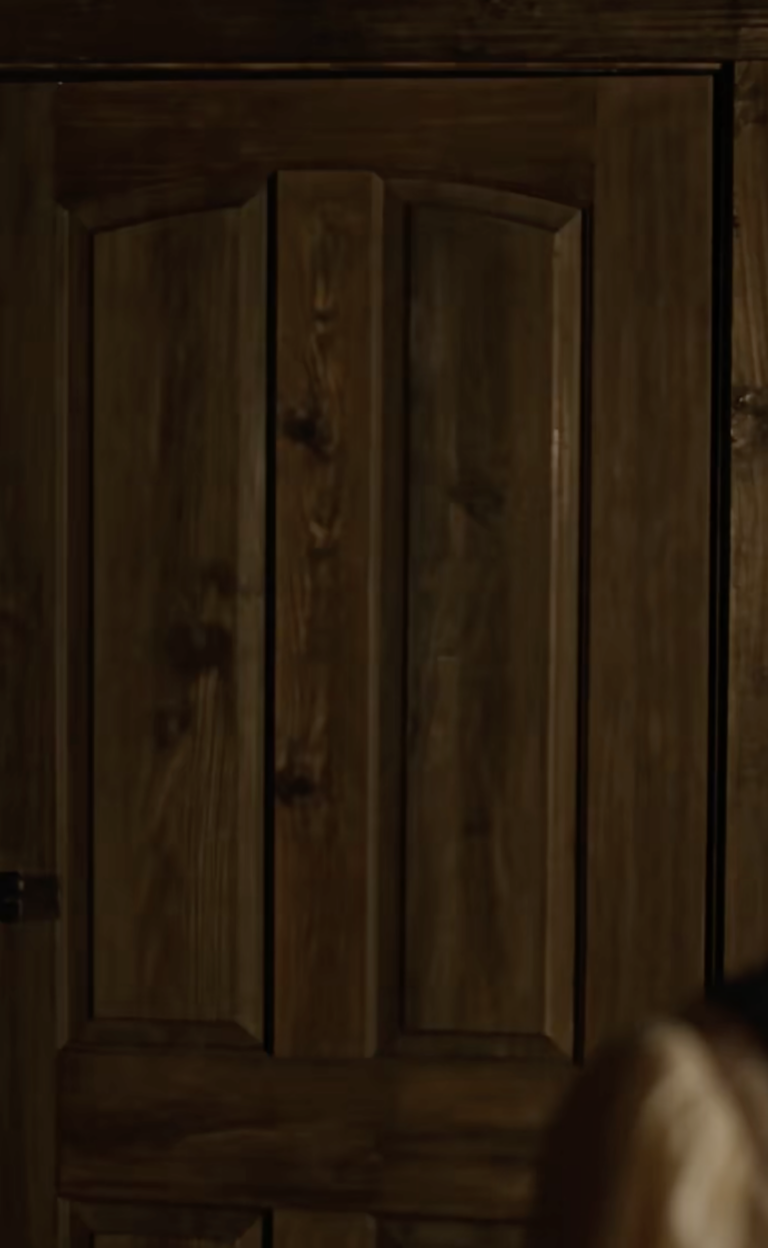
On her first morning, she stood by the blue door wearing a new yellow dress Catherine had sewn.
She looked at the little carved star near the hinge.
“Grandpa?”
“Yes?”
“Did Mama really know about this?”
“She helped me carve it.”
Rose smiled.
“Tell me again.”
So I told her.
I told her about Lucy at eleven, holding a pocketknife and insisting every house needed a mark so angels could find children during storms.
I told her about the crooked line she carved.
The splinter she got in her thumb.
The argument she had with Catherine because she wanted the star painted gold.
Rose listened.
Then touched the carving.
“I think she found it.”
“What?”
“The house.”
My throat tightened.
Rose looked up.
“She found it even if she didn’t get to stay.”
I could not answer.
She kissed my cheek and ran toward Catherine waiting by the wagon.
I stood alone on the porch.
But not lonely.
Never again lonely.
Then I noticed something strange.
A corner of paper stuck from beneath the bottom door hinge.
I bent down.
Pulled it free.
An envelope.
Old.
Yellowed.
My name written across the front.
Elias.
Catherine came back from the wagon when she saw me standing there.
“What is it?”
“I don’t know.”
But she did.
I could tell by her face.
“You put this here?”
“No.”
The envelope was brittle.
The seal had almost disappeared.
Inside was one final letter.
The handwriting was Lucy’s.
Papa,
Martha says if everything goes wrong, we may have to leave Rose at your door.
I don’t want to do that.
I want to knock myself.
I want to see whether your hair is gray.
I want to ask whether you still whistle when you’re nervous.