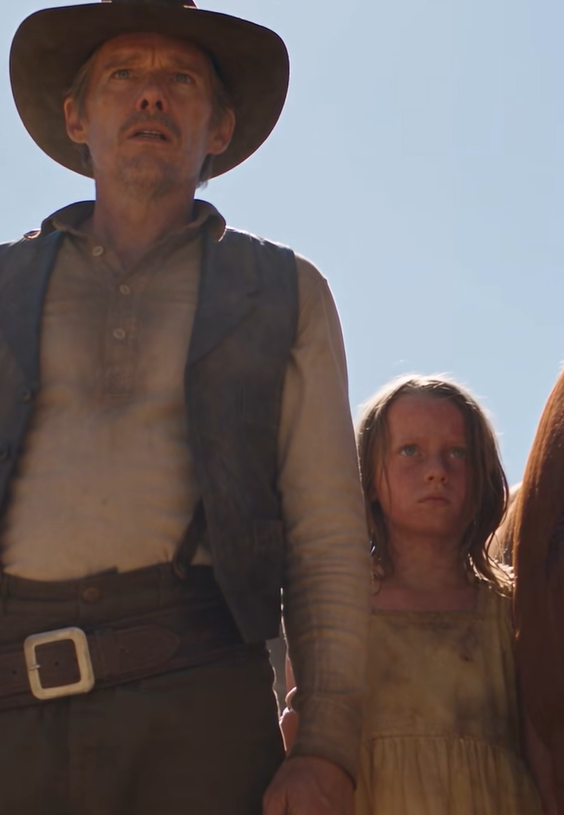
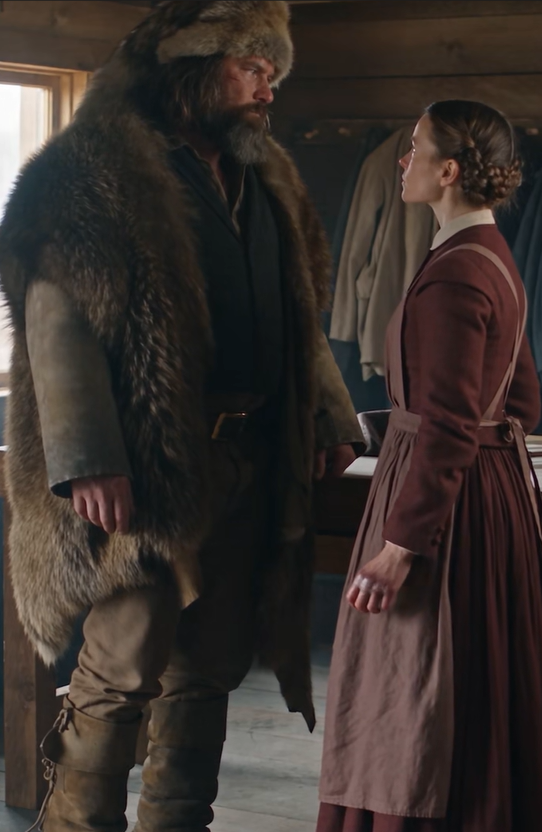
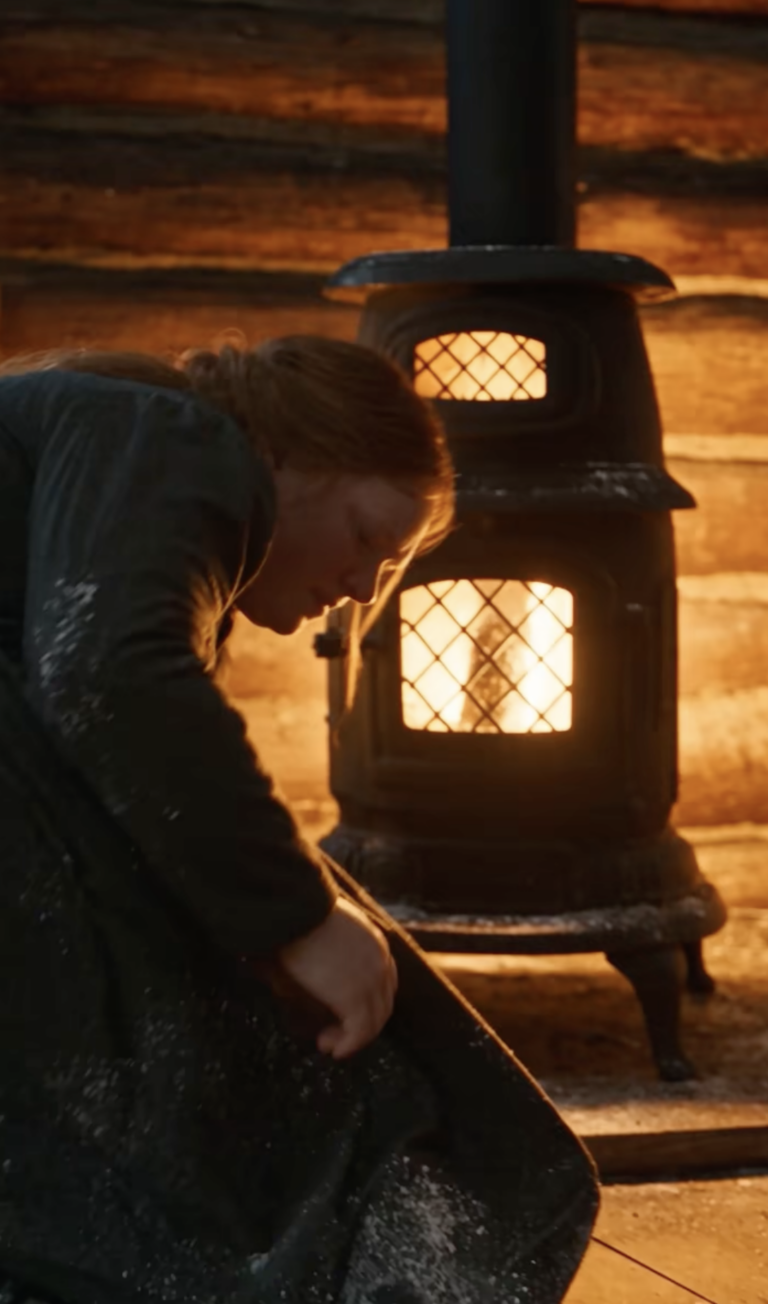
“Nothing always costs later.”
For fourteen years, I had believed I understood loneliness.
I thought loneliness was one plate at supper.
One coffee cup beside the stove.
One pair of boots beside the door.
One set of footsteps crossing the floorboards.
I thought loneliness was waking in winter and reaching across a bed that had gone cold years before.
But looking into Rose’s eyes, I learned there was something worse.
The loneliness of a child who had already decided kindness could not possibly be free.
I crouched until we were eye to eye.
“You don’t owe me work.”
She watched me.
“You don’t owe me money.”
Silence.
“And nobody in this house is going to demand anything because you ate at my table.”
She swallowed.
“Understand?”
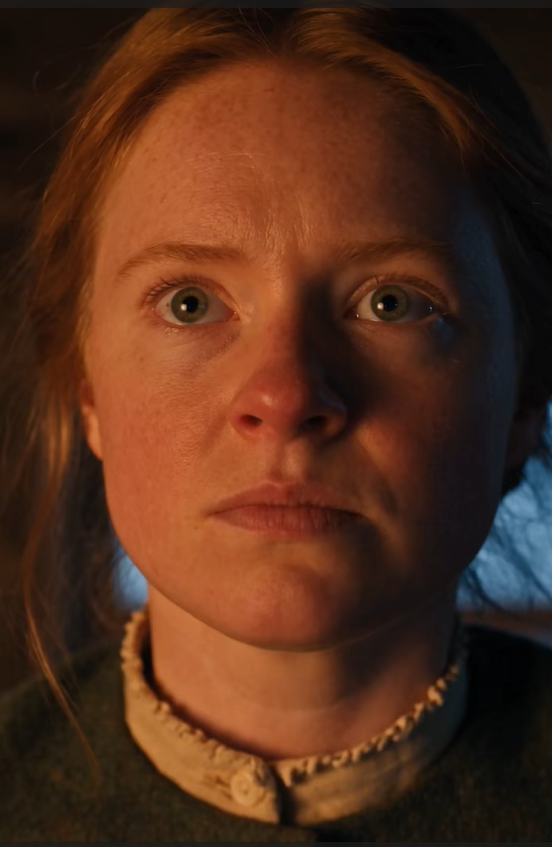
Rose studied my face the way a card player studies a dishonest dealer.
Then Samuel made a sound.
Barely more than a sigh.
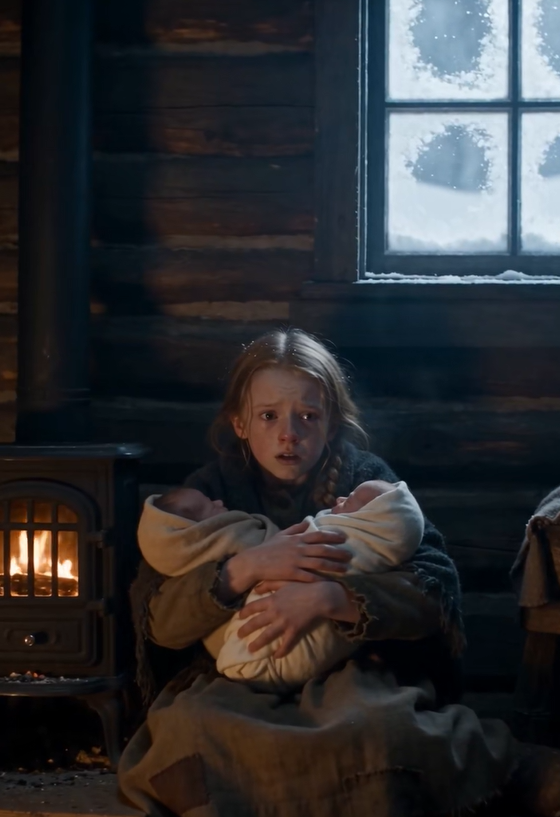
Rose looked down.
“Samuel?”
His head rolled weakly against her arm.
“Samuel, wake up.”
The mask fell away.
Suddenly she was six again.
Terrified.
“Please.”
She shook him gently.
“Samuel.”
I reached for him.
Rose recoiled.
“I’m not taking him away.”
“He doesn’t like strangers.”
“He’s two months old.”
“He knows me.”
“I believe you.”
Her eyes filled.
That nearly broke me.
“Rose,” I said quietly, “if you want him to keep knowing you, you’ve got to let me help.”
She stared at Samuel.
Then, slowly, she loosened the cloth.
The baby weighed almost nothing.
I had carried newborn calves heavier than Samuel Kelly.
His skin burned with heat.
“God Almighty.”
Rose’s mouth trembled.
“Is he dying?”
“No.”
I had no right to promise that.
But I did.
“Not tonight.”
I carried Samuel into the kitchen and laid him on the table.
Rose followed so closely she stepped on the heel of my boot twice.
I wet a clean cloth with cool well water and pressed it gently against the baby’s forehead.
“What did he eat yesterday?”
“Some milk.”
“What kind?”
“Cow.”
“How much?”
Rose held her hands a few inches apart.
“Not much.”
“Today?”
“Water.”
I muttered something I hoped she didn’t understand.
The nearest doctor lived almost ten miles away.
The nearest person who could do Samuel any immediate good lived two miles east.
Hannah Morrow had given birth four months earlier.
I turned to Rose.
“I need to fetch somebody.”
She grabbed my sleeve.
“No.”
“Rose—”
“No sheriff.”
“I’m not getting the sheriff.”
“No county man.”
“I’m getting Mrs. Morrow.”
Her grip remained.
“Who?”
“A neighbor. She’s got a baby.”
Rose stared.
It took a moment.
Then she understood.
“Oh.”
“I’ll be twenty minutes.”
“I can come.”
“You can barely stand.”
“I won’t stay here alone.”
Neither would I have, in her place.
I looked at Samuel.
Then the horse.
Then Rose.
“Fine.”
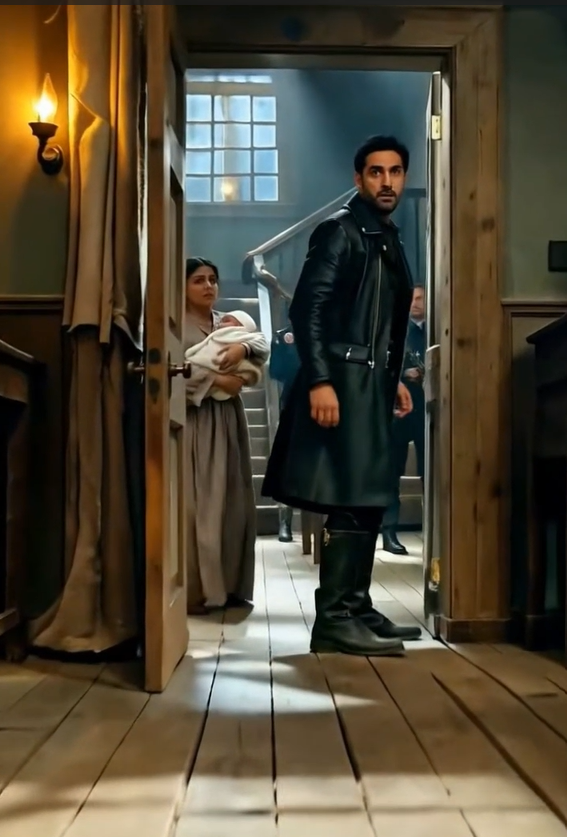
Five minutes later, Rose sat in front of me on the saddle with Samuel wrapped inside my cleanest shirt.
I rode harder than I had ridden in years.
Hannah Morrow opened her door with her own infant asleep against one shoulder.