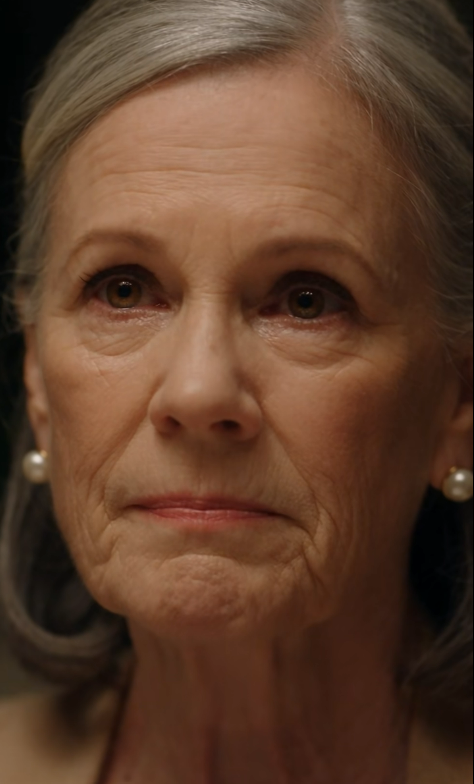
The cruelest thing my daughter-in-law did that night wasn’t telling me there was no chair.
It was smiling while she did it.
“There’s no seat for you, Wilma,” Tessa said brightly, one manicured hand resting across the back of the only empty chair. “Go eat in the restroom. You’re used to it.”
For one second, I honestly thought I had misunderstood her.
Then I looked around the private dining room.
Twenty-four people had heard every word.
Twenty-four people were staring at me.
And not one of them spoke.
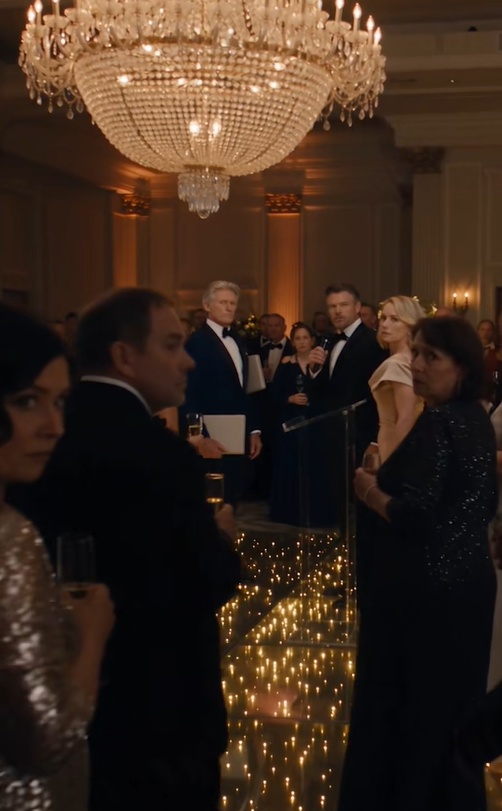
Crystal glasses shimmered beneath warm golden lights. Bottles of expensive wine stood between polished silverware and arrangements of white roses. A string quartet played softly through hidden speakers while waiters in black jackets moved quietly along the walls.
It was one of the finest restaurants in the city.
And the private room had been reserved to celebrate my son Reid’s promotion.
A promotion he had spent nearly seven years chasing.
I had been so proud when he called me three weeks earlier.
“Vice president, Mom,” he had said, laughing like the twelve-year-old boy who once ran home waving his first perfect report card. “Can you believe it?”
I could.
I had always believed in Reid.
Perhaps that had been my greatest weakness.
What nobody at that table knew was that I had secretly paid for the entire celebration.
The room.
The flowers.
The champagne.
The seven-course tasting menu.
Every last dollar.
I had arranged it through the restaurant manager because Reid had mentioned that the dinner was becoming expensive.
He had not asked me for money directly.
He rarely did.
He had simply sighed and said, “Tessa wants it to be special.”
So I made it special.
That was how I had loved my son for forty-one years.
Quietly.
Without receipts.
Without announcements.
Without making him feel indebted.
To everyone sitting around that table, I was simply Reid’s widowed mother—the older woman in a plain navy dress, sensible shoes, and a wool coat bought during a department-store sale.
I did not wear diamonds.
I drove a twelve-year-old Buick.
I lived in a modest two-bedroom apartment on Sycamore Street.
And I had spent most of my life allowing people to confuse simplicity with poverty.
Tessa especially.
She looked me up and down now with a little laugh.
“I’m serious,” she added. “You’ll probably be more comfortable in there anyway.”
Several people shifted awkwardly.
Someone coughed.
A woman near the far end whispered Tessa’s name as if she might reconsider.
Tessa didn’t.
I looked at Reid.
My only son.
The boy I had raised through childhood fevers, broken bones, school projects, failed relationships, unpaid bills, and the terrible year after his father died.
He could have ended everything with four words.
Mom, sit right here.
That was all.
Instead, Reid lowered his eyes toward his plate.
His silence cut deeper than Tessa’s cruelty ever could.
A stranger owes you nothing.
Your child does.
I waited.
Perhaps some foolish piece of me was still expecting him to look up.